Blahface.com Uniting People Online

Capital

Luanda

Currency

Angolan Kwanza (AOA)

Language

Portuguese

Best Time

May–Oct

Time Zone

WAT (UTC+1)

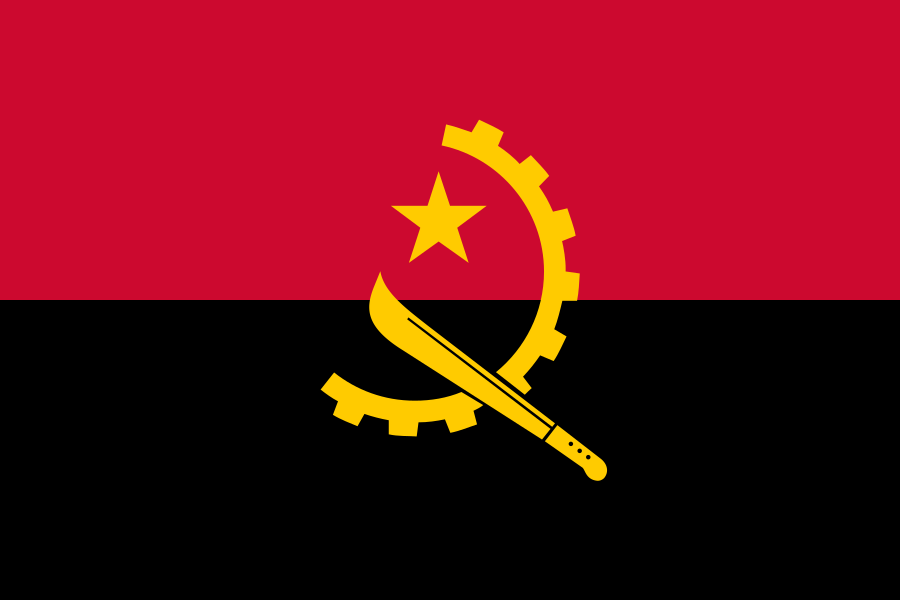
Flag of Angola
Welcome to Angola

Africa's Untamed Atlantic Coast

Welcome to Angola, a vast and vibrant country on Africa's southwestern coast, where dramatic landscapes range from the towering dunes of the Namib Desert to lush tropical rainforests in the north. Its coastline stretches for over a thousand miles, offering pristine beaches, dramatic cliffs, and world-class surf breaks that remain wonderfully undiscovered by mass tourism. The capital, Luanda, is a city of striking contrasts, where colonial-era architecture meets a fast-growing modern skyline along the glittering Atlantic bay. Inland, the Kalandula Falls thunder with breathtaking force, rivaling some of the world's most famous waterfalls in scale and beauty. Angola's rich musical and artistic traditions pulse through cities like Benguela and Lobito, where Portuguese colonial charm blends with vibrant Angolan culture. Wildlife lovers can explore national parks teeming with elephants, antelope, and rare bird species across the country's diverse ecosystems. Angola is a land of resilience and raw natural splendor, offering adventurous travelers an authentic, off-the-beaten-path African experience. Come discover a country as beautiful as it is full of promise.


Popular City

Luanda

Luanda, Angola’s capital, offers the Fortaleza de Sao Miguel, a Portuguese colonial fortress overlooking the bay with views over the city’s rapidly modernizing skyline. The Ilha do Cabo, a narrow peninsula lined with beaches and restaurants, offers a relaxed escape from the busy mainland city. The National Museum of Slavery, housed in a former slave-trading chapel, offers a sobering account of Angola’s history connected to the transatlantic slave trade. Luanda’s markets, including the sprawling Roque Santeiro, once one of the largest informal markets in Africa, reflect the city’s commercial intensity. The city’s oil-funded skyline of gleaming towers stands in contrast to areas still recovering from decades of civil conflict. Luanda’s blend of colonial history and rapid modern development make it one of the most dynamic, if expensive, cities in Africa.

Travel News

No API URL found for post ID 140434.

Popular City

Benguela

Benguela, one of Angola’s oldest colonial cities, retains Portuguese architecture along tree-lined avenues reflecting its history as a major port for the transatlantic slave trade. The city’s beaches, calmer and less developed than those in Luanda, offer a relaxed coastal escape. The Benguela railway, historically significant for connecting Angola’s coast to the mineral-rich interior and neighboring countries, reflects the city’s importance in regional trade history. Local markets sell produce and crafts from the surrounding agricultural region. Benguela’s slower pace and colonial architecture offer a quieter alternative to the busier capital. It remains an important stop for understanding Angola’s complex colonial history.

Travel Tips

Helpful information to consider before and during your visit.

Before You Go

  • Confirm passport validity and entry requirements.
  • Check whether a tourist visa is required.
  • Keep digital copies of important documents.
  • Consider purchasing travel insurance.

Money & Payments

  • Review the local currency and exchange rate.
  • Carry some cash for small businesses and markets.
  • Check for international bank transaction fees.
  • Learn the country's customary tipping practices.

Stay Connected

  • Review your mobile carrier's international plan.
  • Consider purchasing a local SIM or eSIM.
  • Download maps for offline use before traveling.
  • Avoid sensitive transactions on unsecured Wi-Fi.

Transportation

  • Research public transportation before arrival.
  • Use licensed taxis or reputable rideshare services.
  • Check which side of the road vehicles use.
  • Confirm whether an international permit is needed.

Electricity

  • Check the country's voltage and outlet type.
  • Bring the correct plug adapter for your devices.
  • Use a voltage converter when required.
  • Pack a portable charger for longer excursions.

Weather & Clothing

  • Review the seasonal weather before packing.
  • Bring layers for changing temperatures.
  • Pack rain protection when appropriate.
  • Use sunscreen even on cool or cloudy days.

Food & Water

  • Research whether tap water is safe to drink.
  • Communicate food allergies clearly.
  • Try traditional dishes from reputable vendors.
  • Observe local dining customs and meal times.

Safety

  • Secure valuables in crowded tourist areas.
  • Avoid displaying large amounts of cash.
  • Share your itinerary with someone you trust.
  • Review current government travel advisories.

Language & Etiquette

  • Learn a few polite words in the local language.
  • Respect dress requirements at religious sites.
  • Ask permission before photographing people.
  • Follow local traditions, laws and social customs.

Emergency Planning

  • Save the country's emergency telephone number.
  • Locate your nearest embassy or consulate.
  • Keep medication in its original packaging.
  • Store emergency contacts offline and on paper.

Smart Packing

  • Pack comfortable shoes for walking and tours.
  • Keep essential medication in your carry-on.
  • Bring a reusable bottle where appropriate.
  • Leave room for locally purchased items.

Local Research

  • Check attraction hours and reservation policies.
  • Review national holidays and local closures.
  • Download important addresses before departure.
  • Leave flexibility for unexpected discoveries.
Important: Entry requirements, transportation rules, weather conditions and safety guidance can change. Verify important information with official sources before traveling.

Popular City

Lobito

Lobito, just north of Benguela, sits on a narrow sandy peninsula between the ocean and a sheltered bay, giving it one of the most striking natural harbor settings on the Angolan coast. The town’s beaches and calm bay waters make it a popular weekend destination for residents of nearby Benguela. As the terminus of the historic Benguela railway, Lobito has long served as a vital port connecting Angola’s mineral wealth to international shipping routes. The town’s colonial-era buildings and palm-lined streets reflect its history as a planned port city. Lobito’s beaches and harbor setting give it a relaxed, scenic character distinct from Angola’s busier urban centers. It remains a pleasant coastal stop along Angola’s central shoreline.

Local Food to Try

Discover some of Angola's most popular flavors, traditional dishes and memorable local treats during your visit.

Muamba de Galinha

Chicken slowly cooked with palm oil, garlic, onions, spices and okra, creating one of Angola’s best-known traditional dishes.

Calulu

A deeply flavored stew prepared with fish or meat, leafy greens, tomatoes, onions, okra and sometimes dried fish.

Funge

A smooth, thick staple made from cassava or corn flour and served with stews, sauces, fish and meat dishes.

Mufete

Grilled fish served with beans, boiled cassava or sweet potato, onions and a seasoned palm-oil sauce.

Cabidela

A richly seasoned chicken dish cooked with vinegar and a dark sauce, usually served with rice or funge.

Feijão de Óleo de Palma

Beans cooked with red palm oil, onions and seasonings, creating a rich side dish often paired with fish, meat or funge.

Kizaka

Cassava leaves are finely ground and slowly cooked, sometimes with peanuts, fish or meat, for a hearty traditional accompaniment.

Fried Plantains

Ripe plantains are sliced and fried until golden, producing a sweet and caramelized side dish or snack.

Cocada Amarela

A sweet yellow coconut dessert made with egg yolks, sugar and grated coconut, reflecting Angola’s Portuguese culinary influence.

Dining tip: Regional specialties and preparation styles vary throughout Angola. Explore local markets, independent cafés and family-owned restaurants for an authentic taste of the destination.

Little-Known Facts

Angola

Angola possesses one of Africa's most spectacular natural wonders—the Kalandula Falls—which ranks among the continent's largest waterfalls by volume. Beyond its impressive coastline and tropical forests, Angola is also home to the giant sable antelope, an extremely rare species found nowhere else in the wild. For many years it was feared extinct due to civil war, but conservationists later rediscovered surviving populations, making it one of Africa's greatest wildlife success stories.

Another little-known fact is that Angola is one of the world's leading producers of diamonds, with many gemstones originating from rich inland deposits. The country also features the mysterious Black Rocks of Pungo Andongo, enormous granite formations surrounded by legends involving ancient kings and mythical footprints said to belong to Queen Nzinga, one of Africa's most celebrated historical rulers.

Despite decades of conflict in the late 20th century, Angola's ecosystems remain remarkably diverse. From Atlantic beaches to rainforests and desert landscapes, the country supports an incredible variety of wildlife and plant species. Angola's rich musical traditions, particularly semba, are also believed to have influenced the development of Brazilian samba through centuries of cultural exchange across the Atlantic.
Another little-known fact is that Albanians have a unique cultural tradition called "Besa," meaning "to keep one's promise." This centuries-old code of honor became internationally recognized during World War II when Albania was one of the few European countries where the Jewish population actually increased because local families risked their lives to shelter refugees. Albania also boasts the stunning Blue Eye (Syri i Kaltër), a natural spring with crystal-clear turquoise water whose exact depth remains unknown despite multiple explorations.

Finally, Albania enjoys more than 300 sunny days each year, rivaling many Mediterranean destinations. The country is also famous for its "sworn virgins"—a centuries-old tradition in remote mountain villages where women could legally assume male social roles by taking a lifelong vow of celibacy, preserving family inheritance and leadership in the absence of male heirs.