Blahface.com Uniting People Online

Capital

Buenos Aires

Currency

Argentine Peso (ARS)

Language

Spanish

Best Time

Oct–Apr

Time Zone

ART (UTC−3)

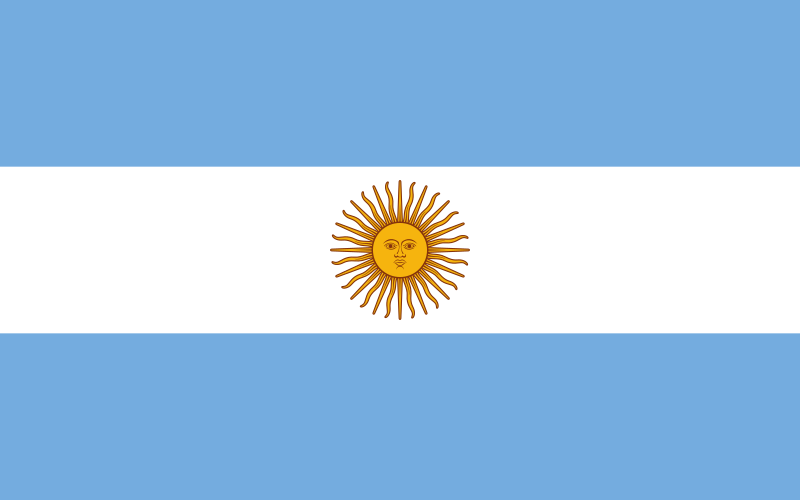
Flag of Argentina
Welcome to Argentina

From Tango to Tierra del Fuego

Welcome to Argentina, a country of staggering scale and diversity, stretching from the subtropical wetlands of the north to the glacier-carved fjords of Patagonia in the south. Buenos Aires captivates with its European elegance, tango-filled streets, and passionate energy that never seems to fade, day or night. In the west, Mendoza's sun-drenched vineyards produce world-renowned Malbec against a stunning backdrop of the snow-capped Andes. Further south, Bariloche enchants visitors with alpine lakes, dense forests, and chocolate-scented streets reminiscent of the Swiss Alps. At the very tip of the continent, Ushuaia, the "End of the World," offers rugged adventure amid glaciers, mountains, and the wild beauty of Tierra del Fuego. Argentina's landscapes are matched only by the warmth of its people, whose passion for life shows in their food, music, and traditions. From dramatic waterfalls to windswept steppe, this is a country built for explorers seeking both beauty and soul. Argentina welcomes you to experience a land where nature and culture meet in spectacular fashion.


Popular City

Buenos Aires

Buenos Aires’s La Boca neighborhood, with its brightly painted Caminito street, captures the passionate spirit of tango, which can be watched or danced in milongas throughout the city. Recoleta Cemetery, an elaborate necropolis of ornate mausoleums, holds the grave of Eva Peron among other notable Argentines. The Teatro Colon, one of the finest opera houses in the world, offers tours through its opulent interior even outside performance times. San Telmo’s Sunday antiques market fills cobblestone streets with vendors and impromptu tango performances. Palermo’s parks and trendy Soho district reflect the city’s European-influenced elegance and vibrant contemporary culture. Buenos Aires’s passionate blend of tango, architecture, and cafe culture make it one of South America’s most captivating capitals.

Travel News

No API URL found for post ID 140436.

Popular City

Mendoza

Mendoza, at the foot of the Andes, anchors Argentina’s premier wine region, with Malbec vineyards stretching across the surrounding high-altitude desert landscape. Bodega tours throughout the region offer tastings paired with views of the snow-capped Andes, including Aconcagua, the highest peak in the Western Hemisphere. The city’s leafy plazas and irrigation canals, an ingenious system dating back to Indigenous Huarpe engineering, keep Mendoza notably green despite its arid surroundings. Parque General San Martin offers a large green space with a lake and views toward the mountains. Adventure activities, including white-water rafting and horseback riding into the foothills, complement the region’s wine tourism. Mendoza’s combination of world-class wine and dramatic mountain scenery make it an essential stop in Argentina.

Travel Tips

Helpful information to consider before and during your visit.

Before You Go

  • Confirm passport validity and entry requirements.
  • Check whether a tourist visa is required.
  • Keep digital copies of important documents.
  • Consider purchasing travel insurance.

Money & Payments

  • Review the local currency and exchange rate.
  • Carry some cash for small businesses and markets.
  • Check for international bank transaction fees.
  • Learn the country's customary tipping practices.

Stay Connected

  • Review your mobile carrier's international plan.
  • Consider purchasing a local SIM or eSIM.
  • Download maps for offline use before traveling.
  • Avoid sensitive transactions on unsecured Wi-Fi.

Transportation

  • Research public transportation before arrival.
  • Use licensed taxis or reputable rideshare services.
  • Check which side of the road vehicles use.
  • Confirm whether an international permit is needed.

Electricity

  • Check the country's voltage and outlet type.
  • Bring the correct plug adapter for your devices.
  • Use a voltage converter when required.
  • Pack a portable charger for longer excursions.

Weather & Clothing

  • Review the seasonal weather before packing.
  • Bring layers for changing temperatures.
  • Pack rain protection when appropriate.
  • Use sunscreen even on cool or cloudy days.

Food & Water

  • Research whether tap water is safe to drink.
  • Communicate food allergies clearly.
  • Try traditional dishes from reputable vendors.
  • Observe local dining customs and meal times.

Safety

  • Secure valuables in crowded tourist areas.
  • Avoid displaying large amounts of cash.
  • Share your itinerary with someone you trust.
  • Review current government travel advisories.

Language & Etiquette

  • Learn a few polite words in the local language.
  • Respect dress requirements at religious sites.
  • Ask permission before photographing people.
  • Follow local traditions, laws and social customs.

Emergency Planning

  • Save the country's emergency telephone number.
  • Locate your nearest embassy or consulate.
  • Keep medication in its original packaging.
  • Store emergency contacts offline and on paper.

Smart Packing

  • Pack comfortable shoes for walking and tours.
  • Keep essential medication in your carry-on.
  • Bring a reusable bottle where appropriate.
  • Leave room for locally purchased items.

Local Research

  • Check attraction hours and reservation policies.
  • Review national holidays and local closures.
  • Download important addresses before departure.
  • Leave flexibility for unexpected discoveries.
Important: Entry requirements, transportation rules, weather conditions and safety guidance can change. Verify important information with official sources before traveling.

Popular City

Bariloche

Bariloche, in Argentine Patagonia, sits on the shores of Lake Nahuel Huapi surrounded by snow-capped peaks, its alpine architecture giving the town a distinctly Swiss-Bavarian character. The Circuito Chico, a scenic drive around the lake, offers viewpoints over turquoise water framed by forested mountains. The town is renowned for its chocolate shops, a tradition brought by European immigrants that has become central to Bariloche’s identity. Cerro Catedral, one of South America’s largest ski resorts, draws winter sports enthusiasts from across the continent. Nearby, Nahuel Huapi National Park offers hiking trails through forests of ancient arrayanes trees found in few other places on earth. Bariloche’s alpine scenery and chocolate culture make it one of Patagonia’s most beloved destinations.

Local Food to Try

Discover some of Argentina's most popular flavors, traditional dishes and memorable local treats during your visit.

Empanadas

Savory pastries filled with seasoned beef, chicken, cheese or vegetables, with recipes and folding styles that vary across Argentina.

Asado

Argentina’s famous barbecue features beef, sausages and other meats slowly grilled over wood or charcoal and shared with family and friends.

Choripán

A grilled chorizo sausage served in crusty bread and commonly topped with chimichurri, creating a popular street-food favorite.

Milanesa

A thin breaded cutlet of beef or chicken, fried or baked and often served with potatoes, salad or melted cheese and tomato sauce.

Locro

A thick, comforting stew made with corn, beans, squash and meat, traditionally enjoyed during national celebrations and cooler weather.

Provoleta

A round of provolone cheese grilled until bubbling and golden, then seasoned with herbs and served as a warm appetizer.

Ñoquis

Soft potato dumplings served with tomato, cream or meat sauces, especially popular on the twenty-ninth day of each month.

Alfajores

Tender sandwich cookies filled with dulce de leche and often coated with chocolate, powdered sugar or coconut.

Flan with Dulce de Leche

Smooth caramel custard is commonly served with a generous spoonful of Argentina’s rich, creamy milk-caramel spread.

Dining tip: Regional specialties and preparation styles vary throughout Argentina. Explore local markets, independent cafés and family-owned restaurants for an authentic taste of the destination.

Little-Known Facts

Argentina

Despite being the birthplace of football legends like Diego Maradona and Lionel Messi, Argentina's official national sport isn't soccer at all — it's pato, a startling hybrid of polo and basketball played on horseback. The name literally means "duck" in Spanish, a nod to the sport's origins, when a live duck sewn into a leather sack was used in place of a ball. The game was so violent in its early form that it was repeatedly banned over the centuries before being tamed, regulated, and officially declared Argentina's national sport in 1953.

Tucked deep in Patagonia is a surprising outpost of Welsh culture, thousands of miles from Wales itself. Beginning in the 1860s, Welsh settlers established a string of communities in the Chubut Valley, seeking a place to preserve their language and traditions outside British influence. Their legacy endures: an estimated tens of thousands of people in the region still identify as Patagonian Welsh today, and towns like Gaiman still host Welsh tea houses, chapels, and an annual Eisteddfod poetry and music festival, conducted partly in Welsh, on the far side of the world from where the tradition began.

Argentina also holds a quiet but significant place in the history of criminal justice. In 1892, in the coastal town of Necochea, police official Juan Vucetich used fingerprint evidence to solve a murder case, marking the first time in recorded history that a criminal conviction relied on fingerprint identification. The technique Vucetich pioneered went on to become a cornerstone of forensic science practiced by police forces around the world, all traced back to that single case on the Argentine coast.
Another little-known fact is that Albanians have a unique cultural tradition called "Besa," meaning "to keep one's promise." This centuries-old code of honor became internationally recognized during World War II when Albania was one of the few European countries where the Jewish population actually increased because local families risked their lives to shelter refugees. Albania also boasts the stunning Blue Eye (Syri i Kaltër), a natural spring with crystal-clear turquoise water whose exact depth remains unknown despite multiple explorations.

Finally, Albania enjoys more than 300 sunny days each year, rivaling many Mediterranean destinations. The country is also famous for its "sworn virgins"—a centuries-old tradition in remote mountain villages where women could legally assume male social roles by taking a lifelong vow of celibacy, preserving family inheritance and leadership in the absence of male heirs.