Blahface.com Uniting People Online

Capital

Malabo

Currency

Central African CFA Franc (XAF)

Language

Spanish, French, Portuguese

Best Time

Dec–Feb

Time Zone

WAT (UTC+1)

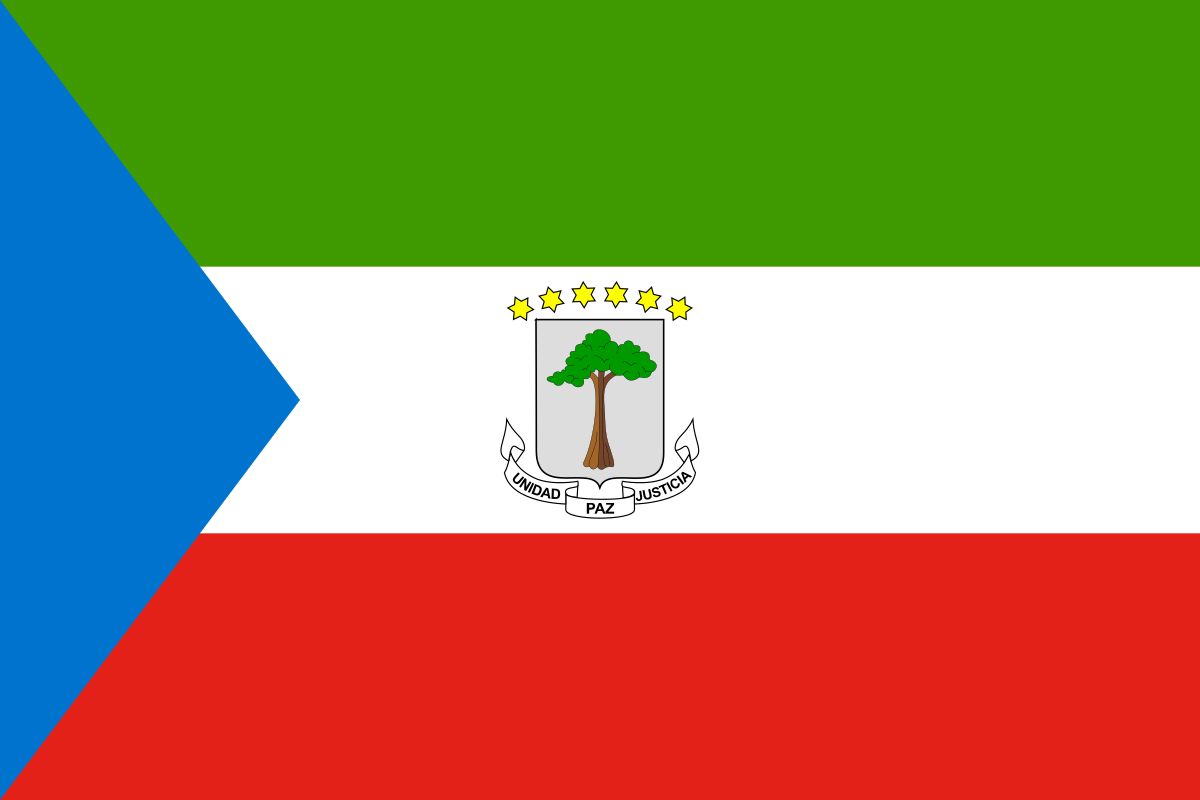
Flag of Equatorial Guinea
Welcome to Equatorial Guinea

Rainforest on the Gulf of Guinea

Welcome to Equatorial Guinea, a small Central African nation split between a mainland rainforest region and volcanic islands in the Gulf of Guinea. Malabo, the capital, sits on the island of Bioko, its colonial Spanish architecture set against lush, volcanic scenery. Bioko Island's rainforests shelter rare primates and sea turtles that nest along its remote beaches. The mainland region of Río Muni offers dense, largely unexplored rainforest teeming with biodiversity. Equatorial Guinea's Spanish colonial heritage sets it apart linguistically and culturally from its African neighbors. Traditional fishing villages along the coast offer a glimpse into daily life shaped by both sea and forest. The country's remoteness has kept much of its natural beauty pristine and largely undiscovered by tourism. Equatorial Guinea invites adventurous travelers to explore a rarely visited blend of island and rainforest beauty.

Popular City

Malabo

Malabo, Equatorial Guinea’s capital on Bioko Island, retains striking Spanish colonial architecture around its central plaza, including the Malabo Cathedral with its twin neo-Gothic spires. The city’s harbor, framed by the dramatic backdrop of Pico Basile, the country’s highest peak, offers a scenic setting despite the country’s limited tourism infrastructure. Arena Blanca beach offers a relatively undeveloped stretch of coastline for visitors seeking a quiet escape near the capital. The National Museum, though modest, provides some context on the country’s Bantu and Bubi cultural heritage. Malabo’s oil wealth has funded significant infrastructure development in recent years, though tourism remains limited. Its dramatic volcanic backdrop and colonial architecture give the city a distinctive character in the Gulf of Guinea.

Travel News

No API URL found for post ID 140483.

Popular City

Bata

Bata, Equatorial Guinea’s largest city on the mainland, offers a long seafront boulevard along the Gulf of Guinea, lined with government buildings and monuments reflecting recent urban investment. The city’s markets trade cacao and timber products central to the mainland region’s economy. Nearby beaches offer a relatively undeveloped coastline, with fishing communities continuing traditional practices along the shore. Bata serves as the gateway to Rio Muni, the country’s mainland territory, offering access to rainforest regions distinct from the island capital. The city’s modern boulevards and monuments reflect the country’s oil-funded development push in recent decades. Bata offers a different, mainland perspective on Equatorial Guinea distinct from Malabo’s island setting.

Travel Tips

Helpful information to consider before and during your visit.

Before You Go

  • Confirm passport validity and entry requirements.
  • Check whether a tourist visa is required.
  • Keep digital copies of important documents.
  • Consider purchasing travel insurance.

Money & Payments

  • Review the local currency and exchange rate.
  • Carry some cash for small businesses and markets.
  • Check for international bank transaction fees.
  • Learn the country's customary tipping practices.

Stay Connected

  • Review your mobile carrier's international plan.
  • Consider purchasing a local SIM or eSIM.
  • Download maps for offline use before traveling.
  • Avoid sensitive transactions on unsecured Wi-Fi.

Transportation

  • Research public transportation before arrival.
  • Use licensed taxis or reputable rideshare services.
  • Check which side of the road vehicles use.
  • Confirm whether an international permit is needed.

Electricity

  • Check the country's voltage and outlet type.
  • Bring the correct plug adapter for your devices.
  • Use a voltage converter when required.
  • Pack a portable charger for longer excursions.

Weather & Clothing

  • Review the seasonal weather before packing.
  • Bring layers for changing temperatures.
  • Pack rain protection when appropriate.
  • Use sunscreen even on cool or cloudy days.

Food & Water

  • Research whether tap water is safe to drink.
  • Communicate food allergies clearly.
  • Try traditional dishes from reputable vendors.
  • Observe local dining customs and meal times.

Safety

  • Secure valuables in crowded tourist areas.
  • Avoid displaying large amounts of cash.
  • Share your itinerary with someone you trust.
  • Review current government travel advisories.

Language & Etiquette

  • Learn a few polite words in the local language.
  • Respect dress requirements at religious sites.
  • Ask permission before photographing people.
  • Follow local traditions, laws and social customs.

Emergency Planning

  • Save the country's emergency telephone number.
  • Locate your nearest embassy or consulate.
  • Keep medication in its original packaging.
  • Store emergency contacts offline and on paper.

Smart Packing

  • Pack comfortable shoes for walking and tours.
  • Keep essential medication in your carry-on.
  • Bring a reusable bottle where appropriate.
  • Leave room for locally purchased items.

Local Research

  • Check attraction hours and reservation policies.
  • Review national holidays and local closures.
  • Download important addresses before departure.
  • Leave flexibility for unexpected discoveries.
Important: Entry requirements, transportation rules, weather conditions and safety guidance can change. Verify important information with official sources before traveling.

Popular City

Ebebiyín

Ebebiyin, near Equatorial Guinea’s borders with Cameroon and Gabon, serves as a trading town connecting the country to its neighbors. The surrounding rainforest landscape reflects the dense, biodiverse terrain typical of this part of Central Africa. Local markets in Ebebiyin trade goods across the tri-border region, giving the town a modest but genuine commercial significance. The area’s remote, forested setting offers a look at rural life far from the country’s oil-funded capital. Travel to this region requires careful planning given limited infrastructure. Ebebiyin remains a little-visited but ecologically significant part of Equatorial Guinea’s mainland rainforest.

Local Food to Try

Discover some of Equatorial Guinea's most popular flavors, traditional dishes and memorable local treats during your visit.

Pepesup

Pepesup is a signature Equatorial Guinea specialty known for its distinctive local ingredients, seasoning and traditional preparation.

Succotash

This popular Equatorial Guinea dish brings together familiar regional flavors and is commonly enjoyed in homes, markets or local restaurants.

Cassava Leaf Stew

A well-loved part of Equatorial Guinea cuisine, Cassava Leaf Stew reflects the country's culinary traditions and locally available ingredients.

Grilled Fish

Grilled Fish is a comforting regional favorite, prepared in styles that may vary between families, cities and different parts of Equatorial Guinea.

Peanut Sauce Chicken

Visitors often seek out Peanut Sauce Chicken for an authentic taste of Equatorial Guinea's everyday cooking and food culture.

Plantain Fritters

This traditional favorite highlights the bold, savory or gently spiced flavors associated with cooking in Equatorial Guinea.

Akwadu

Akwadu is widely recognized in Equatorial Guinea and is often served at casual meals, celebrations or community gatherings.

Fish with Palm Oil

A memorable choice for travelers, Fish with Palm Oil offers a flavorful introduction to the ingredients and techniques used across Equatorial Guinea.

Coconut Rice

This classic food is an important part of Equatorial Guinea's culinary identity and is best sampled freshly prepared.

Dining tip: Regional specialties and preparation styles vary throughout Equatorial Guinea. Explore local markets, independent cafés and family-owned restaurants for an authentic taste of the destination.

Little-Known Facts

Equatorial Guinea

Equatorial Guinea is one of Africa's most unique nations because it consists of both a mainland region and several islands scattered across the Gulf of Guinea. The country's largest island, Bioko, is home to the capital city of Malabo and features lush rainforests, volcanic mountains, and black-sand beaches. Unlike most African countries, Spanish is the primary official language, reflecting its history as a former Spanish colony, while French and Portuguese also hold official status.

The nation possesses remarkable biodiversity, with dense tropical forests providing habitat for gorillas, chimpanzees, forest elephants, colorful birds, and countless plant species. Pico Basile, an extinct volcano rising more than 9,800 feet above sea level, dominates Bioko Island and offers breathtaking views across the Gulf of Guinea on clear days. Offshore waters support rich marine ecosystems where dolphins, sea turtles, and migrating whales are occasionally spotted.

Equatorial Guinea is also one of sub-Saharan Africa's major oil producers, although much of the country's natural beauty remains largely undiscovered by international tourism. Traditional music, dance, and festivals continue to play an important role in local communities, blending African customs with Spanish influences. From volcanic islands and pristine rainforests to diverse wildlife and unique cultural traditions, Equatorial Guinea remains one of Africa's least explored yet most intriguing destinations.
Another little-known fact is that Albanians have a unique cultural tradition called "Besa," meaning "to keep one's promise." This centuries-old code of honor became internationally recognized during World War II when Albania was one of the few European countries where the Jewish population actually increased because local families risked their lives to shelter refugees. Albania also boasts the stunning Blue Eye (Syri i Kaltër), a natural spring with crystal-clear turquoise water whose exact depth remains unknown despite multiple explorations.

Finally, Albania enjoys more than 300 sunny days each year, rivaling many Mediterranean destinations. The country is also famous for its "sworn virgins"—a centuries-old tradition in remote mountain villages where women could legally assume male social roles by taking a lifelong vow of celibacy, preserving family inheritance and leadership in the absence of male heirs.