
Before You Go
- Confirm passport validity and entry requirements.
- Check whether a tourist visa is required.
- Keep digital copies of important documents.
- Consider purchasing travel insurance.
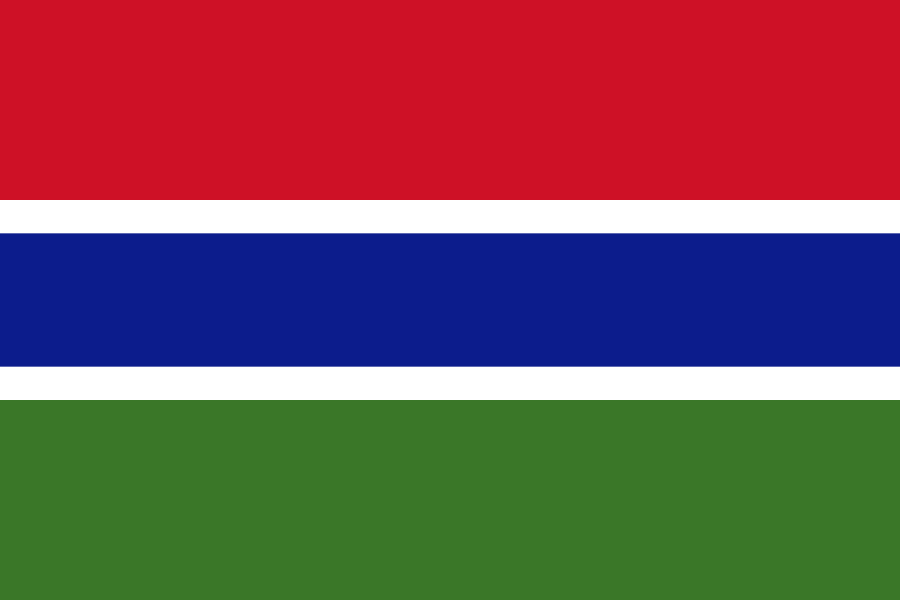
Banjul
Gambian Dalasi (GMD)
English
NovโMay
GMT (UTC+0)
Welcome to the Gambia, West Africa's smallest mainland country, affectionately known as the "Smiling Coast" for its warm hospitality and sunny beaches. The Gambia River winds through the entire country, offering boat safaris past mangroves, hippos, and abundant birdlife. Banjul, the capital, sits at the river's mouth, with nearby beach resorts offering a relaxed introduction to West African travel. Kunta Kinteh Island, a UNESCO World Heritage Site, holds a poignant history tied to the transatlantic slave trade. Gambian markets buzz with color, music, and the friendly banter that has earned the country its welcoming reputation. Birdwatchers flock to the Gambia for its extraordinary diversity of species found along the river and coastline. The country's compact size makes it easy to explore beaches, wildlife, and culture within a short visit. The Gambia invites travelers to experience genuine West African warmth in an accessible, easygoing setting.

No API URL found for post ID 140492.
Helpful information to consider before and during your visit.
Discover some of Gambia's most popular flavors, traditional dishes and memorable local treats during your visit.
Domoda is a signature Gambia specialty known for its distinctive local ingredients, seasoning and traditional preparation.
This popular Gambia dish brings together familiar regional flavors and is commonly enjoyed in homes, markets or local restaurants.
A well-loved part of Gambia cuisine, Yassa reflects the country's culinary traditions and locally available ingredients.
Superkanja is a comforting regional favorite, prepared in styles that may vary between families, cities and different parts of Gambia.
Visitors often seek out Chereh for an authentic taste of Gambia's everyday cooking and food culture.
This traditional favorite highlights the bold, savory or gently spiced flavors associated with cooking in Gambia.
Oyster Stew is widely recognized in Gambia and is often served at casual meals, celebrations or community gatherings.
A memorable choice for travelers, Fish Balls offers a flavorful introduction to the ingredients and techniques used across Gambia.
This classic food is an important part of Gambia's culinary identity and is best sampled freshly prepared.
The Gambia is Africa's smallest mainland country and is almost entirely surrounded by Senegal, except for its narrow Atlantic coastline. The nation follows the winding path of the Gambia River, which stretches nearly 700 miles from its source in Guinea to the Atlantic Ocean. This great river has shaped the country's history, economy, and wildlife for centuries, serving as a lifeline for transportation, fishing, and agriculture.
Despite its small size, The Gambia is internationally recognized as one of Africa's premier birdwatching destinations, with more than 560 recorded bird species. Wetlands, mangrove forests, woodlands, and coastal habitats attract bird enthusiasts from around the world. The river also supports hippos, crocodiles, monkeys, dolphins, and a rich variety of fish. Historic sites such as Kunta Kinteh Island, a UNESCO World Heritage Site, preserve the memory of the transatlantic slave trade and honor those whose lives were forever changed by it.
Known as "The Smiling Coast of Africa," The Gambia is celebrated for the warmth and hospitality of its people. Traditional music featuring the kora, a beautiful 21-string harp, remains an important part of Gambian culture, while colorful markets offer handcrafted textiles, carvings, and local cuisine. With its peaceful atmosphere, rich history, abundant wildlife, and scenic river landscapes, The Gambia offers a distinctive West African experience.
Another little-known fact is that Albanians have a unique cultural tradition called "Besa," meaning "to keep one's promise." This centuries-old code of honor became internationally recognized during World War II when Albania was one of the few European countries where the Jewish population actually increased because local families risked their lives to shelter refugees. Albania also boasts the stunning Blue Eye (Syri i Kaltรซr), a natural spring with crystal-clear turquoise water whose exact depth remains unknown despite multiple explorations.
Finally, Albania enjoys more than 300 sunny days each year, rivaling many Mediterranean destinations. The country is also famous for its "sworn virgins"โa centuries-old tradition in remote mountain villages where women could legally assume male social roles by taking a lifelong vow of celibacy, preserving family inheritance and leadership in the absence of male heirs.