
Before You Go
- Confirm passport validity and entry requirements.
- Check whether a tourist visa is required.
- Keep digital copies of important documents.
- Consider purchasing travel insurance.
Reykjavík
Icelandic Króna (ISK)
Icelandic
Jun–Aug
GMT (UTC+0)
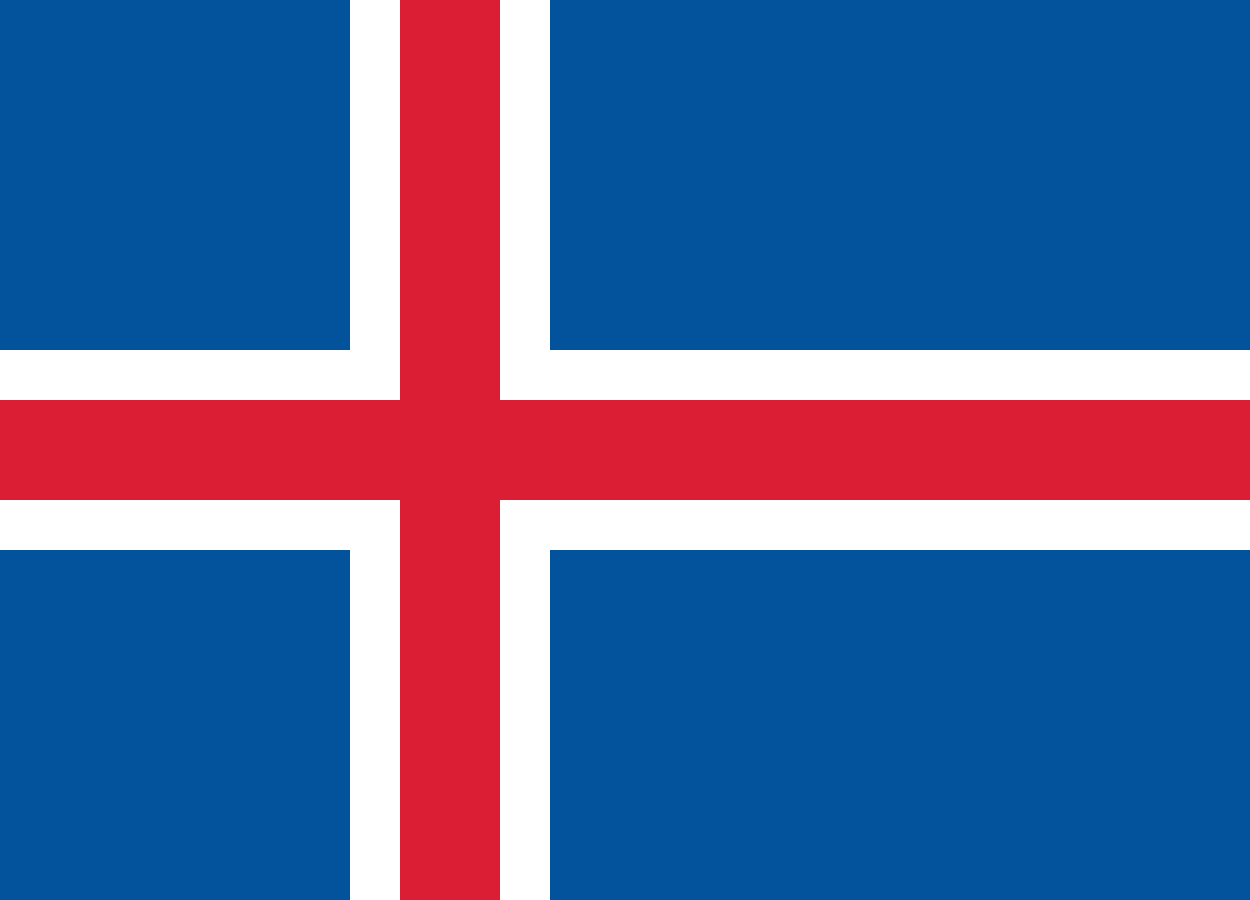
Welcome to Iceland, a dramatic island nation where volcanoes, glaciers, and geothermal wonders create some of the most otherworldly scenery on Earth. The Golden Circle route reveals erupting geysers, thundering waterfalls, and the rift where tectonic plates visibly pull apart. Reykjavik, the world's northernmost capital, offers colorful architecture and a surprisingly vibrant creative and culinary scene. Iceland's glaciers and ice caves create surreal blue landscapes, while black sand beaches contrast dramatically with the surrounding green cliffs. The Blue Lagoon's milky geothermal waters offer a uniquely relaxing experience amid volcanic rock formations. In winter, the northern lights dance across dark skies, drawing travelers from around the world. Summer brings the midnight sun, illuminating waterfalls and highlands nearly around the clock. Iceland invites travelers to explore a raw, elemental landscape found nowhere else on the planet.

No API URL found for post ID 140505.
Helpful information to consider before and during your visit.
Discover some of Iceland's most popular flavors, traditional dishes and memorable local treats during your visit.
Lamb Soup is a signature Iceland specialty known for its distinctive local ingredients, seasoning and traditional preparation.
This popular Iceland dish brings together familiar regional flavors and is commonly enjoyed in homes, markets or local restaurants.
A well-loved part of Iceland cuisine, Hangikjöt reflects the country's culinary traditions and locally available ingredients.
Skyr is a comforting regional favorite, prepared in styles that may vary between families, cities and different parts of Iceland.
Visitors often seek out Pylsur for an authentic taste of Iceland's everyday cooking and food culture.
This traditional favorite highlights the bold, savory or gently spiced flavors associated with cooking in Iceland.
Kleinur is widely recognized in Iceland and is often served at casual meals, celebrations or community gatherings.
A memorable choice for travelers, Harðfiskur offers a flavorful introduction to the ingredients and techniques used across Iceland.
This classic food is an important part of Iceland's culinary identity and is best sampled freshly prepared.
Iceland is often called the "Land of Fire and Ice" because glaciers and volcanoes exist side by side across its dramatic landscapes. The island sits atop the Mid-Atlantic Ridge, where the North American and Eurasian tectonic plates slowly drift apart, creating an extraordinary landscape of volcanoes, lava fields, geysers, waterfalls, glaciers, and geothermal hot springs. Despite its name, much of Iceland enjoys relatively mild winters thanks to the warming influence of the Gulf Stream.
One of Iceland's greatest natural spectacles is the Aurora Borealis, or Northern Lights, which dance across the winter sky in dazzling shades of green, purple, and pink. During summer, much of the country experiences the Midnight Sun, with daylight lasting nearly around the clock. Iceland is also home to Europe's largest glacier, Vatnajökull, which covers active volcanoes hidden beneath its icy surface. Visitors can explore shimmering ice caves, black-sand beaches, towering waterfalls such as Gullfoss and Skógafoss, and erupting geysers that inspired the English word "geyser."
Iceland's small population has fostered a strong sense of community while preserving a rich literary tradition dating back to the medieval Icelandic Sagas. Renewable geothermal and hydroelectric energy supply nearly all of the country's electricity and heating, making Iceland a global leader in sustainable energy. With its otherworldly scenery, abundant wildlife, and remarkable geological wonders, Iceland offers one of the planet's most unforgettable travel experiences.
Another little-known fact is that Albanians have a unique cultural tradition called "Besa," meaning "to keep one's promise." This centuries-old code of honor became internationally recognized during World War II when Albania was one of the few European countries where the Jewish population actually increased because local families risked their lives to shelter refugees. Albania also boasts the stunning Blue Eye (Syri i Kaltër), a natural spring with crystal-clear turquoise water whose exact depth remains unknown despite multiple explorations.
Finally, Albania enjoys more than 300 sunny days each year, rivaling many Mediterranean destinations. The country is also famous for its "sworn virgins"—a centuries-old tradition in remote mountain villages where women could legally assume male social roles by taking a lifelong vow of celibacy, preserving family inheritance and leadership in the absence of male heirs.