
Before You Go
- Confirm passport validity and entry requirements.
- Check whether a tourist visa is required.
- Keep digital copies of important documents.
- Consider purchasing travel insurance.
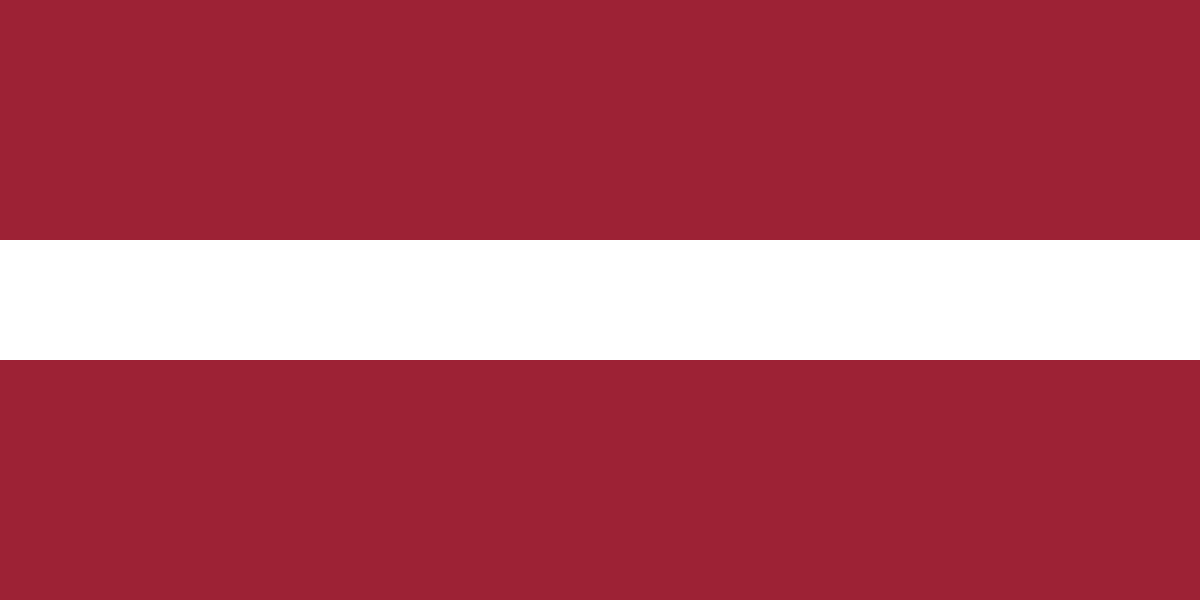
Riga
Euro (EUR)
Latvian
May–Sep
EET (UTC+2) / EEST (UTC+3)
Welcome to Latvia, a Baltic country where a beautifully preserved medieval capital meets vast forests and sandy coastline. Riga's Old Town, a UNESCO World Heritage Site, showcases the largest collection of Art Nouveau architecture in Europe alongside Gothic spires and cobblestone streets. Latvia's coastline along the Baltic Sea offers wide sandy beaches, particularly in the resort town of Jūrmala. Gauja National Park reveals dense forests, sandstone cliffs, and medieval castles along a scenic river valley. Traditional midsummer celebrations, filled with bonfires and folk songs, reflect Latvia's deep connection to nature and seasonal ritual. The country's small size makes it easy to explore charming towns, forests, and coastline within a short trip. Latvian amber, harvested along the Baltic shore, has been treasured and traded for thousands of years. Latvia invites travelers to discover a quiet Baltic gem rich in architecture and natural beauty.

No API URL found for post ID 140524.
Helpful information to consider before and during your visit.
Discover some of Latvia's most popular flavors, traditional dishes and memorable local treats during your visit.
Grey Peas with Bacon is a signature Latvia specialty known for its distinctive local ingredients, seasoning and traditional preparation.
This popular Latvia dish brings together familiar regional flavors and is commonly enjoyed in homes, markets or local restaurants.
A well-loved part of Latvia cuisine, Rupjmaize reflects the country's culinary traditions and locally available ingredients.
Piragi is a comforting regional favorite, prepared in styles that may vary between families, cities and different parts of Latvia.
Visitors often seek out Cold Beet Soup for an authentic taste of Latvia's everyday cooking and food culture.
This traditional favorite highlights the bold, savory or gently spiced flavors associated with cooking in Latvia.
Smoked Fish is widely recognized in Latvia and is often served at casual meals, celebrations or community gatherings.
A memorable choice for travelers, Debesmanna offers a flavorful introduction to the ingredients and techniques used across Latvia.
This classic food is an important part of Latvia's culinary identity and is best sampled freshly prepared.
Latvia is one of the Baltic nations and is known for its vast forests, pristine lakes, sandy beaches, and charming medieval towns. More than half of the country is covered by forests, providing habitat for elk, lynx, wolves, beavers, and countless bird species. Latvia's coastline stretches for nearly 310 miles along the Baltic Sea, where wide beaches and rolling sand dunes create some of Northern Europe's most peaceful coastal scenery.
The capital city of Riga is celebrated for its remarkably preserved Old Town and one of the world's finest collections of Art Nouveau architecture, earning UNESCO World Heritage status. Cobblestone streets, medieval churches, historic guild halls, and elegant buildings reflect centuries of Hanseatic trading history. Latvia is also home to Gauja National Park, often called the "Switzerland of Latvia," where sandstone cliffs, caves, castles, and forests surround the winding Gauja River.
Latvian traditions remain deeply connected to nature and folklore. The country's famous Song and Dance Festival, held every five years, brings together tens of thousands of performers in one of the world's largest choral celebrations and has been recognized by UNESCO as part of humanity's intangible cultural heritage. With its rich history, beautiful landscapes, and vibrant cultural traditions, Latvia offers visitors an authentic glimpse into the heart of the Baltic region.
Another little-known fact is that Albanians have a unique cultural tradition called "Besa," meaning "to keep one's promise." This centuries-old code of honor became internationally recognized during World War II when Albania was one of the few European countries where the Jewish population actually increased because local families risked their lives to shelter refugees. Albania also boasts the stunning Blue Eye (Syri i Kaltër), a natural spring with crystal-clear turquoise water whose exact depth remains unknown despite multiple explorations.
Finally, Albania enjoys more than 300 sunny days each year, rivaling many Mediterranean destinations. The country is also famous for its "sworn virgins"—a centuries-old tradition in remote mountain villages where women could legally assume male social roles by taking a lifelong vow of celibacy, preserving family inheritance and leadership in the absence of male heirs.