
Before You Go
- Confirm passport validity and entry requirements.
- Check whether a tourist visa is required.
- Keep digital copies of important documents.
- Consider purchasing travel insurance.
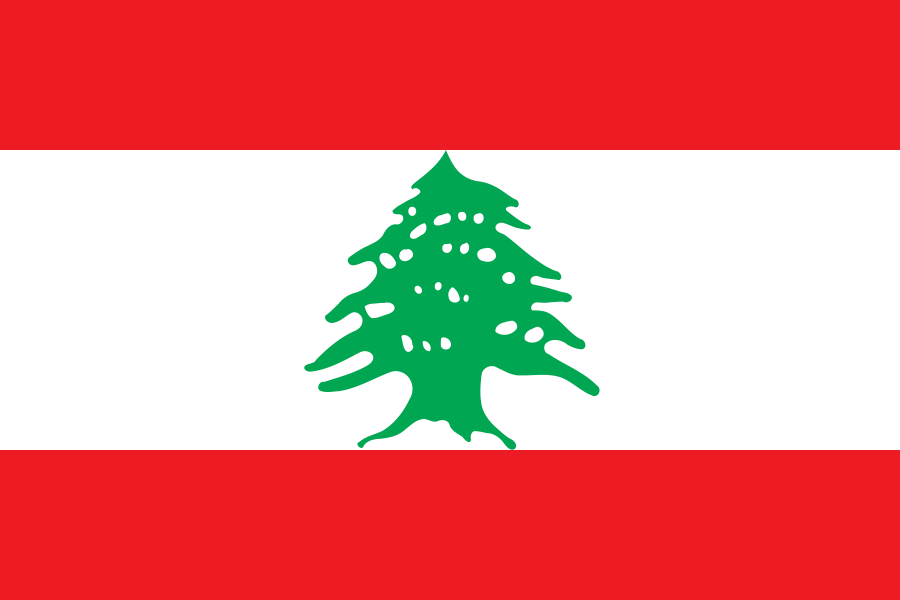
Beirut
Lebanese Pound (LBP)
Arabic
Apr–Jun and Sep–Oct
EET (UTC+2) / EEST (UTC+3)
Welcome to Lebanon, a small Mediterranean country where ancient Phoenician ruins meet vibrant modern culture and renowned cuisine. Beirut, the capital, blends French colonial charm with a resilient, lively energy reflected in its nightlife and dining scene. The Roman ruins of Baalbek, among the best preserved in the world, showcase colossal temple columns rising dramatically from the Bekaa Valley. Lebanon's mountains offer skiing in winter and hiking through cedar forests in summer, a striking contrast to its Mediterranean coast. The ancient cedar trees of Lebanon, a national symbol, have been treasured since biblical times. Byblos, one of the oldest continuously inhabited cities on Earth, reveals layers of Phoenician, Roman, and Crusader history. Lebanese cuisine, rich in mezze and fresh ingredients, reflects a proud culinary tradition celebrated throughout the region. Lebanon invites travelers to discover a small country of extraordinary history, flavor, and resilience.

No API URL found for post ID 140525.
Helpful information to consider before and during your visit.
Discover some of Lebanon's most popular flavors, traditional dishes and memorable local treats during your visit.
Kibbeh is a signature Lebanon specialty known for its distinctive local ingredients, seasoning and traditional preparation.
This popular Lebanon dish brings together familiar regional flavors and is commonly enjoyed in homes, markets or local restaurants.
A well-loved part of Lebanon cuisine, Fattoush reflects the country's culinary traditions and locally available ingredients.
Manakish is a comforting regional favorite, prepared in styles that may vary between families, cities and different parts of Lebanon.
Visitors often seek out Shawarma for an authentic taste of Lebanon's everyday cooking and food culture.
This traditional favorite highlights the bold, savory or gently spiced flavors associated with cooking in Lebanon.
Warak Enab is widely recognized in Lebanon and is often served at casual meals, celebrations or community gatherings.
A memorable choice for travelers, Knafeh offers a flavorful introduction to the ingredients and techniques used across Lebanon.
This classic food is an important part of Lebanon's culinary identity and is best sampled freshly prepared.
Lebanon is a country where ancient history, Mediterranean beauty, and towering mountains come together in an area smaller than many U.S. states. Nestled along the eastern Mediterranean coast, Lebanon has served as a crossroads of civilizations for thousands of years, with influences from the Phoenicians, Romans, Ottomans, and many others still visible today. Despite its compact size, the country offers remarkable geographic diversity, from sandy beaches and fertile valleys to cedar-covered mountains that receive enough winter snowfall to support ski resorts.
One of Lebanon's most treasured natural symbols is the Cedars of God, a UNESCO World Heritage Site preserving some of the last remaining groves of the legendary cedar trees that were prized by ancient civilizations for shipbuilding and monumental construction. The ancient city of Byblos, considered one of the world's oldest continuously inhabited cities, has welcomed people for more than 7,000 years. Visitors can also explore the magnificent Roman temples of Baalbek, among the largest and best-preserved Roman ruins anywhere in the world, featuring towering columns that continue to impress archaeologists and travelers alike.
Lebanon is renowned for its rich culinary traditions, including hummus, tabbouleh, kibbeh, and freshly baked flatbreads that have become favorites around the world. Its vibrant culture blends Middle Eastern hospitality with Mediterranean charm, reflected in lively festivals, music, art, and café culture. From ancient archaeological treasures and picturesque mountain villages to bustling coastal cities, Lebanon offers an extraordinary combination of history, natural beauty, and cultural richness that has captivated visitors for generations.
Another little-known fact is that Albanians have a unique cultural tradition called "Besa," meaning "to keep one's promise." This centuries-old code of honor became internationally recognized during World War II when Albania was one of the few European countries where the Jewish population actually increased because local families risked their lives to shelter refugees. Albania also boasts the stunning Blue Eye (Syri i Kaltër), a natural spring with crystal-clear turquoise water whose exact depth remains unknown despite multiple explorations.
Finally, Albania enjoys more than 300 sunny days each year, rivaling many Mediterranean destinations. The country is also famous for its "sworn virgins"—a centuries-old tradition in remote mountain villages where women could legally assume male social roles by taking a lifelong vow of celibacy, preserving family inheritance and leadership in the absence of male heirs.