
Before You Go
- Confirm passport validity and entry requirements.
- Check whether a tourist visa is required.
- Keep digital copies of important documents.
- Consider purchasing travel insurance.
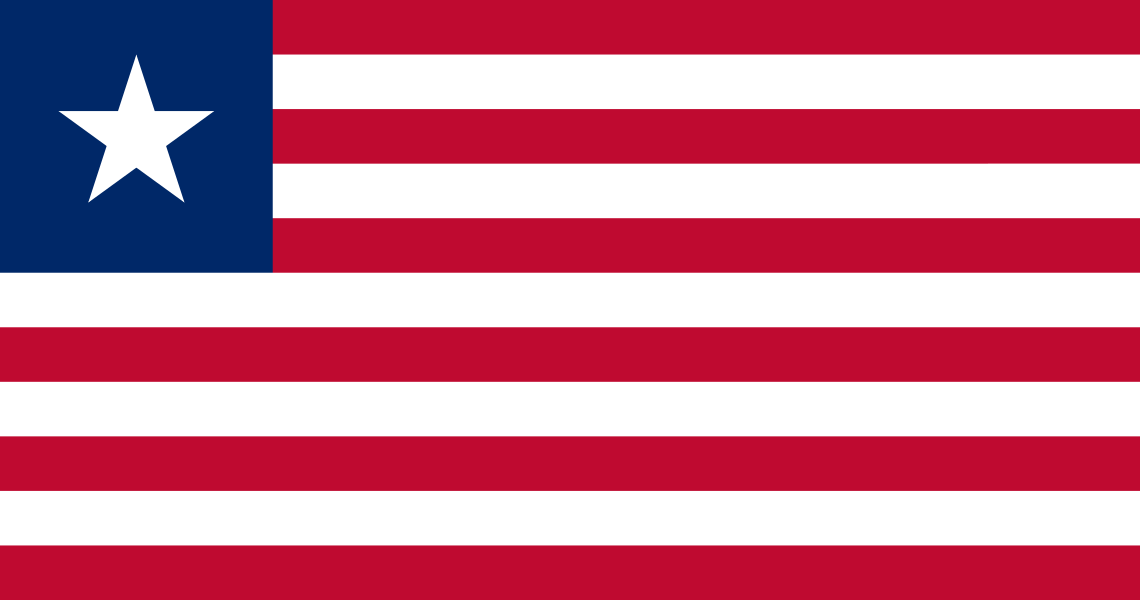
Monrovia
Liberian Dollar (LRD)
English
NovโApr
GMT (UTC+0)
Welcome to Liberia, a West African country founded by freed American slaves, where sandy Atlantic beaches meet dense tropical rainforest. Monrovia, the capital, reflects a unique blend of American and West African influences in its architecture and culture. Liberia's Sapo National Park protects one of the largest remaining stretches of Upper Guinean rainforest, home to forest elephants and pygmy hippos. The country's coastline offers relatively undiscovered surf breaks and quiet beaches along the Atlantic. Traditional secret societies and masked ceremonies remain an important part of cultural life in rural communities. Liberia's resilience, rebuilding after years of civil conflict, is reflected in the warmth and optimism of its people. Robertsport has become a growing destination for surfers seeking uncrowded waves and laid-back coastal life. Liberia invites adventurous travelers to discover a country of natural beauty and remarkable resilience.

No API URL found for post ID 140527.
Helpful information to consider before and during your visit.
Discover some of Liberia's most popular flavors, traditional dishes and memorable local treats during your visit.
Palm Butter is a signature Liberia specialty known for its distinctive local ingredients, seasoning and traditional preparation.
This popular Liberia dish brings together familiar regional flavors and is commonly enjoyed in homes, markets or local restaurants.
A well-loved part of Liberia cuisine, Cassava Leaf Stew reflects the country's culinary traditions and locally available ingredients.
Dumboy is a comforting regional favorite, prepared in styles that may vary between families, cities and different parts of Liberia.
Visitors often seek out Check Rice for an authentic taste of Liberia's everyday cooking and food culture.
This traditional favorite highlights the bold, savory or gently spiced flavors associated with cooking in Liberia.
Fufu is widely recognized in Liberia and is often served at casual meals, celebrations or community gatherings.
A memorable choice for travelers, Kala offers a flavorful introduction to the ingredients and techniques used across Liberia.
This classic food is an important part of Liberia's culinary identity and is best sampled freshly prepared.
Liberia is a West African nation with a fascinating history and an abundance of natural beauty. Founded in the early 1800s as a homeland for formerly enslaved African Americans, Liberia became Africa's first modern republic in 1847. The country's Atlantic coastline stretches for more than 350 miles and is lined with beautiful beaches, lagoons, mangrove forests, and fishing villages, while its interior contains dense tropical rainforests rich in biodiversity.
Liberia protects one of the largest remaining portions of the Upper Guinean Forest, one of the world's most important biodiversity hotspots. Sapo National Park, the country's largest protected area, provides sanctuary for pygmy hippos, forest elephants, chimpanzees, leopards, and hundreds of bird species. The country's rivers and waterfalls wind through lush forests, creating scenic landscapes that remain largely untouched by mass tourism and offer exceptional opportunities for ecotourism and wildlife observation.
Liberian culture reflects a vibrant blend of Indigenous traditions and African American heritage. Music, storytelling, colorful festivals, and handcrafted artwork continue to play important roles in community life. Traditional cuisine features rice, cassava, seafood, and flavorful stews prepared with locally grown ingredients. With its unique historical background, expansive rainforests, and warm coastal atmosphere, Liberia remains one of West Africa's most intriguing destinations.
Another little-known fact is that Albanians have a unique cultural tradition called "Besa," meaning "to keep one's promise." This centuries-old code of honor became internationally recognized during World War II when Albania was one of the few European countries where the Jewish population actually increased because local families risked their lives to shelter refugees. Albania also boasts the stunning Blue Eye (Syri i Kaltรซr), a natural spring with crystal-clear turquoise water whose exact depth remains unknown despite multiple explorations.
Finally, Albania enjoys more than 300 sunny days each year, rivaling many Mediterranean destinations. The country is also famous for its "sworn virgins"โa centuries-old tradition in remote mountain villages where women could legally assume male social roles by taking a lifelong vow of celibacy, preserving family inheritance and leadership in the absence of male heirs.