
Before You Go
- Confirm passport validity and entry requirements.
- Check whether a tourist visa is required.
- Keep digital copies of important documents.
- Consider purchasing travel insurance.
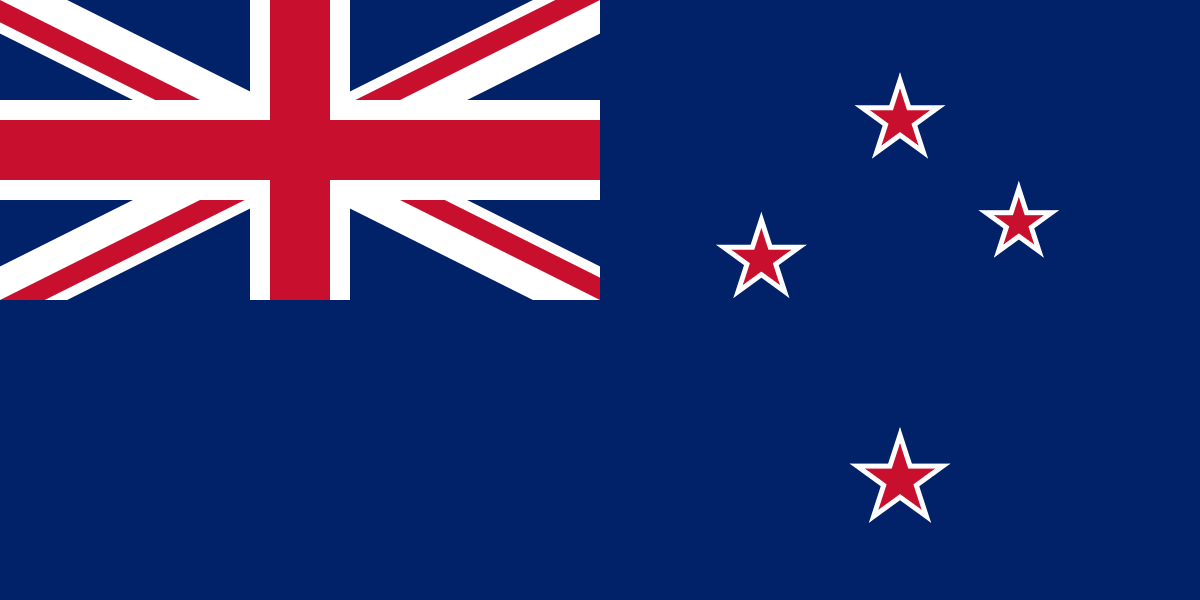
Wellington
New Zealand Dollar (NZD)
English, Māori
Dec–Mar
NZST (UTC+12) / NZDT (UTC+13)
Welcome to New Zealand, a country of extraordinary natural diversity, from snow-capped mountains to lush rainforest to dramatic coastlines. The North Island's geothermal wonders, including bubbling mud pools and geysers, reflect the country's active volcanic landscape. Fiordland's Milford Sound, with its towering cliffs and cascading waterfalls, ranks among the most stunning natural sights on Earth. Queenstown, the adventure capital, offers bungee jumping, skiing, and jet boating amid breathtaking alpine scenery. Māori culture remains deeply woven throughout New Zealand, reflected in traditional carvings, haka performances, and place names. The country's dramatic landscapes famously served as the backdrop for the Lord of the Rings films. Rotorua's geothermal parks and Māori cultural centers offer a fascinating blend of nature and heritage. New Zealand invites travelers to explore a land of adventure, natural beauty, and rich indigenous culture.

No API URL found for post ID 140554.
Helpful information to consider before and during your visit.
Discover some of New Zealand's most popular flavors, traditional dishes and memorable local treats during your visit.
Hāngi is a signature New Zealand specialty known for its distinctive local ingredients, seasoning and traditional preparation.
This popular New Zealand dish brings together familiar regional flavors and is commonly enjoyed in homes, markets or local restaurants.
A well-loved part of New Zealand cuisine, Green-Lipped Mussels reflects the country's culinary traditions and locally available ingredients.
Whitebait Fritters is a comforting regional favorite, prepared in styles that may vary between families, cities and different parts of New Zealand.
Visitors often seek out Lamb Roast for an authentic taste of New Zealand's everyday cooking and food culture.
This traditional favorite highlights the bold, savory or gently spiced flavors associated with cooking in New Zealand.
Rewena Bread is widely recognized in New Zealand and is often served at casual meals, celebrations or community gatherings.
A memorable choice for travelers, Pavlova offers a flavorful introduction to the ingredients and techniques used across New Zealand.
This classic food is an important part of New Zealand's culinary identity and is best sampled freshly prepared.
New Zealand was one of the last major landmasses on Earth to be settled by humans, with Polynesian voyagers, the ancestors of the Māori, arriving only around 1250 to 1300 CE, making its human history remarkably recent compared to most of the world. Before human arrival, New Zealand had no native land mammals at all besides a few bat species, allowing birds to fill ecological niches typically occupied by mammals elsewhere, which is why the country became home to giant flightless birds like the now-extinct moa and the endangered kiwi.
New Zealand was also the first country in the world to grant women the right to vote in national elections, doing so in 1893, decades ahead of most of the Western world. The country sits directly along the Pacific Ring of Fire and experiences tens of thousands of earthquakes every year, though only a small fraction are strong enough to be felt.
New Zealand's isolation has made it a favored filming location for large-scale fantasy productions, and it has leaned into this identity so thoroughly that the country's tourism board has built entire campaigns around its dramatic, otherworldly landscapes.
Another little-known fact is that Albanians have a unique cultural tradition called "Besa," meaning "to keep one's promise." This centuries-old code of honor became internationally recognized during World War II when Albania was one of the few European countries where the Jewish population actually increased because local families risked their lives to shelter refugees. Albania also boasts the stunning Blue Eye (Syri i Kaltër), a natural spring with crystal-clear turquoise water whose exact depth remains unknown despite multiple explorations.
Finally, Albania enjoys more than 300 sunny days each year, rivaling many Mediterranean destinations. The country is also famous for its "sworn virgins"—a centuries-old tradition in remote mountain villages where women could legally assume male social roles by taking a lifelong vow of celibacy, preserving family inheritance and leadership in the absence of male heirs.