Blahface.com Uniting People Online

Home Advertise Contact Terms

Capital

Muscat

Currency

Omani Rial (OMR)

Language

Arabic

Best Time

Octโ€“Apr

Time Zone

GST (UTC+4)

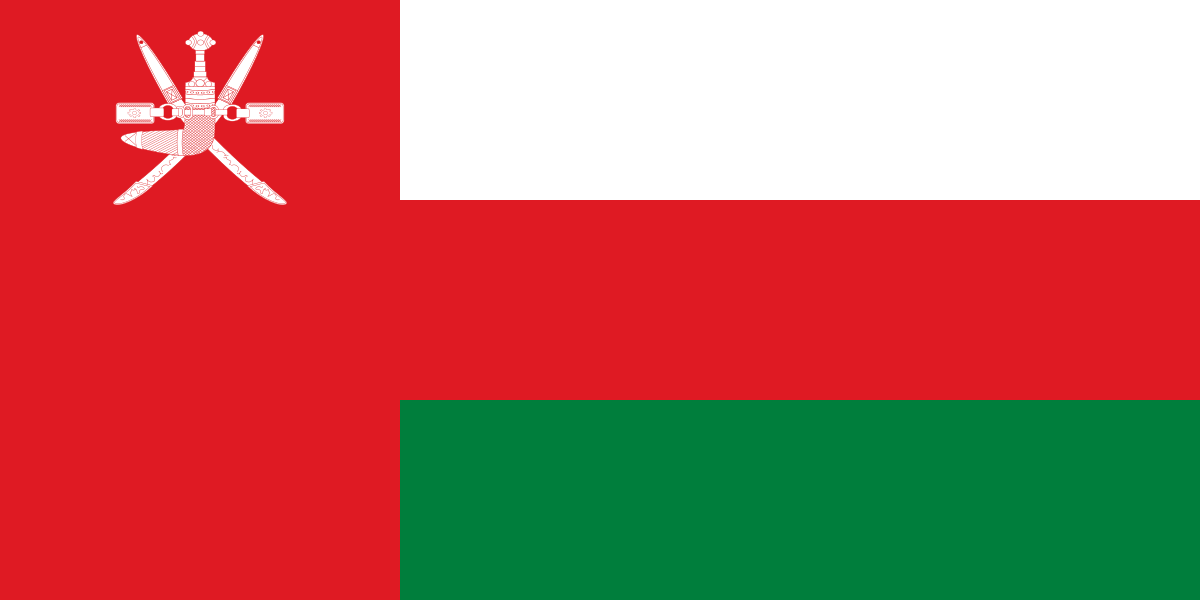
Flag of Oman
Welcome to Oman

Oman's Desert Forts and Turquoise Coast

Welcome to Oman, a Gulf nation where rugged mountains, vast deserts, and a stunning coastline create a strikingly diverse landscape. Muscat, the capital, showcases whitewashed architecture, grand mosques, and a relaxed harbor atmosphere along the Arabian Sea. The Wahiba Sands offer dramatic dunes perfect for camping beneath star-filled skies and exploring by camel or 4x4. Oman's rugged Hajar Mountains reveal dramatic canyons, terraced villages, and cooler highland air. Ancient forts scattered across the country, including Nizwa and Bahla, reflect centuries of trade and tribal history. The turquoise waters of Musandam offer dramatic fjord-like scenery and excellent snorkeling. Omani hospitality, rooted in Bedouin tradition, welcomes visitors with genuine warmth and fragrant frankincense. Oman invites travelers to discover a beautifully preserved and welcoming corner of Arabia.

Popular City

Muscat

Muscat’s Sultan Qaboos Grand Mosque, with its enormous hand-woven Persian carpet and Swarovski crystal chandelier, is among the most architecturally impressive mosques in the Gulf and welcomes non-Muslim visitors during set hours. The Mutrah Corniche and its covered souk offer frankincense, silver, and spices along a scenic harbor walk. Al Alam Palace, the ceremonial residence of the Sultan, sits flanked by twin Portuguese-built forts guarding the harbor entrance. The Royal Opera House Muscat, a striking addition to the city’s skyline, hosts performances in a setting that blends traditional Omani design with modern acoustics. Muscat’s setting between rugged mountains and the Gulf of Oman gives the city a dramatic natural backdrop unlike other Gulf capitals. Its relatively low-key development has preserved a traditional character increasingly rare in the region.

Travel News

No API URL found for post ID 140560.

Popular City

Nizwa

Nizwa, once Oman’s capital, is centered on its massive round fort, one of the best-preserved in the country, with a maze of defensive passages and a rooftop offering views over the surrounding oasis. The city’s Friday goat market remains a vivid, traditional scene of trade and negotiation. Nizwa Souq sells Omani silver jewelry, khanjar daggers, and dates grown in the extensive palm groves that ring the city. The nearby Jabal Akhdar mountains, known as the Green Mountain, offer terraced rose and fruit orchards and cooler air than the coastal plains. Nizwa’s role as a historic center of Islamic learning and trade gives it a cultural depth distinct from the modern capital. It remains one of the best places in Oman to see traditional Omani fort architecture and craft.

Travel Tips

Helpful information to consider before and during your visit.

Before You Go

  • Confirm passport validity and entry requirements.
  • Check whether a tourist visa is required.
  • Keep digital copies of important documents.
  • Consider purchasing travel insurance.

Money & Payments

  • Review the local currency and exchange rate.
  • Carry some cash for small businesses and markets.
  • Check for international bank transaction fees.
  • Learn the country's customary tipping practices.

Stay Connected

  • Review your mobile carrier's international plan.
  • Consider purchasing a local SIM or eSIM.
  • Download maps for offline use before traveling.
  • Avoid sensitive transactions on unsecured Wi-Fi.

Transportation

  • Research public transportation before arrival.
  • Use licensed taxis or reputable rideshare services.
  • Check which side of the road vehicles use.
  • Confirm whether an international permit is needed.

Electricity

  • Check the country's voltage and outlet type.
  • Bring the correct plug adapter for your devices.
  • Use a voltage converter when required.
  • Pack a portable charger for longer excursions.

Weather & Clothing

  • Review the seasonal weather before packing.
  • Bring layers for changing temperatures.
  • Pack rain protection when appropriate.
  • Use sunscreen even on cool or cloudy days.

Food & Water

  • Research whether tap water is safe to drink.
  • Communicate food allergies clearly.
  • Try traditional dishes from reputable vendors.
  • Observe local dining customs and meal times.

Safety

  • Secure valuables in crowded tourist areas.
  • Avoid displaying large amounts of cash.
  • Share your itinerary with someone you trust.
  • Review current government travel advisories.

Language & Etiquette

  • Learn a few polite words in the local language.
  • Respect dress requirements at religious sites.
  • Ask permission before photographing people.
  • Follow local traditions, laws and social customs.

Emergency Planning

  • Save the country's emergency telephone number.
  • Locate your nearest embassy or consulate.
  • Keep medication in its original packaging.
  • Store emergency contacts offline and on paper.

Smart Packing

  • Pack comfortable shoes for walking and tours.
  • Keep essential medication in your carry-on.
  • Bring a reusable bottle where appropriate.
  • Leave room for locally purchased items.

Local Research

  • Check attraction hours and reservation policies.
  • Review national holidays and local closures.
  • Download important addresses before departure.
  • Leave flexibility for unexpected discoveries.
Important: Entry requirements, transportation rules, weather conditions and safety guidance can change. Verify important information with official sources before traveling.

Popular City

Salalah

Salalah, in Oman’s far south, transforms during the annual khareef monsoon season into a lush, misty landscape of waterfalls and green hills unlike anywhere else in the Arabian Peninsula. Al Husn Souq offers frankincense harvested from trees in the surrounding hills, a trade that has defined the region for millennia. The ruins of Sumhuram, an ancient port once central to the frankincense trade, sit along the coast near Khor Rori, a UNESCO World Heritage site. Salalah’s beaches, backed by coconut palms rather than desert, give the city a tropical character distinct from the rest of Oman. Nearby wadis and waterfalls, especially active during the monsoon months, draw visitors from across the Gulf seeking cooler, greener scenery. Salalah’s frankincense heritage and monsoon-fed landscape make it one of the Arabian Peninsula’s most unusual destinations.

Local Food to Try

Discover some of Oman's most popular flavors, traditional dishes and memorable local treats during your visit.

Shuwa

Shuwa is a signature Oman specialty known for its distinctive local ingredients, seasoning and traditional preparation.

Majboos

This popular Oman dish brings together familiar regional flavors and is commonly enjoyed in homes, markets or local restaurants.

Mashuai

A well-loved part of Oman cuisine, Mashuai reflects the country's culinary traditions and locally available ingredients.

Harees

Harees is a comforting regional favorite, prepared in styles that may vary between families, cities and different parts of Oman.

Mishkak

Visitors often seek out Mishkak for an authentic taste of Oman's everyday cooking and food culture.

Arsia

This traditional favorite highlights the bold, savory or gently spiced flavors associated with cooking in Oman.

Madrouba

Madrouba is widely recognized in Oman and is often served at casual meals, celebrations or community gatherings.

Halwa Omani

A memorable choice for travelers, Halwa Omani offers a flavorful introduction to the ingredients and techniques used across Oman.

Khubz Ragag

This classic food is an important part of Oman's culinary identity and is best sampled freshly prepared.

Dining tip: Regional specialties and preparation styles vary throughout Oman. Explore local markets, independent cafรฉs and family-owned restaurants for an authentic taste of the destination.

Little-Known Facts

Oman

Oman is one of the oldest independent states in the Arab world, with the Al Said dynasty ruling continuously since 1744, and it once controlled a maritime empire that stretched across parts of East Africa, including the island of Zanzibar, which Oman ruled until the 19th century. The country is home to Jebel Shams, its highest peak, and a canyon so dramatic it's nicknamed the "Grand Canyon of Arabia."

Oman is also one of the few places in the world where frankincense trees grow wild, and the aromatic resin harvested from them was one of the most valuable trade commodities in the ancient world, so prized that frankincense from Oman's Dhofar region was transported along incense routes stretching all the way to the Mediterranean and beyond. The country's capital, Muscat, has strict architectural regulations requiring most buildings to be painted white or in muted earth tones and to incorporate traditional Islamic design elements, giving the city a notably uniform and elegant appearance compared to some of its flashier Gulf neighbors.

Oman also has a unique geographic exclave called Musandam, separated from the rest of the country by the United Arab Emirates, which overlooks the strategically vital Strait of Hormuz, through which a significant share of the world's oil shipments pass.
Another little-known fact is that Albanians have a unique cultural tradition called "Besa," meaning "to keep one's promise." This centuries-old code of honor became internationally recognized during World War II when Albania was one of the few European countries where the Jewish population actually increased because local families risked their lives to shelter refugees. Albania also boasts the stunning Blue Eye (Syri i Kaltรซr), a natural spring with crystal-clear turquoise water whose exact depth remains unknown despite multiple explorations.

Finally, Albania enjoys more than 300 sunny days each year, rivaling many Mediterranean destinations. The country is also famous for its "sworn virgins"โ€”a centuries-old tradition in remote mountain villages where women could legally assume male social roles by taking a lifelong vow of celibacy, preserving family inheritance and leadership in the absence of male heirs.