
Before You Go
- Confirm passport validity and entry requirements.
- Check whether a tourist visa is required.
- Keep digital copies of important documents.
- Consider purchasing travel insurance.
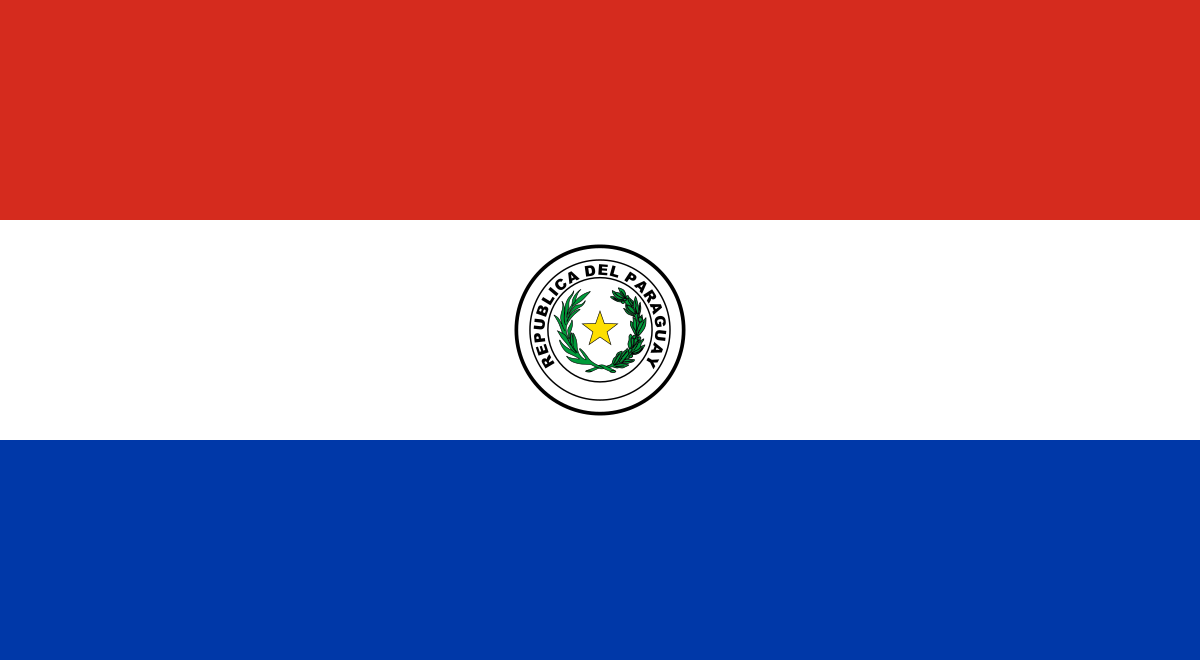
Asunción
Paraguayan Guaraní (PYG)
Spanish, Guaraní
May–Sep
PYT (UTC−4)
Welcome to Paraguay, a landlocked South American country where wide rivers, wetlands, and Jesuit ruins reveal a rich, understated history. Asunción, the capital, offers a relaxed introduction to Paraguayan culture along the banks of the Paraguay River. The Jesuit Missions of La Santísima Trinidad, a UNESCO World Heritage Site, reveal remarkably preserved colonial religious architecture. The Pantanal and Paraguayan Chaco offer vast wetlands and dry forest teeming with wildlife, including jaguars and giant anteaters. Paraguay's guaraní culture and language remain deeply woven into daily life, distinguishing it from its South American neighbors. Traditional ñandutí lace-making showcases intricate craftsmanship passed down through generations. The country's slower pace and lesser-visited status offer an authentic, uncrowded South American experience. Paraguay invites travelers to discover a quietly rich country full of history and natural beauty.

No API URL found for post ID 140566.
Helpful information to consider before and during your visit.
Discover some of Paraguay's most popular flavors, traditional dishes and memorable local treats during your visit.
Sopa Paraguaya is a signature Paraguay specialty known for its distinctive local ingredients, seasoning and traditional preparation.
This popular Paraguay dish brings together familiar regional flavors and is commonly enjoyed in homes, markets or local restaurants.
A well-loved part of Paraguay cuisine, Mbejú reflects the country's culinary traditions and locally available ingredients.
Bori Bori is a comforting regional favorite, prepared in styles that may vary between families, cities and different parts of Paraguay.
Visitors often seek out Vori Vori for an authentic taste of Paraguay's everyday cooking and food culture.
This traditional favorite highlights the bold, savory or gently spiced flavors associated with cooking in Paraguay.
Pira Caldo is widely recognized in Paraguay and is often served at casual meals, celebrations or community gatherings.
A memorable choice for travelers, Payagua Mascada offers a flavorful introduction to the ingredients and techniques used across Paraguay.
This classic food is an important part of Paraguay's culinary identity and is best sampled freshly prepared.
Peru is home to Machu Picchu, the 15th-century Inca citadel perched high in the Andes that remained unknown to the outside world until its rediscovery in 1911, despite being located just miles from Cusco, the former Inca capital. The country is also home to the Nazca Lines, enormous geoglyphs etched into the desert floor that depict animals and shapes so large they can only be fully appreciated from the air, and their exact purpose remains a subject of ongoing archaeological debate.
Peru is considered one of the birthplaces of the potato, with thousands of distinct potato varieties still cultivated in the Andean highlands today, far more than are commonly found anywhere else in the world. The country is also home to Lake Titicaca, the highest navigable lake in the world, shared with Bolivia, where the Uros people live on artificial floating islands constructed entirely from reeds, a practice that has continued for centuries.
Peru's coastline contains some of the driest deserts on Earth, yet the country simultaneously holds a significant share of the Amazon rainforest within its borders, giving it an extraordinarily diverse range of ecosystems packed within a single nation.
Another little-known fact is that Albanians have a unique cultural tradition called "Besa," meaning "to keep one's promise." This centuries-old code of honor became internationally recognized during World War II when Albania was one of the few European countries where the Jewish population actually increased because local families risked their lives to shelter refugees. Albania also boasts the stunning Blue Eye (Syri i Kaltër), a natural spring with crystal-clear turquoise water whose exact depth remains unknown despite multiple explorations.
Finally, Albania enjoys more than 300 sunny days each year, rivaling many Mediterranean destinations. The country is also famous for its "sworn virgins"—a centuries-old tradition in remote mountain villages where women could legally assume male social roles by taking a lifelong vow of celibacy, preserving family inheritance and leadership in the absence of male heirs.