
Before You Go
- Confirm passport validity and entry requirements.
- Check whether a tourist visa is required.
- Keep digital copies of important documents.
- Consider purchasing travel insurance.
São Tomé
Dobra (STN)
Portuguese
Jun–Sep
GMT (UTC+0)
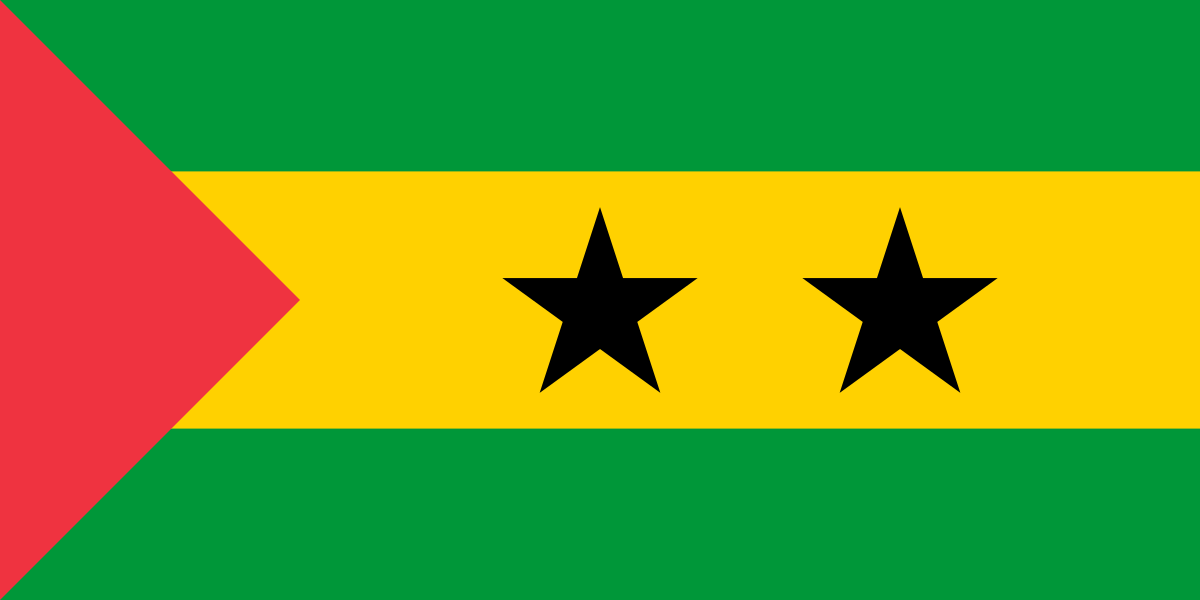
Welcome to São Tomé and Príncipe, a small volcanic island nation off the coast of Central Africa, cloaked in lush rainforest. Cocoa and coffee plantations, remnants of colonial history, now offer scenic tours amid the islands' fertile volcanic soil. São Tomé, the capital, blends Portuguese colonial architecture with a relaxed equatorial atmosphere. The islands' dramatic volcanic peaks rise directly from the sea, creating striking, jungle-covered landscapes. Pristine beaches and coral reefs surround the islands, offering excellent snorkeling largely undiscovered by tourism. Príncipe, the quieter of the two main islands, offers an even more remote and unspoiled escape. Sea turtles nest along the islands' beaches, adding to the destination's rich natural biodiversity. São Tomé and Príncipe invites travelers to discover a hidden, lush island paradise in the Gulf of Guinea.

No API URL found for post ID 140580.
Helpful information to consider before and during your visit.
Discover some of São Tomé and Príncipe's most popular flavors, traditional dishes and memorable local treats during your visit.
Calulu is a signature Sao Tome and Principe specialty known for its distinctive local ingredients, seasoning and traditional preparation.
This popular Sao Tome and Principe dish brings together familiar regional flavors and is commonly enjoyed in homes, markets or local restaurants.
A well-loved part of Sao Tome and Principe cuisine, Fish Feijoada reflects the country's culinary traditions and locally available ingredients.
Molho no Fogo is a comforting regional favorite, prepared in styles that may vary between families, cities and different parts of Sao Tome and Principe.
Visitors often seek out Matabala for an authentic taste of Sao Tome and Principe's everyday cooking and food culture.
This traditional favorite highlights the bold, savory or gently spiced flavors associated with cooking in Sao Tome and Principe.
Coconut Rice is widely recognized in Sao Tome and Principe and is often served at casual meals, celebrations or community gatherings.
A memorable choice for travelers, Bolo de Banana offers a flavorful introduction to the ingredients and techniques used across Sao Tome and Principe.
This classic food is an important part of Sao Tome and Principe's culinary identity and is best sampled freshly prepared.
Saudi Arabia is home to Mecca and Medina, the two holiest cities in Islam, and millions of Muslims travel to Mecca each year to perform the Hajj pilgrimage, one of the largest annual gatherings of people anywhere in the world. The country contains the Rub' al Khali, or "Empty Quarter," the largest continuous sand desert on Earth, an area so vast and inhospitable that large parts of it remain scarcely explored even today.
Saudi Arabia holds some of the largest proven oil reserves in the world and has historically been the largest oil exporter globally, a resource that transformed the country from a largely nomadic desert society into one of the world's wealthiest nations within a matter of decades. The country has undertaken sweeping social changes in recent years, including allowing women to drive starting in 2018 and opening up to international tourism for the first time in its history, reversing decades of restrictions on foreign visitors unrelated to religious pilgrimage.
Saudi Arabia is also home to Mada'in Salih, an archaeological site of monumental tombs carved into rock by the ancient Nabataeans, the same civilization responsible for Petra in Jordan, making it one of the most significant pre-Islamic archaeological sites in the Arabian Peninsula.
Another little-known fact is that Albanians have a unique cultural tradition called "Besa," meaning "to keep one's promise." This centuries-old code of honor became internationally recognized during World War II when Albania was one of the few European countries where the Jewish population actually increased because local families risked their lives to shelter refugees. Albania also boasts the stunning Blue Eye (Syri i Kaltër), a natural spring with crystal-clear turquoise water whose exact depth remains unknown despite multiple explorations.
Finally, Albania enjoys more than 300 sunny days each year, rivaling many Mediterranean destinations. The country is also famous for its "sworn virgins"—a centuries-old tradition in remote mountain villages where women could legally assume male social roles by taking a lifelong vow of celibacy, preserving family inheritance and leadership in the absence of male heirs.