Blahface.com Uniting People Online

Home Advertise Contact Terms

Capital

Lusaka

Currency

Zambian Kwacha (ZMW)

Language

English

Best Time

Mayโ€“Oct

Time Zone

CAT (UTC+2)

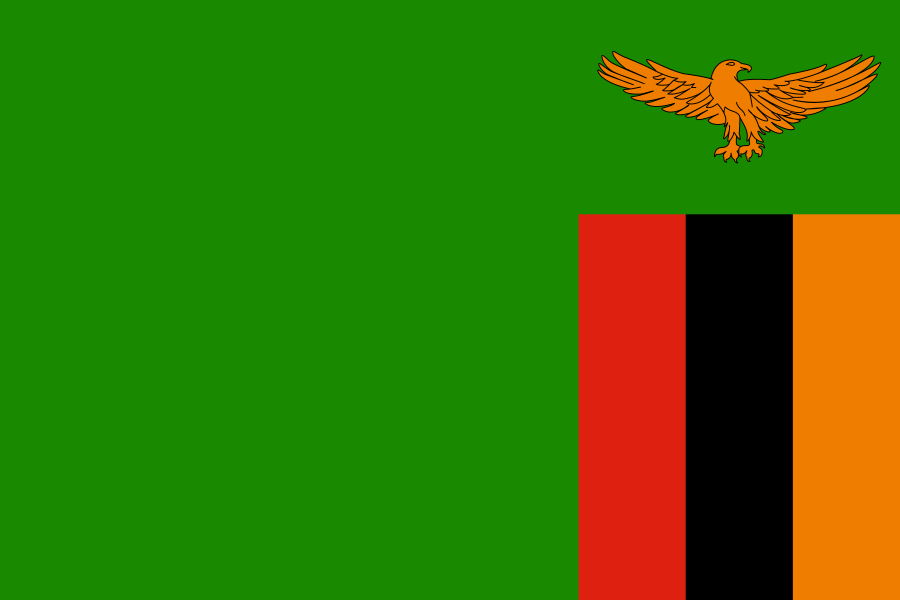
Flag of Zambia
Welcome to Zambia

Zambia's Thundering Falls and Wild Savanna

Welcome to Zambia, a Southern African country home to the thundering Victoria Falls and vast, wildlife-rich savanna. Victoria Falls, known locally as "The Smoke That Thunders," ranks among the most spectacular waterfalls on Earth. South Luangwa National Park offers exceptional walking safaris amid dense wildlife populations along the Luangwa River. Lusaka, the capital, provides a relaxed gateway to the country's renowned national parks and wilderness areas. Zambia's Lower Zambezi National Park offers canoe safaris past elephants and hippos along the scenic river. Traditional villages throughout the country preserve rich customs, music, and craftsmanship. Zambia's commitment to low-impact tourism has helped preserve genuinely wild, uncrowded safari experiences. Zambia invites travelers to experience dramatic waterfalls and authentic African wilderness.
Popular City

Lusaka

Lusaka, Zambia’s capital, offers the Lusaka National Museum, tracing the country’s history from its earliest human settlements through independence from British colonial rule. The city’s markets, including Soweto Market, one of the largest in Southern Africa, offer produce and crafts from across the country. The Moore Pottery Factory and surrounding craft markets showcase Zambian ceramics and traditional carvings. Lusaka’s Kabwata Cultural Village offers a concentrated look at traditional Zambian architecture and craftsmanship within the city itself. Lusaka serves mainly as a practical gateway before heading to Zambia’s famous wildlife parks and waterfalls. Its relaxed pace offers an easy introduction to Zambian city life.

Travel News

No API URL found for post ID 140623.

Popular City

Livingstone

Livingstone serves as the gateway to Victoria Falls, one of the Seven Natural Wonders of the World, where the Zambezi River plunges over a mile-wide precipice in a thunderous curtain of mist visible for miles. The Victoria Falls Bridge, spanning the gorge between Zambia and Zimbabwe, offers bungee jumping with the falls as a dramatic backdrop. The Livingstone Museum, Zambia’s oldest and largest, traces the region’s history including the expeditions of explorer David Livingstone, for whom the town is named. Devil’s Pool, a natural rock pool at the very edge of the falls, allows swimmers to peer over the precipice during the drier months of the year. White-water rafting through the Zambezi’s rapids below the falls ranks among the most thrilling commercially run rafting trips in the world. Livingstone’s access to Victoria Falls makes it one of the premier adventure travel destinations in Southern Africa.

Travel Tips

Helpful information to consider before and during your visit.

Before You Go

  • Confirm passport validity and entry requirements.
  • Check whether a tourist visa is required.
  • Keep digital copies of important documents.
  • Consider purchasing travel insurance.

Money & Payments

  • Review the local currency and exchange rate.
  • Carry some cash for small businesses and markets.
  • Check for international bank transaction fees.
  • Learn the country's customary tipping practices.

Stay Connected

  • Review your mobile carrier's international plan.
  • Consider purchasing a local SIM or eSIM.
  • Download maps for offline use before traveling.
  • Avoid sensitive transactions on unsecured Wi-Fi.

Transportation

  • Research public transportation before arrival.
  • Use licensed taxis or reputable rideshare services.
  • Check which side of the road vehicles use.
  • Confirm whether an international permit is needed.

Electricity

  • Check the country's voltage and outlet type.
  • Bring the correct plug adapter for your devices.
  • Use a voltage converter when required.
  • Pack a portable charger for longer excursions.

Weather & Clothing

  • Review the seasonal weather before packing.
  • Bring layers for changing temperatures.
  • Pack rain protection when appropriate.
  • Use sunscreen even on cool or cloudy days.

Food & Water

  • Research whether tap water is safe to drink.
  • Communicate food allergies clearly.
  • Try traditional dishes from reputable vendors.
  • Observe local dining customs and meal times.

Safety

  • Secure valuables in crowded tourist areas.
  • Avoid displaying large amounts of cash.
  • Share your itinerary with someone you trust.
  • Review current government travel advisories.

Language & Etiquette

  • Learn a few polite words in the local language.
  • Respect dress requirements at religious sites.
  • Ask permission before photographing people.
  • Follow local traditions, laws and social customs.

Emergency Planning

  • Save the country's emergency telephone number.
  • Locate your nearest embassy or consulate.
  • Keep medication in its original packaging.
  • Store emergency contacts offline and on paper.

Smart Packing

  • Pack comfortable shoes for walking and tours.
  • Keep essential medication in your carry-on.
  • Bring a reusable bottle where appropriate.
  • Leave room for locally purchased items.

Local Research

  • Check attraction hours and reservation policies.
  • Review national holidays and local closures.
  • Download important addresses before departure.
  • Leave flexibility for unexpected discoveries.
Important: Entry requirements, transportation rules, weather conditions and safety guidance can change. Verify important information with official sources before traveling.

Popular City

Ndola

Ndola, in Zambia’s Copperbelt region, developed around the country’s mining industry and retains a more industrial character than the capital or the tourist-focused Livingstone. The Copperbelt Museum traces the region’s mining history and its central role in Zambia’s economy since colonial times. Nearby, the Chichele Presidential Lodge and access points to Kasanka National Park offer wildlife viewing away from more crowded safari circuits, including one of the largest mammal migrations in the world when millions of fruit bats arrive each year. Ndola’s parks and gardens offer a green counterpoint to its mining-town origins. The city’s role in Zambia’s copper economy has shaped much of its development and infrastructure. Ndola offers a practical, less-touristed stop for travelers interested in the Copperbelt region’s history and nearby wildlife areas.

Local Food to Try

Discover some of Zambia's most popular flavors, traditional dishes and memorable local treats during your visit.

Nshima

Nshima is a well-known part of Zambia's cuisine and offers visitors a flavorful introduction to the country's food traditions.

Ifisashi

Ifisashi is a well-known part of Zambia's cuisine and offers visitors a flavorful introduction to the country's food traditions.

Chikanda

Chikanda is a well-known part of Zambia's cuisine and offers visitors a flavorful introduction to the country's food traditions.

Kapenta

Kapenta is a well-known part of Zambia's cuisine and offers visitors a flavorful introduction to the country's food traditions.

Kalembula

Kalembula is a well-known part of Zambia's cuisine and offers visitors a flavorful introduction to the country's food traditions.

Village Chicken

Village Chicken is a well-known part of Zambia's cuisine and offers visitors a flavorful introduction to the country's food traditions.

Delele

Delele is a well-known part of Zambia's cuisine and offers visitors a flavorful introduction to the country's food traditions.

Vitumbuwa

Vitumbuwa is a well-known part of Zambia's cuisine and offers visitors a flavorful introduction to the country's food traditions.

Munkoyo Porridge

Munkoyo Porridge is a well-known part of Zambia's cuisine and offers visitors a flavorful introduction to the country's food traditions.

Dining tip: Regional specialties and preparation styles vary throughout Zambia. Explore local markets, independent cafรฉs and family-owned restaurants for an authentic taste of the destination.

Little-Known Facts

Zambia

Zimbabwe is named after Great Zimbabwe, an extensive stone city built without mortar between the 11th and 15th centuries by ancestors of the Shona people, whose massive dry-stone walls remain among the most significant architectural achievements in pre-colonial sub-Saharan Africa. The country shares Victoria Falls with Zambia, and on the Zimbabwean side, visitors can walk along a rainforest trail that offers some of the closest and most dramatic views of the falls' thundering main gorge.

Zimbabwe experienced one of the most extreme cases of hyperinflation in modern economic history during the late 2000s, at one point issuing a 100-trillion-dollar banknote, now a popular novelty collectible, before the country abandoned its own currency entirely in favor of foreign currencies for several years. The country is also home to significant populations of the "Big Five" African game animals, and Hwange National Park is one of the largest wildlife reserves in the region, known for its substantial elephant population.

Zimbabwe was formerly known as Southern Rhodesia, named after British colonialist Cecil Rhodes, and it gained full independence in 1980 following a prolonged guerrilla war, after which the country renamed itself Zimbabwe in reference to the ancient stone city's legacy.
Another little-known fact is that Albanians have a unique cultural tradition called "Besa," meaning "to keep one's promise." This centuries-old code of honor became internationally recognized during World War II when Albania was one of the few European countries where the Jewish population actually increased because local families risked their lives to shelter refugees. Albania also boasts the stunning Blue Eye (Syri i Kaltรซr), a natural spring with crystal-clear turquoise water whose exact depth remains unknown despite multiple explorations.

Finally, Albania enjoys more than 300 sunny days each year, rivaling many Mediterranean destinations. The country is also famous for its "sworn virgins"โ€”a centuries-old tradition in remote mountain villages where women could legally assume male social roles by taking a lifelong vow of celibacy, preserving family inheritance and leadership in the absence of male heirs.