
Before You Go
- Confirm passport validity and entry requirements.
- Check whether a tourist visa is required.
- Keep digital copies of important documents.
- Consider purchasing travel insurance.
Warsaw
Polish Złoty (PLN)
Polish
May–Sep
CET (UTC+1) / CEST (UTC+2)
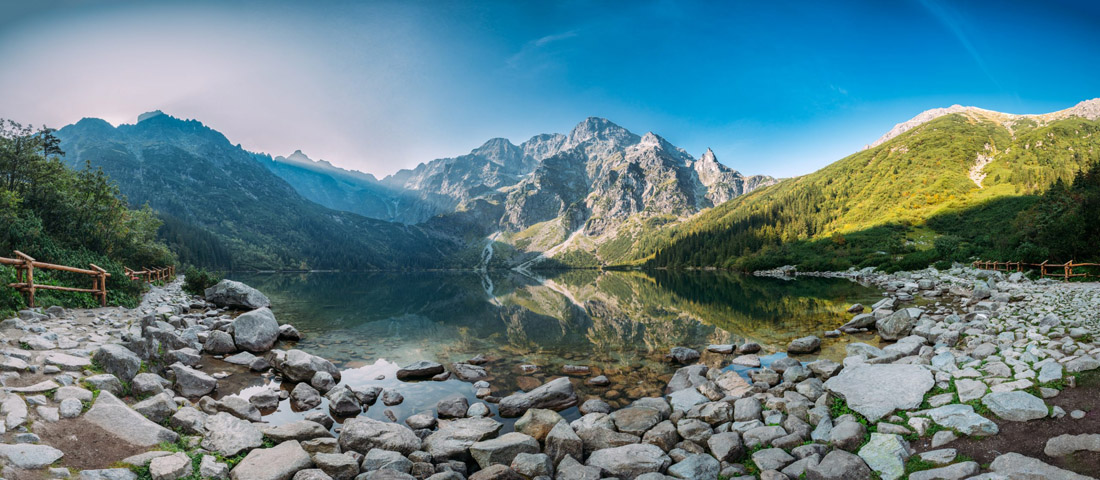
Welcome to Poland, a Central European country where beautifully restored medieval cities reflect both deep history and remarkable resilience. Kraków's Old Town, a UNESCO World Heritage Site, showcases Gothic architecture and a lively main square surrounded by cafés. Warsaw, painstakingly rebuilt after wartime destruction, blends historic charm with a dynamic modern skyline. The Tatra Mountains offer dramatic alpine scenery and charming mountain towns like Zakopane. Poland's countryside reveals medieval castles, dense forests, and the moving history preserved at Auschwitz-Birkenau. Gdańsk's colorful waterfront architecture reflects centuries of Baltic trading history. Traditional Polish cuisine, hearty and comforting, reflects generations of cultural resilience and pride. Poland invites travelers to discover a country of profound history and beautifully restored beauty.

Helpful information to consider before and during your visit.
Discover some of Poland's most popular flavors, traditional dishes and memorable local treats during your visit.
Pierogi is a signature Poland specialty known for its distinctive local ingredients, seasoning and traditional preparation.
This popular Poland dish brings together familiar regional flavors and is commonly enjoyed in homes, markets or local restaurants.
A well-loved part of Poland cuisine, Żurek reflects the country's culinary traditions and locally available ingredients.
Gołąbki is a comforting regional favorite, prepared in styles that may vary between families, cities and different parts of Poland.
Visitors often seek out Kotlet Schabowy for an authentic taste of Poland's everyday cooking and food culture.
This traditional favorite highlights the bold, savory or gently spiced flavors associated with cooking in Poland.
Barszcz is widely recognized in Poland and is often served at casual meals, celebrations or community gatherings.
A memorable choice for travelers, Sernik offers a flavorful introduction to the ingredients and techniques used across Poland.
This classic food is an important part of Poland's culinary identity and is best sampled freshly prepared.
Poland is home to the Białowieża Forest, one of the last and largest remaining fragments of the primeval forest that once covered much of Europe, and it still shelters wild European bison, the continent's heaviest land animal, which were hunted to extinction in the wild in the 1920s before being successfully reintroduced through a captive breeding program centered largely in Poland. The country is also home to the Wieliczka Salt Mine, in operation continuously since the 13th century, where miners carved entire chapels, chandeliers, and sculptures out of rock salt deep underground, some of which remain open to visitors today.
Poland's borders have shifted dramatically throughout history, and the country disappeared from the map entirely for over a century between 1795 and 1918, partitioned among Prussia, Russia, and Austria, before being reconstituted as an independent state after World War I. The Polish city of Toruń is the birthplace of astronomer Nicolaus Copernicus, whose heliocentric model of the solar system fundamentally reshaped humanity's understanding of its place in the universe.
Poland is also credited as the origin of the modern Enigma code-breaking effort, as Polish mathematicians made the first successful breaks into the German Enigma cipher machine years before British codebreakers at Bletchley Park built on their work during World War II.