
Before You Go
- Confirm passport validity and entry requirements.
- Check whether a tourist visa is required.
- Keep digital copies of important documents.
- Consider purchasing travel insurance.

Madrid
Euro (EUR)
Spanish
Apr–Jun and Sep–Oct
CET (UTC+1) / CEST (UTC+2)
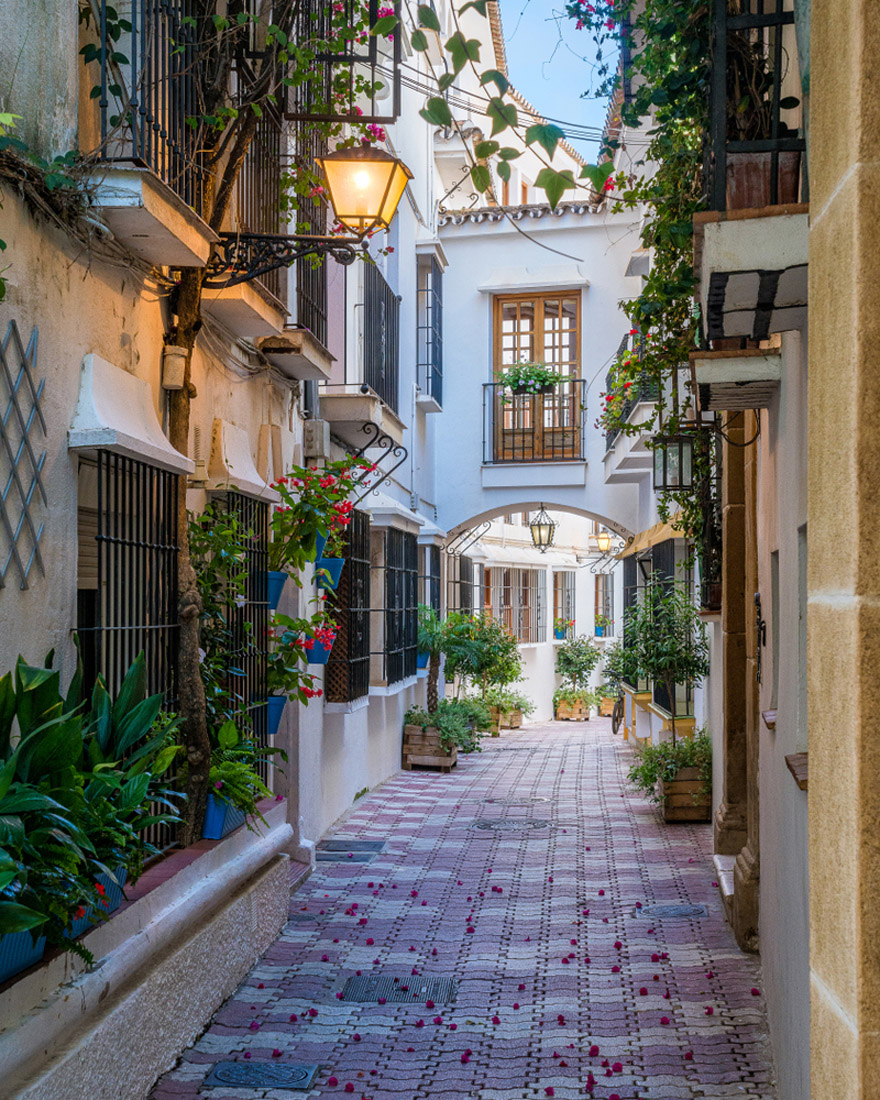
Welcome to Spain, a country where passionate flamenco rhythms, historic architecture, and sun-drenched coastlines create an unforgettable atmosphere. Barcelona's Gaudí masterpieces, including the Sagrada Família, showcase some of the world's most imaginative architecture. Madrid's grand boulevards and world-class museums reflect Spain's rich artistic and royal history. Andalusia's Alhambra palace reveals stunning Moorish architecture amid the dramatic hills of Granada. Spain's Mediterranean coastline offers golden beaches, charming fishing villages, and lively coastal cities. The Camino de Santiago pilgrimage route winds through scenic countryside toward the historic cathedral of Santiago de Compostela. Spanish cuisine, from tapas to paella, reflects deep regional pride and centuries of culinary tradition. Spain invites travelers to experience a country of passion, art, and vibrant culture.

Helpful information to consider before and during your visit.
Discover some of Spain's most popular flavors, traditional dishes and memorable local treats during your visit.
Paella is a well-known part of Spain's cuisine and offers visitors a flavorful introduction to the country's food traditions.
Tortilla Española is a well-known part of Spain's cuisine and offers visitors a flavorful introduction to the country's food traditions.
Gazpacho is a well-known part of Spain's cuisine and offers visitors a flavorful introduction to the country's food traditions.
Jamón Ibérico is a well-known part of Spain's cuisine and offers visitors a flavorful introduction to the country's food traditions.
Patatas Bravas is a well-known part of Spain's cuisine and offers visitors a flavorful introduction to the country's food traditions.
Pulpo a la Gallega is a well-known part of Spain's cuisine and offers visitors a flavorful introduction to the country's food traditions.
Croquetas is a well-known part of Spain's cuisine and offers visitors a flavorful introduction to the country's food traditions.
Churros is a well-known part of Spain's cuisine and offers visitors a flavorful introduction to the country's food traditions.
Crema Catalana is a well-known part of Spain's cuisine and offers visitors a flavorful introduction to the country's food traditions.
Spain is home to more UNESCO World Heritage Sites than almost any other country in the world, and its capital region includes the Cave of Altamira, whose Paleolithic paintings, created roughly 36,000 years ago, were so remarkably sophisticated when first studied that some 19th-century scholars initially refused to believe they were genuinely ancient. Spain is also home to the Sagrada Família in Barcelona, a still-unfinished basilica designed by architect Antoni Gaudí, construction on which began in 1882 and is now finally expected to reach completion in the coming years, making it one of the longest ongoing construction projects for a single building in the world.
Spain has a unique linguistic landscape, with Spanish serving as the primary official language alongside regional co-official languages including Catalan, Basque, and Galician, and the Basque language in particular is considered a linguistic isolate, unrelated to any other known language family in the world. The country is also home to La Tomatina, an annual festival in the town of Buñol where thousands of participants throw tons of overripe tomatoes at one another in a massive, good-natured food fight.
Spain's Camino de Santiago, a network of historic pilgrimage routes converging on the city of Santiago de Compostela, has drawn religious pilgrims and modern travelers alike for over a thousand years, making it one of the oldest continuously used pilgrimage networks in the world.