
Before You Go
- Confirm passport validity and entry requirements.
- Check whether a tourist visa is required.
- Keep digital copies of important documents.
- Consider purchasing travel insurance.

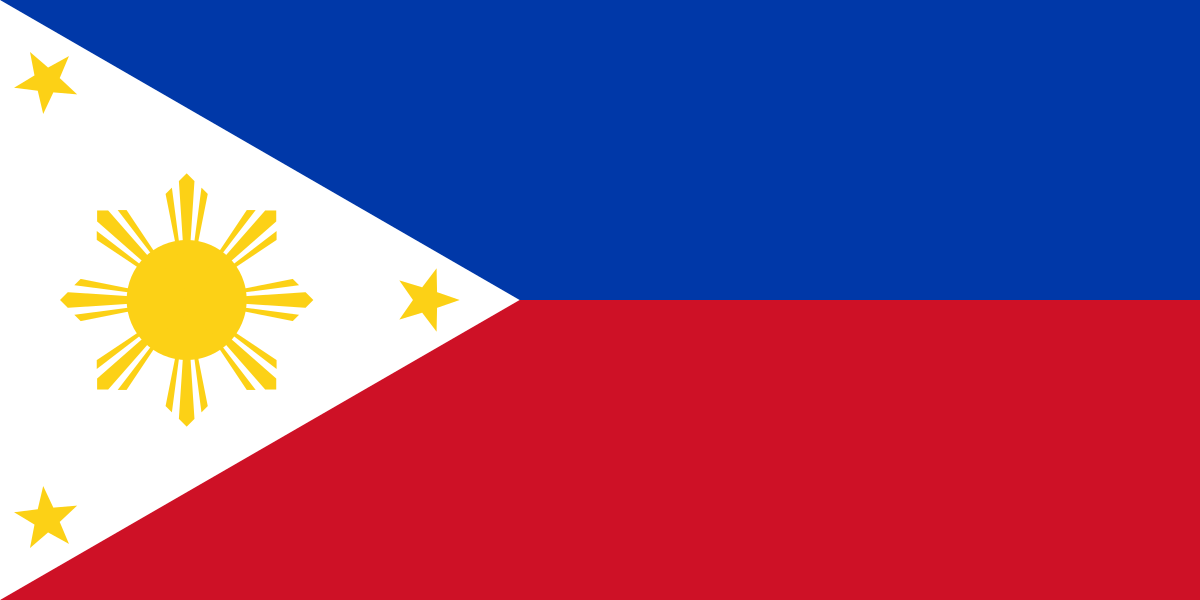
Manila
Philippine Peso (PHP)
Filipino, English
DecβFeb
PHT (UTC+8)
Welcome to the Philippines, a Southeast Asian archipelago of over 7,000 islands, offering some of the most stunning beaches on Earth. Palawan's El Nido and Coron reveal dramatic limestone cliffs rising from turquoise lagoons and hidden beaches. Manila, the capital, blends Spanish colonial history with a vibrant, bustling modern energy. The rice terraces of Banaue, carved into mountainsides over two thousand years ago, remain a breathtaking feat of ancient engineering. Chocolate Hills in Bohol create a surreal, undulating landscape found nowhere else on Earth. World-class diving throughout the islands reveals vibrant coral reefs and diverse marine life. Filipino hospitality, warm and welcoming, makes visitors feel instantly at home throughout the islands. The Philippines invites travelers to discover an island paradise of extraordinary natural beauty.

Helpful information to consider before and during your visit.
Discover some of Philippines's most popular flavors, traditional dishes and memorable local treats during your visit.
Adobo is a signature Philippines specialty known for its distinctive local ingredients, seasoning and traditional preparation.
This popular Philippines dish brings together familiar regional flavors and is commonly enjoyed in homes, markets or local restaurants.
A well-loved part of Philippines cuisine, Lechon reflects the country's culinary traditions and locally available ingredients.
Kare-Kare is a comforting regional favorite, prepared in styles that may vary between families, cities and different parts of Philippines.
Visitors often seek out Pancit for an authentic taste of Philippines's everyday cooking and food culture.
This traditional favorite highlights the bold, savory or gently spiced flavors associated with cooking in Philippines.
Sisig is widely recognized in Philippines and is often served at casual meals, celebrations or community gatherings.
A memorable choice for travelers, Halo-Halo offers a flavorful introduction to the ingredients and techniques used across Philippines.
This classic food is an important part of Philippines's culinary identity and is best sampled freshly prepared.
The Philippines is composed of over 7,600 islands, making it one of the largest archipelagic nations in the world, though only about 2,000 of these islands are inhabited. The country is home to the Banaue Rice Terraces, carved into the mountains of the Cordillera region over 2,000 years ago by hand, without modern machinery, and often referred to as the "Eighth Wonder of the World" for the sheer scale of the ancient engineering involved.
The Philippines was named after King Philip II of Spain and remained a Spanish colony for over 300 years before being ceded to the United States in 1898, giving the country a distinctive blend of Asian, Spanish, and American cultural influences still visible in its language, religion, and cuisine today. It is also home to the world's shortest active volcano, Taal, which sits on an island within a lake that itself sits within a larger volcanic caldera, creating a striking "lake within an island within a lake" formation.
The Philippines has one of the largest Catholic populations in the world, a legacy of Spanish colonization, making it the largest Christian-majority nation in Asia, and Filipino call center and business process outsourcing industries have made the country one of the world's largest hubs for English-language customer service operations.