Blahface.com Uniting People Online

Samoa

Capital

Apia

Currency

Samoan Tala (WST)

Language

Samoan, English

Best Time

May–Oct

Time Zone

WST (UTC+13)

Flag of Samoa
Welcome to Samoa

Samoa's Traditional Polynesian Spirit

Welcome to Samoa, a South Pacific nation where traditional Polynesian culture remains vibrantly alive amid stunning natural beauty. The To Sua Ocean Trench offers a breathtaking swimming hole set within a deep, jungle-fringed sinkhole. Apia, the capital, offers a relaxed introduction to Samoan life, with markets and churches reflecting strong community values. Samoa's fa'a Samoa way of life, centered on family and tradition, remains central to daily culture. Lush rainforests and waterfalls cover much of the interior, offering rewarding hikes away from the coast. Traditional fale houses and village life offer visitors an authentic glimpse into Samoan hospitality. The surrounding waters offer excellent surfing, diving, and encounters with vibrant marine life. Samoa invites travelers to experience genuine Polynesian culture amid unspoiled island beauty.

Popular City

Apia

Apia, Samoa’s relaxed capital, centers on the waterfront Vaiala area and the Robert Louis Stevenson Museum, set in the author’s former home where he spent his final years and remains buried on a hilltop above the property. The Apia Market offers woven mats, kava bowls, and produce sold by vendors from villages across Upolu island. The Immaculate Conception Cathedral, with its striking twin spires, anchors the compact downtown near the harbor. Papaseea Sliding Rocks, just outside the city, offer a natural water slide down smooth volcanic rock into freshwater pools popular with local families. Apia’s unhurried pace and strong Samoan cultural traditions, including village-based fa’a Samoa customs, give visitors an authentic introduction to Pacific island life. It serves as the natural base for exploring the rest of Upolu island.

Travel News

Popular City

Salelologa

Salelologa, the main town on Savai’i island, serves as the arrival point for ferries from Upolu and the gateway to Samoa’s largest and most volcanically dramatic island. The nearby Alofaaga Blowholes send seawater shooting dramatically into the air through lava tube formations along the coast. Saleaula’s lava fields, the result of eruptions in the early twentieth century, preserve a partially buried church as a striking reminder of the island’s volcanic power. Savai’i’s slower pace and traditional villages offer a more rural, less developed counterpart to Upolu. The island’s waterfalls, including Afu Aau, cascade into natural swimming pools shaded by rainforest. Salelologa’s access to Savai’i’s volcanic landscapes makes it a worthwhile stop for travelers seeking Samoa’s wilder side.

Travel Tips

Helpful information to consider before and during your visit.

Before You Go

  • Confirm passport validity and entry requirements.
  • Check whether a tourist visa is required.
  • Keep digital copies of important documents.
  • Consider purchasing travel insurance.

Money & Payments

  • Review the local currency and exchange rate.
  • Carry some cash for small businesses and markets.
  • Check for international bank transaction fees.
  • Learn the country's customary tipping practices.

Stay Connected

  • Review your mobile carrier's international plan.
  • Consider purchasing a local SIM or eSIM.
  • Download maps for offline use before traveling.
  • Avoid sensitive transactions on unsecured Wi-Fi.

Transportation

  • Research public transportation before arrival.
  • Use licensed taxis or reputable rideshare services.
  • Check which side of the road vehicles use.
  • Confirm whether an international permit is needed.

Electricity

  • Check the country's voltage and outlet type.
  • Bring the correct plug adapter for your devices.
  • Use a voltage converter when required.
  • Pack a portable charger for longer excursions.

Weather & Clothing

  • Review the seasonal weather before packing.
  • Bring layers for changing temperatures.
  • Pack rain protection when appropriate.
  • Use sunscreen even on cool or cloudy days.

Food & Water

  • Research whether tap water is safe to drink.
  • Communicate food allergies clearly.
  • Try traditional dishes from reputable vendors.
  • Observe local dining customs and meal times.

Safety

  • Secure valuables in crowded tourist areas.
  • Avoid displaying large amounts of cash.
  • Share your itinerary with someone you trust.
  • Review current government travel advisories.

Language & Etiquette

  • Learn a few polite words in the local language.
  • Respect dress requirements at religious sites.
  • Ask permission before photographing people.
  • Follow local traditions, laws and social customs.

Emergency Planning

  • Save the country's emergency telephone number.
  • Locate your nearest embassy or consulate.
  • Keep medication in its original packaging.
  • Store emergency contacts offline and on paper.

Smart Packing

  • Pack comfortable shoes for walking and tours.
  • Keep essential medication in your carry-on.
  • Bring a reusable bottle where appropriate.
  • Leave room for locally purchased items.

Local Research

  • Check attraction hours and reservation policies.
  • Review national holidays and local closures.
  • Download important addresses before departure.
  • Leave flexibility for unexpected discoveries.
Important: Entry requirements, transportation rules, weather conditions and safety guidance can change. Verify important information with official sources before traveling.

Popular City

Lalomanu

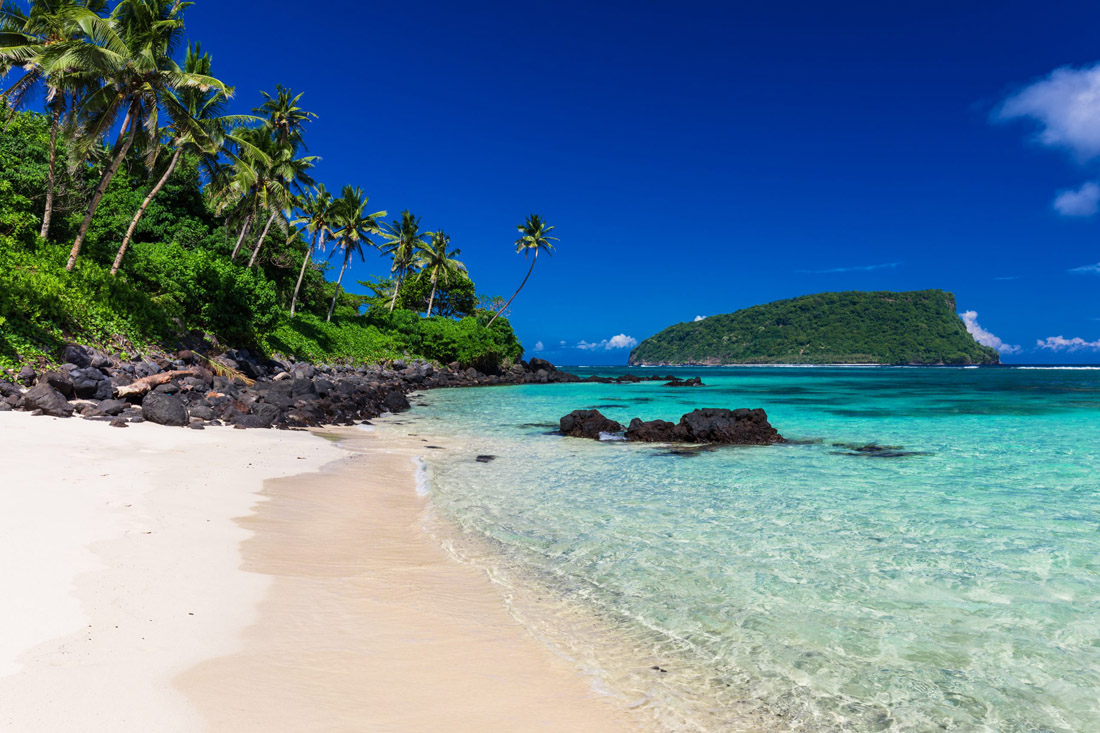
Lalomanu, on Upolu’s southeastern coast, is home to one of Samoa’s most celebrated beaches, its white sand and turquoise lagoon framed by traditional open-sided fale huts available for overnight stays. The beach was largely rebuilt following a 2009 tsunami and remains a symbol of the community’s resilience. To Sua Ocean Trench, a short drive away, is one of Samoa’s most photographed natural sites, a giant sunken garden with a ladder descending into a saltwater swimming hole surrounded by lush vegetation. The nearby coastline offers excellent snorkeling over reefs just steps from shore. Lalomanu’s relaxed beach fale culture, where meals and accommodation are simple and community-run, offers a genuinely local alternative to resort-style tourism. It remains one of the most idyllic and photogenic stretches of coastline in Samoa.

Local Food to Try

Discover some of Samoa's most popular flavors, traditional dishes and memorable local treats during your visit.

Oka I'a

Oka I'a is a signature Samoa specialty known for its distinctive local ingredients, seasoning and traditional preparation.

Palusami

This popular Samoa dish brings together familiar regional flavors and is commonly enjoyed in homes, markets or local restaurants.

Sapasui

A well-loved part of Samoa cuisine, Sapasui reflects the country's culinary traditions and locally available ingredients.

Fa'alifu Taro

Fa'alifu Taro is a comforting regional favorite, prepared in styles that may vary between families, cities and different parts of Samoa.

Pani Popo

Visitors often seek out Pani Popo for an authentic taste of Samoa's everyday cooking and food culture.

Lu'au

This traditional favorite highlights the bold, savory or gently spiced flavors associated with cooking in Samoa.

Koko Alaisa

Koko Alaisa is widely recognized in Samoa and is often served at casual meals, celebrations or community gatherings.

Panipopo

A memorable choice for travelers, Panipopo offers a flavorful introduction to the ingredients and techniques used across Samoa.

Puligi

This classic food is an important part of Samoa's culinary identity and is best sampled freshly prepared.

Dining tip: Regional specialties and preparation styles vary throughout Samoa. Explore local markets, independent cafΓ©s and family-owned restaurants for an authentic taste of the destination.

Little-Known Facts

Samoa

Samoa made the highly unusual decision in 2011 to skip an entire calendar day, jumping from December 29 directly to December 31, in order to switch which side of the International Date Line it fell on and align its business week more closely with its major trading partners, Australia and New Zealand, rather than the United States. The move meant Samoa effectively had no December 30th that year at all.

The country is considered one of the birthplaces of Polynesian culture, and its traditional social structure, called "fa'a Samoa" or "the Samoan way," continues to govern much of daily life, including a system of matai, or chiefly titles, that remains central to village governance today. Samoa is also home to a rare natural swimming hole called the To Sua Ocean Trench, a giant sunken garden with a deep saltwater pool connected to the ocean through an underground channel, accessible only by a tall descending ladder.

Samoa was also one of the last Polynesian nations to gain independence, doing so from New Zealand in 1962, becoming the first Pacific Island nation to do so in the 20th century.