
Before You Go
- Confirm passport validity and entry requirements.
- Check whether a tourist visa is required.
- Keep digital copies of important documents.
- Consider purchasing travel insurance.
Lomé
West African CFA Franc (XOF)
French
Nov–Feb
GMT (UTC+0)
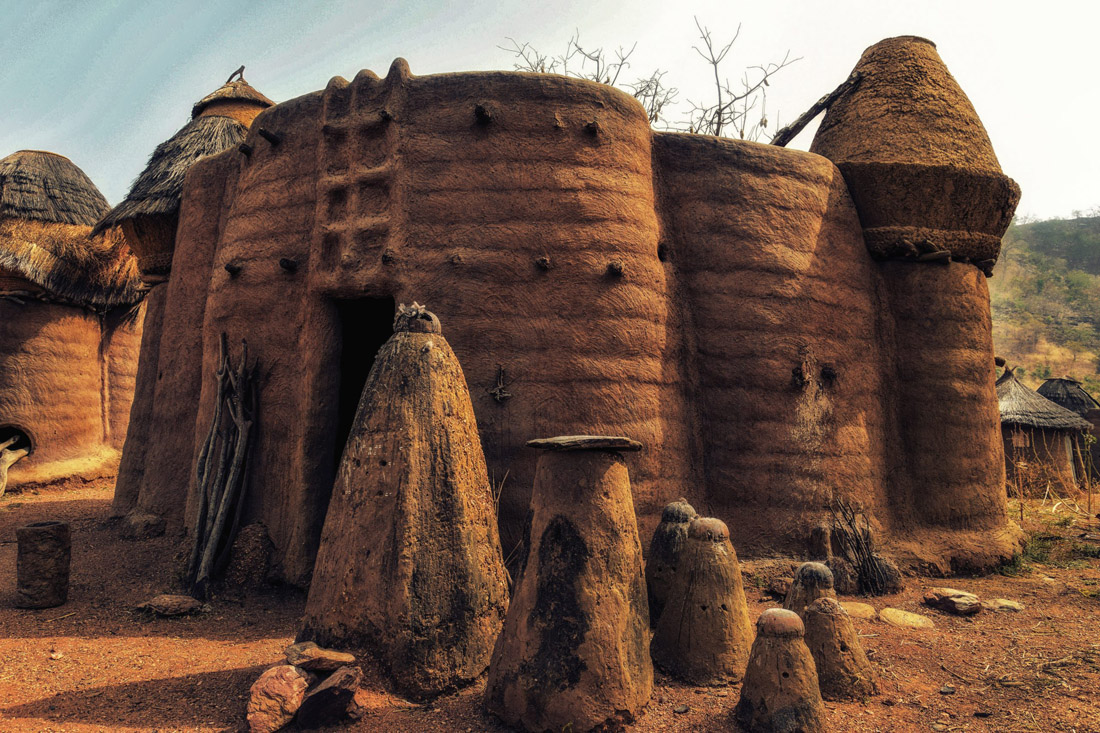
Welcome to Togo, a narrow West African country where vibrant Voodoo traditions meet a relaxed Atlantic coastline. Lomé, the capital, offers bustling markets, including the famous Akodessewa fetish market rooted in traditional spiritual practice. Togo's rolling hills in the Kpalimé region offer waterfalls, coffee plantations, and scenic hiking trails. Traditional Tamberma clay tower houses, a UNESCO World Heritage Site, reveal a unique and striking architectural style. The country's beaches offer a relaxed coastal escape, with palm-lined shores along the Gulf of Guinea. Togo's compact size makes it easy to combine coastal relaxation with cultural and highland exploration. Traditional festivals throughout the country showcase vibrant Voodoo ceremonies and colorful masquerades. Togo invites travelers to discover a compact country rich in spiritual tradition and coastal charm.

Helpful information to consider before and during your visit.
Discover some of Togo's most popular flavors, traditional dishes and memorable local treats during your visit.
Fufu is a well-known part of Togo's cuisine and offers visitors a flavorful introduction to the country's food traditions.
Akume is a well-known part of Togo's cuisine and offers visitors a flavorful introduction to the country's food traditions.
Djenkoume is a well-known part of Togo's cuisine and offers visitors a flavorful introduction to the country's food traditions.
Gboma Dessi is a well-known part of Togo's cuisine and offers visitors a flavorful introduction to the country's food traditions.
Ayimolou is a well-known part of Togo's cuisine and offers visitors a flavorful introduction to the country's food traditions.
Koklo Meme is a well-known part of Togo's cuisine and offers visitors a flavorful introduction to the country's food traditions.
Ablo is a well-known part of Togo's cuisine and offers visitors a flavorful introduction to the country's food traditions.
Kom is a well-known part of Togo's cuisine and offers visitors a flavorful introduction to the country's food traditions.
Botokoin is a well-known part of Togo's cuisine and offers visitors a flavorful introduction to the country's food traditions.
Togo is a narrow strip of a country in West Africa, stretching from the Atlantic coast far inland while remaining relatively thin from east to west, a shape resulting largely from colonial-era boundary negotiations between France and Germany. The country's coastal capital, Lomé, sits right along the border with Ghana, and it's said that the border was drawn so precisely through the middle of a market that vendors on either side technically operate in two different countries.
Togo is home to the Koutammakou region, where the Batammariba people build distinctive multi-story mud tower-houses called "Tata Somba," structures so architecturally unique that the entire region has been designated a UNESCO World Heritage Site for its blend of vernacular architecture and cultural traditions. The country also has a history of practicing voodoo, and its Akodessewa Fetish Market in Lomé is considered one of the largest voodoo markets in the world, supplying traditional healers and spiritual practitioners from across the region.
Togo gained independence from France in 1960 and has since been governed for decades by a single family, with the Gnassingbé family having led the country continuously since 1967, one of the longest-running political dynasties in modern African history.