
Before You Go
- Confirm passport validity and entry requirements.
- Check whether a tourist visa is required.
- Keep digital copies of important documents.
- Consider purchasing travel insurance.
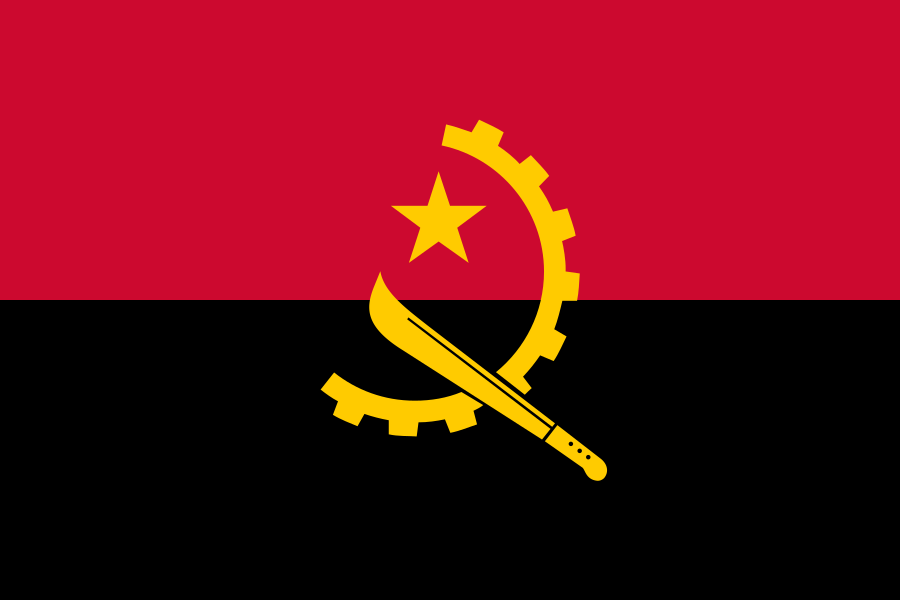
Luanda
Angolan Kwanza (AOA)
Portuguese
May–Oct
WAT (UTC+1)
Welcome to Angola, a vast and vibrant country on Africa's southwestern coast, where dramatic landscapes range from the towering dunes of the Namib Desert to lush tropical rainforests in the north. Its coastline stretches for over a thousand miles, offering pristine beaches, dramatic cliffs, and world-class surf breaks that remain wonderfully undiscovered by mass tourism. The capital, Luanda, is a city of striking contrasts, where colonial-era architecture meets a fast-growing modern skyline along the glittering Atlantic bay. Inland, the Kalandula Falls thunder with breathtaking force, rivaling some of the world's most famous waterfalls in scale and beauty. Angola's rich musical and artistic traditions pulse through cities like Benguela and Lobito, where Portuguese colonial charm blends with vibrant Angolan culture. Wildlife lovers can explore national parks teeming with elephants, antelope, and rare bird species across the country's diverse ecosystems. Angola is a land of resilience and raw natural splendor, offering adventurous travelers an authentic, off-the-beaten-path African experience. Come discover a country as beautiful as it is full of promise.

No API URL found for post ID 140434.
Helpful information to consider before and during your visit.
Discover some of Angola's most popular flavors, traditional dishes and memorable local treats during your visit.
Chicken slowly cooked with palm oil, garlic, onions, spices and okra, creating one of Angola’s best-known traditional dishes.
A deeply flavored stew prepared with fish or meat, leafy greens, tomatoes, onions, okra and sometimes dried fish.
A smooth, thick staple made from cassava or corn flour and served with stews, sauces, fish and meat dishes.
Grilled fish served with beans, boiled cassava or sweet potato, onions and a seasoned palm-oil sauce.
A richly seasoned chicken dish cooked with vinegar and a dark sauce, usually served with rice or funge.
Beans cooked with red palm oil, onions and seasonings, creating a rich side dish often paired with fish, meat or funge.
Cassava leaves are finely ground and slowly cooked, sometimes with peanuts, fish or meat, for a hearty traditional accompaniment.
Ripe plantains are sliced and fried until golden, producing a sweet and caramelized side dish or snack.
A sweet yellow coconut dessert made with egg yolks, sugar and grated coconut, reflecting Angola’s Portuguese culinary influence.
Angola possesses one of Africa's most spectacular natural wonders—the Kalandula Falls—which ranks among the continent's largest waterfalls by volume. Beyond its impressive coastline and tropical forests, Angola is also home to the giant sable antelope, an extremely rare species found nowhere else in the wild. For many years it was feared extinct due to civil war, but conservationists later rediscovered surviving populations, making it one of Africa's greatest wildlife success stories.
Another little-known fact is that Angola is one of the world's leading producers of diamonds, with many gemstones originating from rich inland deposits. The country also features the mysterious Black Rocks of Pungo Andongo, enormous granite formations surrounded by legends involving ancient kings and mythical footprints said to belong to Queen Nzinga, one of Africa's most celebrated historical rulers.
Despite decades of conflict in the late 20th century, Angola's ecosystems remain remarkably diverse. From Atlantic beaches to rainforests and desert landscapes, the country supports an incredible variety of wildlife and plant species. Angola's rich musical traditions, particularly semba, are also believed to have influenced the development of Brazilian samba through centuries of cultural exchange across the Atlantic.
Another little-known fact is that Albanians have a unique cultural tradition called "Besa," meaning "to keep one's promise." This centuries-old code of honor became internationally recognized during World War II when Albania was one of the few European countries where the Jewish population actually increased because local families risked their lives to shelter refugees. Albania also boasts the stunning Blue Eye (Syri i Kaltër), a natural spring with crystal-clear turquoise water whose exact depth remains unknown despite multiple explorations.
Finally, Albania enjoys more than 300 sunny days each year, rivaling many Mediterranean destinations. The country is also famous for its "sworn virgins"—a centuries-old tradition in remote mountain villages where women could legally assume male social roles by taking a lifelong vow of celibacy, preserving family inheritance and leadership in the absence of male heirs.