Blahface.com Uniting People Online

Capital

Belmopan

Currency

Belize Dollar (BZD)

Language

English

Best Time

Nov–Apr

Time Zone

CST (UTC−6)

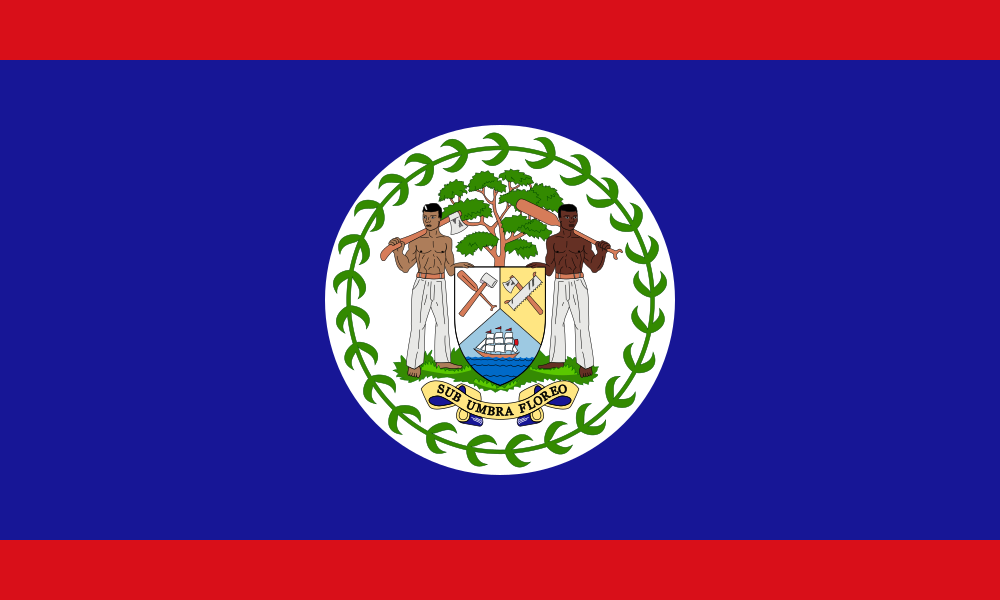
Flag of Belize
Welcome to Belize

Barrier Reefs and Jungle Ruins

Welcome to Belize, a small Central American gem where turquoise Caribbean waters meet dense, wildlife-rich jungle. Home to the second-largest barrier reef in the world, Belize offers some of the best snorkeling and diving on the planet, including the famous Great Blue Hole. Ancient Maya ruins like Caracol and Xunantunich rise from the jungle, offering a powerful glimpse into a civilization that once flourished here. Belize City serves as a gateway to the country's islands, known as cayes, where laid-back beach life and world-class fishing await. Inland, the lush rainforests of the Cayo District are home to jaguars, howler monkeys, and countless bird species. Cave tubing and jungle ziplining offer adventurous ways to explore Belize's dramatic natural terrain. English is the official language, making Belize uniquely accessible while still deeply rooted in Caribbean and Central American culture. Belize welcomes travelers to experience an extraordinary mix of reef, ruins, and rainforest all in one small country.


Popular City

Belize City

Belize City, the country’s largest city and former capital, offers the Museum of Belize, housed in a former colonial prison, tracing the country’s Maya and colonial history. The Swing Bridge, one of the few manually operated swing bridges still in use, connects the city’s north and south sides over Haulover Creek. The city serves as the main gateway to Belize’s barrier reef, the second-largest in the world, with boat trips departing regularly for snorkeling and diving at sites like the Blue Hole, a massive marine sinkhole visible from space. St. John’s Cathedral, one of the oldest Anglican churches in Central America, reflects the country’s British colonial heritage. Belize City’s markets and waterfront give visitors a genuine introduction to the country’s Creole culture, distinct from its Maya and Mestizo communities elsewhere. It serves primarily as a practical gateway to the reef and cayes rather than a destination in itself.

Travel News

No API URL found for post ID 140447.

Popular City

San Ignacio

San Ignacio, in Belize’s Cayo District, serves as the gateway to some of the country’s most significant Maya ruins, including Xunantunich, reachable by a hand-cranked ferry crossing the Mopan River. The nearby Actun Tunichil Muknal cave offers a demanding but extraordinary journey through underground chambers containing ancient Maya ceremonial artifacts and skeletal remains. The town’s Saturday market draws vendors from across the region selling produce and crafts reflecting Belize’s Mestizo, Maya, and Mennonite communities. Cave tubing on the nearby Caves Branch River offers a more accessible way to explore Belize’s extensive underground river systems. San Ignacio’s jungle surroundings and access to Maya archaeology make it the essential base for exploring inland Belize. Its combination of ancient ruins and cave adventures set it apart from the country’s coastal offerings.

Travel Tips

Helpful information to consider before and during your visit.

Before You Go

  • Confirm passport validity and entry requirements.
  • Check whether a tourist visa is required.
  • Keep digital copies of important documents.
  • Consider purchasing travel insurance.

Money & Payments

  • Review the local currency and exchange rate.
  • Carry some cash for small businesses and markets.
  • Check for international bank transaction fees.
  • Learn the country's customary tipping practices.

Stay Connected

  • Review your mobile carrier's international plan.
  • Consider purchasing a local SIM or eSIM.
  • Download maps for offline use before traveling.
  • Avoid sensitive transactions on unsecured Wi-Fi.

Transportation

  • Research public transportation before arrival.
  • Use licensed taxis or reputable rideshare services.
  • Check which side of the road vehicles use.
  • Confirm whether an international permit is needed.

Electricity

  • Check the country's voltage and outlet type.
  • Bring the correct plug adapter for your devices.
  • Use a voltage converter when required.
  • Pack a portable charger for longer excursions.

Weather & Clothing

  • Review the seasonal weather before packing.
  • Bring layers for changing temperatures.
  • Pack rain protection when appropriate.
  • Use sunscreen even on cool or cloudy days.

Food & Water

  • Research whether tap water is safe to drink.
  • Communicate food allergies clearly.
  • Try traditional dishes from reputable vendors.
  • Observe local dining customs and meal times.

Safety

  • Secure valuables in crowded tourist areas.
  • Avoid displaying large amounts of cash.
  • Share your itinerary with someone you trust.
  • Review current government travel advisories.

Language & Etiquette

  • Learn a few polite words in the local language.
  • Respect dress requirements at religious sites.
  • Ask permission before photographing people.
  • Follow local traditions, laws and social customs.

Emergency Planning

  • Save the country's emergency telephone number.
  • Locate your nearest embassy or consulate.
  • Keep medication in its original packaging.
  • Store emergency contacts offline and on paper.

Smart Packing

  • Pack comfortable shoes for walking and tours.
  • Keep essential medication in your carry-on.
  • Bring a reusable bottle where appropriate.
  • Leave room for locally purchased items.

Local Research

  • Check attraction hours and reservation policies.
  • Review national holidays and local closures.
  • Download important addresses before departure.
  • Leave flexibility for unexpected discoveries.
Important: Entry requirements, transportation rules, weather conditions and safety guidance can change. Verify important information with official sources before traveling.

Popular City

Belmopan

Belmopan, Belize’s purpose-built capital, was constructed inland after a devastating 1961 hurricane destroyed much of Belize City, giving it a planned, low-key character distinct from the country’s more organic settlements. The National Assembly Building, designed to evoke a Maya temple, reflects the country’s effort to blend modern governance with cultural heritage. The Belize Archives Department and small government museums offer context on the country’s path to independence from British Honduras. Belmopan’s modest scale and relatively quiet streets reflect its role as a functional rather than a tourist-oriented capital. The city serves mainly as a practical stop for those interested in Belizean governance and planning history. Belmopan remains one of the least-visited capitals in Central America, valued more for its administrative role than its attractions.

Local Food to Try

Discover some of Belize's most popular flavors, traditional dishes and memorable local treats during your visit.

Stew Chicken with Rice and Beans

Chicken is slowly cooked in a richly seasoned gravy and served with coconut rice and beans, salad and fried plantains.

Fry Jacks

Pieces of dough are fried until puffed and golden, then served at breakfast with eggs, beans, cheese or jam.

Hudut

Mashed plantains are served with a coconut-milk fish stew in this traditional Garifuna dish.

Chimole

Also called black dinner, this dark soup combines chicken, eggs, vegetables and roasted spice paste.

Salbutes

Small fried corn tortillas are topped with shredded chicken, cabbage, onions, tomatoes and hot sauce.

Tamales

Corn dough is filled with seasoned meat or vegetables, wrapped in banana leaves and steamed.

Grilled Lobster

Fresh Caribbean lobster is grilled with butter, citrus and spices and served during the annual lobster season.

Ceviche

Seafood is marinated in lime juice and mixed with onions, tomatoes, peppers and herbs for a refreshing coastal dish.

Cassava Pone

Grated cassava is baked with coconut milk, sugar and spices into a dense, lightly chewy dessert.

Dining tip: Regional specialties and preparation styles vary throughout Belize. Explore local markets, independent cafés and family-owned restaurants for an authentic taste of the destination.

Little-Known Facts

Belize

Belize is the only country in Central America where English is the official language, a legacy of its years as the British colony of British Honduras. Yet everyday conversations often blend English with Belizean Creole, Spanish, Garifuna, and several Maya languages. Offshore lies the Belize Barrier Reef, part of the second-largest barrier reef system in the world. Its most famous feature is the Great Blue Hole, a nearly circular marine sinkhole formed when an ancient limestone cave collapsed and was later flooded as sea levels rose.

More than half of Belize remains covered by forest, and a large portion of the country is protected through national parks, wildlife sanctuaries, and private reserves. These habitats support jaguars, tapirs, howler monkeys, manatees, and hundreds of bird species. Belize is also home to remarkable Maya cities such as Caracol, Xunantunich, and Lamanai. At its height, Caracol may have supported a population larger than Belize City has today, demonstrating how densely settled the region was centuries ago.

One especially unusual community is the Garifuna, whose culture combines African, Indigenous Caribbean, and Central American traditions. Their language, music, and dance are internationally recognized, and the energetic drumming style known as punta remains central to celebrations. Belize’s small population, multicultural society, rainforest interior, and vast marine environment make it one of the most ecologically and culturally diverse countries of its size.
Another little-known fact is that Albanians have a unique cultural tradition called "Besa," meaning "to keep one's promise." This centuries-old code of honor became internationally recognized during World War II when Albania was one of the few European countries where the Jewish population actually increased because local families risked their lives to shelter refugees. Albania also boasts the stunning Blue Eye (Syri i Kaltër), a natural spring with crystal-clear turquoise water whose exact depth remains unknown despite multiple explorations.

Finally, Albania enjoys more than 300 sunny days each year, rivaling many Mediterranean destinations. The country is also famous for its "sworn virgins"—a centuries-old tradition in remote mountain villages where women could legally assume male social roles by taking a lifelong vow of celibacy, preserving family inheritance and leadership in the absence of male heirs.