
Before You Go
- Confirm passport validity and entry requirements.
- Check whether a tourist visa is required.
- Keep digital copies of important documents.
- Consider purchasing travel insurance.
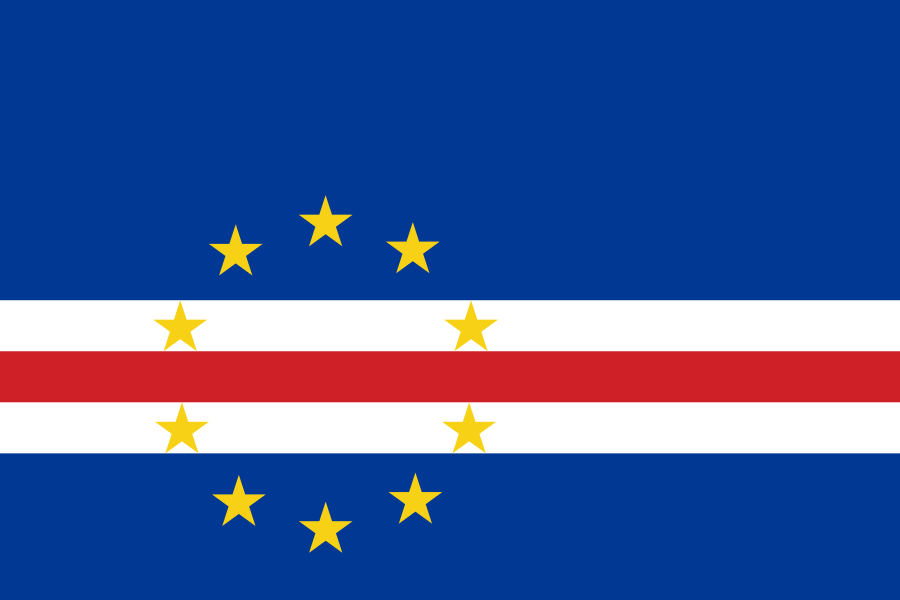
Praia
Cape Verdean Escudo (CVE)
Portuguese
Nov–Jun
CVT (UTC−1)
Welcome to Cabo Verde, an archipelago of volcanic islands off the West African coast, where dramatic landscapes meet a soulful blend of African and Portuguese culture. The islands range from the lush, green peaks of Santo Antão to the desert-like dunes of Sal and Boa Vista, offering remarkably diverse scenery for such a small nation. Mindelo, on São Vicente, pulses with music and color, deeply rooted in the melancholic beauty of morna, Cabo Verde's beloved musical tradition. Fogo Island is home to an active volcano, with a village nestled inside its crater and vineyards growing in the fertile volcanic soil. Pristine beaches throughout the islands attract surfers, windsurfers, and sun-seekers drawn to their consistent Atlantic winds and warm waters. Sea turtles nest along Cabo Verde's shores, and the surrounding waters offer excellent diving and whale watching. The islands' relaxed pace and genuinely warm hospitality make visitors feel instantly at ease. Cabo Verde invites travelers to discover a rare blend of volcanic drama, ocean beauty, and soulful island culture.

No API URL found for post ID 140458.
Helpful information to consider before and during your visit.
Discover some of Cabo Verde's most popular flavors, traditional dishes and memorable local treats during your visit.
Cachupa is a signature Cabo Verde specialty known for its distinctive local ingredients, seasoning and traditional preparation.
This popular Cabo Verde dish brings together familiar regional flavors and is commonly enjoyed in homes, markets or local restaurants.
A well-loved part of Cabo Verde cuisine, Buzio reflects the country's culinary traditions and locally available ingredients.
Canja is a comforting regional favorite, prepared in styles that may vary between families, cities and different parts of Cabo Verde.
Visitors often seek out Xerém for an authentic taste of Cabo Verde's everyday cooking and food culture.
This traditional favorite highlights the bold, savory or gently spiced flavors associated with cooking in Cabo Verde.
Cuscuz is widely recognized in Cabo Verde and is often served at casual meals, celebrations or community gatherings.
A memorable choice for travelers, Doce de Papaya offers a flavorful introduction to the ingredients and techniques used across Cabo Verde.
This classic food is an important part of Cabo Verde's culinary identity and is best sampled freshly prepared.
Cabo Verde is an Atlantic archipelago located hundreds of miles west of mainland Africa. The ten volcanic islands were uninhabited when Portuguese navigators arrived in the 15th century, making the country’s population and culture the result of centuries of African and European interaction. Each island has its own character: some are dry and desert-like, while others contain steep mountains, fertile valleys, black-sand beaches, and colorful colonial towns.
The island of Fogo is dominated by Pico do Fogo, an active volcano rising dramatically from a vast crater. Communities cultivate grapes and coffee in the dark volcanic soil, producing distinctive wines in a landscape that appears almost lunar. Cabo Verde is also famous for morna, a deeply emotional musical style often compared to Portuguese fado or the blues. International singer Cesária Évora, known as the “Barefoot Diva,” brought morna to audiences around the world.
Because the islands lie along important migration routes, they provide nesting grounds for loggerhead sea turtles and resting places for seabirds. Cabo Verdean society also developed the concept of morabeza, a word describing warmth, hospitality, generosity, and an easygoing spirit. The country’s national language is Portuguese, but most people speak Cabo Verdean Creole in daily life. Despite scarce freshwater and limited farmland, the islands have built a strong maritime culture shaped by fishing, migration, music, and connections across the Atlantic.
Another little-known fact is that Albanians have a unique cultural tradition called "Besa," meaning "to keep one's promise." This centuries-old code of honor became internationally recognized during World War II when Albania was one of the few European countries where the Jewish population actually increased because local families risked their lives to shelter refugees. Albania also boasts the stunning Blue Eye (Syri i Kaltër), a natural spring with crystal-clear turquoise water whose exact depth remains unknown despite multiple explorations.
Finally, Albania enjoys more than 300 sunny days each year, rivaling many Mediterranean destinations. The country is also famous for its "sworn virgins"—a centuries-old tradition in remote mountain villages where women could legally assume male social roles by taking a lifelong vow of celibacy, preserving family inheritance and leadership in the absence of male heirs.