Blahface.com Uniting People Online

Capital

N'Djamena

Currency

Central African CFA Franc (XAF)

Language

Arabic, French

Best Time

Nov–Feb

Time Zone

WAT (UTC+1)

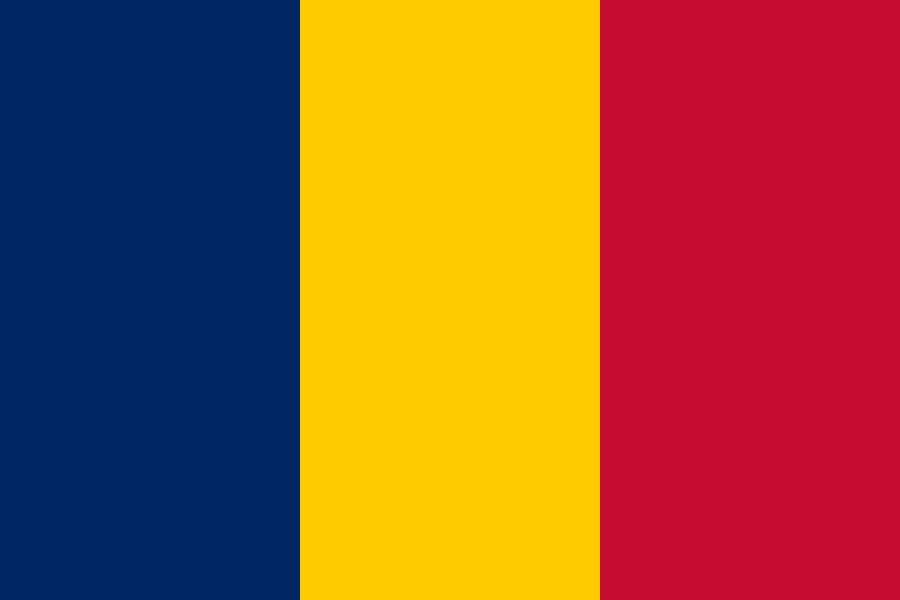
Flag of Chad
Welcome to Chad

Sahara's Hidden Crossroads

Welcome to Chad, a vast Central African nation where the Sahara Desert gives way to savanna and one of Africa's great lakes. Lake Chad, though shrinking, remains a vital lifeline for millions and a striking sight against the surrounding desert. The Ennedi Plateau, a UNESCO World Heritage Site, reveals dramatic sandstone formations and ancient rock art carved thousands of years ago. N'Djamena, the capital, sits along the Chari River, offering a window into daily Sahelian life and bustling local markets. Zakouma National Park has become a remarkable conservation success story, home to recovering elephant herds and abundant wildlife. Nomadic herding communities still cross Chad's plains much as they have for centuries, following ancient migration routes. The country's remoteness has kept much of its landscape and culture wonderfully unspoiled. Chad invites the adventurous traveler to discover a raw, largely undiscovered corner of Africa.


Popular City

N'Djamena

N’Djamena, Chad’s capital, sits at the confluence of the Chari and Logone rivers, near the border with Cameroon. The Grand Mosque, with its striking minarets, and the National Museum, showcasing prehistoric fossils including some of the earliest known hominid remains found in the region, anchor the city’s modest but notable sights. N’Djamena’s central market offers a vivid look at Saharan and Sahelian trade, with goods arriving from across Chad’s diverse regions. The riverside areas provide a relaxed spot to watch daily life along the water, including fishing and washing. The city serves primarily as a practical gateway for the small number of travelers exploring Chad’s remote desert and wildlife regions further afield. N’Djamena’s blend of Sahelian and Central African influences reflects the country’s position as a crossroads between the two.

Travel News

No API URL found for post ID 140463.

Popular City

Moundou

Moundou, Chad’s second-largest city, sits in the country’s more fertile south and serves as a center for cotton production and brewing, home to Chad’s main brewery. The city’s markets reflect the agricultural economy of the surrounding region, distinct from the arid north. Moundou’s relatively lush surroundings, by Chadian standards, support cotton and other cash crops central to the local economy. The town’s mix of ethnic groups reflects the cultural diversity of southern Chad. Moundou offers a look at Chad’s agricultural south, distinct from the desert landscapes more commonly associated with the country. It remains a practical, workaday city rather than a tourist destination.

Travel Tips

Helpful information to consider before and during your visit.

Before You Go

  • Confirm passport validity and entry requirements.
  • Check whether a tourist visa is required.
  • Keep digital copies of important documents.
  • Consider purchasing travel insurance.

Money & Payments

  • Review the local currency and exchange rate.
  • Carry some cash for small businesses and markets.
  • Check for international bank transaction fees.
  • Learn the country's customary tipping practices.

Stay Connected

  • Review your mobile carrier's international plan.
  • Consider purchasing a local SIM or eSIM.
  • Download maps for offline use before traveling.
  • Avoid sensitive transactions on unsecured Wi-Fi.

Transportation

  • Research public transportation before arrival.
  • Use licensed taxis or reputable rideshare services.
  • Check which side of the road vehicles use.
  • Confirm whether an international permit is needed.

Electricity

  • Check the country's voltage and outlet type.
  • Bring the correct plug adapter for your devices.
  • Use a voltage converter when required.
  • Pack a portable charger for longer excursions.

Weather & Clothing

  • Review the seasonal weather before packing.
  • Bring layers for changing temperatures.
  • Pack rain protection when appropriate.
  • Use sunscreen even on cool or cloudy days.

Food & Water

  • Research whether tap water is safe to drink.
  • Communicate food allergies clearly.
  • Try traditional dishes from reputable vendors.
  • Observe local dining customs and meal times.

Safety

  • Secure valuables in crowded tourist areas.
  • Avoid displaying large amounts of cash.
  • Share your itinerary with someone you trust.
  • Review current government travel advisories.

Language & Etiquette

  • Learn a few polite words in the local language.
  • Respect dress requirements at religious sites.
  • Ask permission before photographing people.
  • Follow local traditions, laws and social customs.

Emergency Planning

  • Save the country's emergency telephone number.
  • Locate your nearest embassy or consulate.
  • Keep medication in its original packaging.
  • Store emergency contacts offline and on paper.

Smart Packing

  • Pack comfortable shoes for walking and tours.
  • Keep essential medication in your carry-on.
  • Bring a reusable bottle where appropriate.
  • Leave room for locally purchased items.

Local Research

  • Check attraction hours and reservation policies.
  • Review national holidays and local closures.
  • Download important addresses before departure.
  • Leave flexibility for unexpected discoveries.
Important: Entry requirements, transportation rules, weather conditions and safety guidance can change. Verify important information with official sources before traveling.

Popular City

Sarh

Sarh, in southern Chad along the Chari River, serves as a regional trading center for the surrounding agricultural area. The town’s riverside setting and markets reflect its role connecting rural communities to wider trade networks. Sarh’s more tropical climate and vegetation, compared to the arid north, support cotton and other crops central to the local economy. The town’s mix of ethnic and religious traditions reflects southern Chad’s cultural diversity. As with much of Chad, formal tourism infrastructure remains limited in Sarh. The city offers a genuine, if lightly visited, look at life in southern Chad’s river valley.

Local Food to Try

Discover some of Chad's most popular flavors, traditional dishes and memorable local treats during your visit.

Daraba

Daraba is a signature Chad specialty known for its distinctive local ingredients, seasoning and traditional preparation.

Jarret de Boeuf

This popular Chad dish brings together familiar regional flavors and is commonly enjoyed in homes, markets or local restaurants.

Kisra

A well-loved part of Chad cuisine, Kisra reflects the country's culinary traditions and locally available ingredients.

Aiyash

Aiyash is a comforting regional favorite, prepared in styles that may vary between families, cities and different parts of Chad.

Moulah

Visitors often seek out Moulah for an authentic taste of Chad's everyday cooking and food culture.

Grilled Fish

This traditional favorite highlights the bold, savory or gently spiced flavors associated with cooking in Chad.

Peanut Sauce

Peanut Sauce is widely recognized in Chad and is often served at casual meals, celebrations or community gatherings.

La Bouillie

A memorable choice for travelers, La Bouillie offers a flavorful introduction to the ingredients and techniques used across Chad.

Beignets

This classic food is an important part of Chad's culinary identity and is best sampled freshly prepared.

Dining tip: Regional specialties and preparation styles vary throughout Chad. Explore local markets, independent cafés and family-owned restaurants for an authentic taste of the destination.

Little-Known Facts

Chad

Chad stretches from the Sahara Desert in the north through the Sahel to greener savannas in the south, creating striking environmental contrasts. The country is named after Lake Chad, whose name comes from a local word meaning simply “lake” or “large body of water.” Once one of Africa’s largest lakes, Lake Chad expands and contracts dramatically with rainfall, drought, irrigation, and seasonal changes, creating shifting shorelines and islands.

Northern Chad contains the Ennedi Plateau, a spectacular region of sandstone arches, towers, canyons, and ancient rock art. Thousands of paintings and engravings depict cattle, horses, camels, hunters, and wild animals, revealing that today’s desert was once far wetter and greener. The remote Ounianga Lakes are another surprise: a chain of permanent blue, green, and reddish lakes surrounded by the hyper-arid Sahara. Underground water and unusual wind patterns help prevent them from disappearing.

Chad is also one of the best places to study very early human ancestry. Fossils discovered in the Djurab Desert include Sahelanthropus tchadensis, nicknamed “Toumaï,” which may be around seven million years old and is among the oldest known possible relatives of the human lineage. The country is home to more than 200 ethnic groups and languages, including nomadic communities whose livelihoods depend on carefully timed movement across desert and grassland.
Another little-known fact is that Albanians have a unique cultural tradition called "Besa," meaning "to keep one's promise." This centuries-old code of honor became internationally recognized during World War II when Albania was one of the few European countries where the Jewish population actually increased because local families risked their lives to shelter refugees. Albania also boasts the stunning Blue Eye (Syri i Kaltër), a natural spring with crystal-clear turquoise water whose exact depth remains unknown despite multiple explorations.

Finally, Albania enjoys more than 300 sunny days each year, rivaling many Mediterranean destinations. The country is also famous for its "sworn virgins"—a centuries-old tradition in remote mountain villages where women could legally assume male social roles by taking a lifelong vow of celibacy, preserving family inheritance and leadership in the absence of male heirs.