
Before You Go
- Confirm passport validity and entry requirements.
- Check whether a tourist visa is required.
- Keep digital copies of important documents.
- Consider purchasing travel insurance.
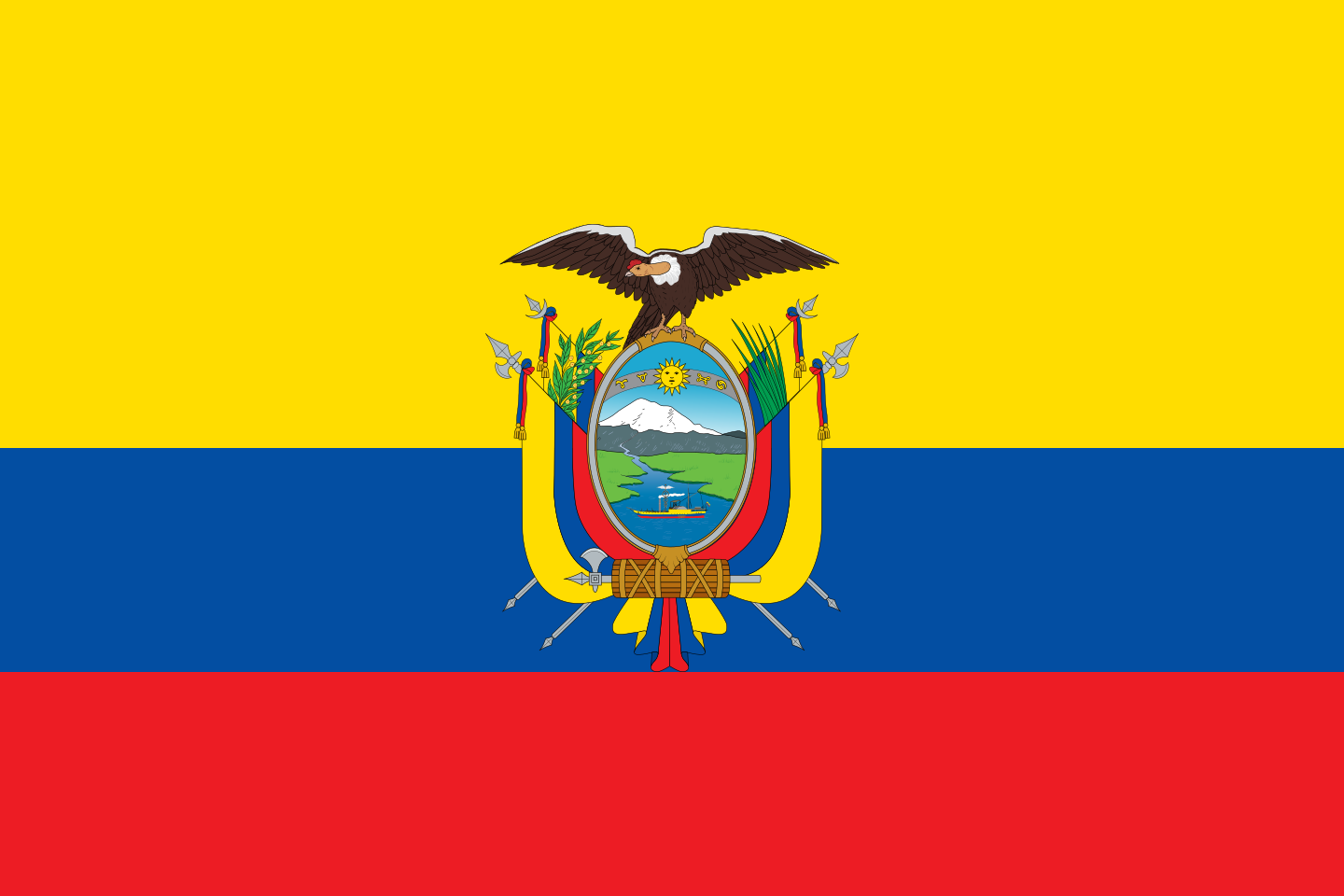
Quito
US Dollar (USD)
Spanish
Jun–Sep
ECT (UTC−5), Galápagos (UTC−6)
Welcome to Ecuador, a compact South American country offering an extraordinary range of landscapes, from Andean peaks to Amazon rainforest to the legendary Galápagos Islands. Quito, the capital, sits high in the Andes, its beautifully preserved colonial old town earning UNESCO World Heritage status. The Galápagos Islands, made famous by Charles Darwin, offer unparalleled wildlife encounters with giant tortoises, marine iguanas, and blue-footed boobies. Ecuador's Amazon basin teems with extraordinary biodiversity, accessible through jungle lodges and Indigenous-guided excursions. The Avenue of the Volcanoes showcases a dramatic string of snow-capped peaks, including the iconic Cotopaxi. Cuenca's charming colonial streets and nearby Incan ruins reveal layers of history amid the southern highlands. Ecuador's markets, particularly in Otavalo, showcase vibrant Indigenous textiles and crafts. Ecuador invites travelers to experience remarkable biodiversity and culture within a strikingly small area.

No API URL found for post ID 140480.
Helpful information to consider before and during your visit.
Discover some of Ecuador's most popular flavors, traditional dishes and memorable local treats during your visit.
Encebollado is a signature Ecuador specialty known for its distinctive local ingredients, seasoning and traditional preparation.
This popular Ecuador dish brings together familiar regional flavors and is commonly enjoyed in homes, markets or local restaurants.
A well-loved part of Ecuador cuisine, Hornado reflects the country's culinary traditions and locally available ingredients.
Llapingachos is a comforting regional favorite, prepared in styles that may vary between families, cities and different parts of Ecuador.
Visitors often seek out Ceviche de Camarón for an authentic taste of Ecuador's everyday cooking and food culture.
This traditional favorite highlights the bold, savory or gently spiced flavors associated with cooking in Ecuador.
Seco de Chivo is widely recognized in Ecuador and is often served at casual meals, celebrations or community gatherings.
A memorable choice for travelers, Bolón de Verde offers a flavorful introduction to the ingredients and techniques used across Ecuador.
This classic food is an important part of Ecuador's culinary identity and is best sampled freshly prepared.
Although Ecuador is one of South America's smaller countries, it is among the most biologically diverse places on Earth. Named after the Equator, which passes directly through the country, Ecuador offers an incredible variety of landscapes, including snow-capped volcanoes, Amazon rainforest, Pacific coastline, cloud forests, and the world-famous Galápagos Islands. Visitors can stand with one foot in each hemisphere at the Mitad del Mundo monument just north of Quito.
The Galápagos Islands transformed the world's understanding of nature after Charles Darwin visited in 1835. The islands remain home to giant tortoises, marine iguanas, blue-footed boobies, and numerous species found nowhere else on Earth. Ecuador also boasts the Avenue of the Volcanoes, a chain of towering Andean peaks that includes Cotopaxi, one of the world's highest active volcanoes. Quito, the nation's capital, sits at nearly 9,350 feet above sea level and was among the first cities designated as a UNESCO World Heritage Site because of its exceptionally preserved colonial architecture.
Ecuador's remarkable biodiversity extends into the Amazon Basin, where thousands of plant, bird, and animal species thrive. The country also recognizes the legal rights of nature within its constitution, making it one of the first nations to grant ecosystems legal protection. From colorful indigenous markets and colonial cities to extraordinary wildlife and breathtaking mountain scenery, Ecuador offers an unmatched diversity of experiences within a surprisingly compact country.
Another little-known fact is that Albanians have a unique cultural tradition called "Besa," meaning "to keep one's promise." This centuries-old code of honor became internationally recognized during World War II when Albania was one of the few European countries where the Jewish population actually increased because local families risked their lives to shelter refugees. Albania also boasts the stunning Blue Eye (Syri i Kaltër), a natural spring with crystal-clear turquoise water whose exact depth remains unknown despite multiple explorations.
Finally, Albania enjoys more than 300 sunny days each year, rivaling many Mediterranean destinations. The country is also famous for its "sworn virgins"—a centuries-old tradition in remote mountain villages where women could legally assume male social roles by taking a lifelong vow of celibacy, preserving family inheritance and leadership in the absence of male heirs.