Blahface.com Uniting People Online

Capital

San Salvador

Currency

US Dollar (USD)

Language

Spanish

Best Time

Nov–Apr

Time Zone

CST (UTC−6)

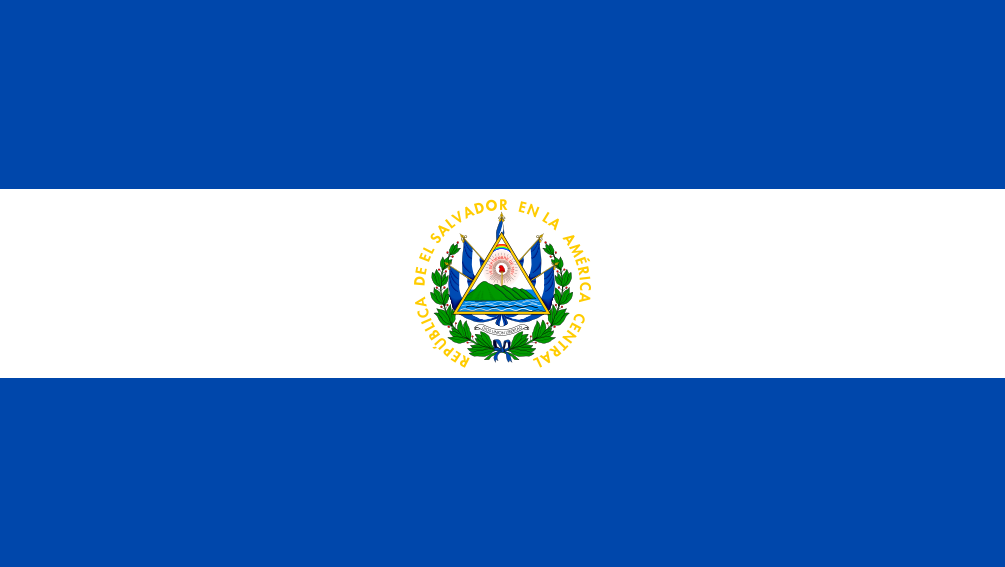
Flag of El Salvador
Welcome to El Salvador

Central America's Surf and Volcano Trail

Welcome to El Salvador, a compact Central American country known for its world-class surf breaks and dramatic volcanic landscapes. El Tunco and El Zonte have become legendary among surfers, drawing waves-chasers from around the globe to their Pacific shores. San Salvador, the capital, sits beneath the shadow of the San Salvador Volcano, blending urban energy with striking natural backdrops. Lake Coatepeque, formed within a volcanic crater, offers stunning turquoise waters ringed by green hillsides. El Salvador's coffee-growing highlands produce excellent brews amid scenic mountain routes. Ancient Maya ruins, including Joya de Cerén, a remarkably preserved "Pompeii of the Americas," reveal centuries of history. The country's small size makes it easy to experience volcanoes, beaches, and colonial towns all within a single trip. El Salvador welcomes travelers to discover a rising Central American gem full of natural drama.


Popular City

San Salvador

San Salvador, El Salvador’s capital, offers the National Palace and Metropolitan Cathedral, both reflecting the country’s political and religious history within the historic center. The Museum of Word and Image traces El Salvador’s difficult civil war period alongside its broader cultural heritage. El Boqueron National Park, set within the crater of a dormant volcano just outside the city, offers hiking trails and views over San Salvador from the crater rim. The city’s Zona Rosa neighborhood has become a hub for restaurants and nightlife reflecting the capital’s ongoing modernization. Nearby, the Ruta de las Flores offers a scenic drive through colorful colonial towns and coffee country, easily accessed from the capital. San Salvador’s blend of history and access to volcanic scenery make it a worthwhile if underexplored Central American capital.

Travel News

No API URL found for post ID 140482.

Popular City

Santa Ana

Santa Ana, El Salvador’s second city, is anchored by its striking Gothic Revival cathedral, one of the most photogenic churches in Central America, along with a beautifully restored National Theatre. The city serves as the gateway to Santa Ana Volcano, El Salvador’s tallest, whose crater holds a strikingly turquoise sulfuric lake. Nearby Lake Coatepeque, formed within a volcanic caldera, offers a scenic swimming and boating destination popular with both locals and visitors. Santa Ana’s colonial architecture and volcanic surroundings give it a character distinct from the busier capital. The city’s coffee-growing region reflects the agricultural heritage central to this part of El Salvador. Santa Ana’s combination of architecture and volcano access make it one of the country’s most rewarding stops.

Travel Tips

Helpful information to consider before and during your visit.

Before You Go

  • Confirm passport validity and entry requirements.
  • Check whether a tourist visa is required.
  • Keep digital copies of important documents.
  • Consider purchasing travel insurance.

Money & Payments

  • Review the local currency and exchange rate.
  • Carry some cash for small businesses and markets.
  • Check for international bank transaction fees.
  • Learn the country's customary tipping practices.

Stay Connected

  • Review your mobile carrier's international plan.
  • Consider purchasing a local SIM or eSIM.
  • Download maps for offline use before traveling.
  • Avoid sensitive transactions on unsecured Wi-Fi.

Transportation

  • Research public transportation before arrival.
  • Use licensed taxis or reputable rideshare services.
  • Check which side of the road vehicles use.
  • Confirm whether an international permit is needed.

Electricity

  • Check the country's voltage and outlet type.
  • Bring the correct plug adapter for your devices.
  • Use a voltage converter when required.
  • Pack a portable charger for longer excursions.

Weather & Clothing

  • Review the seasonal weather before packing.
  • Bring layers for changing temperatures.
  • Pack rain protection when appropriate.
  • Use sunscreen even on cool or cloudy days.

Food & Water

  • Research whether tap water is safe to drink.
  • Communicate food allergies clearly.
  • Try traditional dishes from reputable vendors.
  • Observe local dining customs and meal times.

Safety

  • Secure valuables in crowded tourist areas.
  • Avoid displaying large amounts of cash.
  • Share your itinerary with someone you trust.
  • Review current government travel advisories.

Language & Etiquette

  • Learn a few polite words in the local language.
  • Respect dress requirements at religious sites.
  • Ask permission before photographing people.
  • Follow local traditions, laws and social customs.

Emergency Planning

  • Save the country's emergency telephone number.
  • Locate your nearest embassy or consulate.
  • Keep medication in its original packaging.
  • Store emergency contacts offline and on paper.

Smart Packing

  • Pack comfortable shoes for walking and tours.
  • Keep essential medication in your carry-on.
  • Bring a reusable bottle where appropriate.
  • Leave room for locally purchased items.

Local Research

  • Check attraction hours and reservation policies.
  • Review national holidays and local closures.
  • Download important addresses before departure.
  • Leave flexibility for unexpected discoveries.
Important: Entry requirements, transportation rules, weather conditions and safety guidance can change. Verify important information with official sources before traveling.

Popular City

San Miguel

San Miguel, in eastern El Salvador, is known for its vibrant November carnival, one of the largest and most colorful celebrations in Central America. The city’s cathedral and central park anchor a downtown reflecting the region’s agricultural and commercial importance. Nearby, the Pacific beaches of El Cuco and Las Flores offer some of El Salvador’s best surfing, drawing a growing number of international surf travelers. San Miguel Volcano, also known as Chaparrastique, looms over the city and remains an active reminder of the country’s volcanic geography. The city’s markets reflect the agricultural production of eastern El Salvador, including coffee and sugarcane. San Miguel’s carnival and proximity to surf beaches make it a worthwhile stop in the country’s less-visited east.

Local Food to Try

Discover some of El Salvador's most popular flavors, traditional dishes and memorable local treats during your visit.

Pupusas

Pupusas is a signature El Salvador specialty known for its distinctive local ingredients, seasoning and traditional preparation.

Yuca Frita con Chicharrón

This popular El Salvador dish brings together familiar regional flavors and is commonly enjoyed in homes, markets or local restaurants.

Sopa de Pata

A well-loved part of El Salvador cuisine, Sopa de Pata reflects the country's culinary traditions and locally available ingredients.

Tamales Salvadoreños

Tamales Salvadoreños is a comforting regional favorite, prepared in styles that may vary between families, cities and different parts of El Salvador.

Pan con Pollo

Visitors often seek out Pan con Pollo for an authentic taste of El Salvador's everyday cooking and food culture.

Pasteles Fritos

This traditional favorite highlights the bold, savory or gently spiced flavors associated with cooking in El Salvador.

Riguas

Riguas is widely recognized in El Salvador and is often served at casual meals, celebrations or community gatherings.

Atol de Elote

A memorable choice for travelers, Atol de Elote offers a flavorful introduction to the ingredients and techniques used across El Salvador.

Quesadilla Salvadoreña

This classic food is an important part of El Salvador's culinary identity and is best sampled freshly prepared.

Dining tip: Regional specialties and preparation styles vary throughout El Salvador. Explore local markets, independent cafés and family-owned restaurants for an authentic taste of the destination.

Little-Known Facts

El Salvador

El Salvador may be the smallest country in mainland Central America, but it is packed with remarkable natural beauty and cultural heritage. Often called the "Land of Volcanoes," it contains more than 20 volcanoes, many of which remain active and create dramatic landscapes of crater lakes, fertile valleys, and scenic mountain ranges. The country's Pacific coastline has also become an internationally recognized destination for surfing, attracting visitors with consistent waves and warm tropical waters.

One of El Salvador's most fascinating archaeological treasures is Joya de Cerén, often called the "Pompeii of the Americas." Preserved beneath volcanic ash for over 1,400 years, this ancient farming village provides an exceptionally detailed glimpse into everyday life before European contact. The country's volcanic soil also supports the cultivation of high-quality coffee, which has played an important role in El Salvador's economy and culture for generations.

Colorful colonial towns, vibrant artisan markets, and lively festivals reflect a blend of Indigenous and Spanish traditions. Visitors can explore cloud forests, waterfalls, national parks, and coastal mangrove ecosystems within just a few hours of each other. Despite its compact size, El Salvador offers an impressive diversity of scenery and experiences, making it one of Central America's most rewarding destinations for travelers seeking both adventure and authentic culture.
Another little-known fact is that Albanians have a unique cultural tradition called "Besa," meaning "to keep one's promise." This centuries-old code of honor became internationally recognized during World War II when Albania was one of the few European countries where the Jewish population actually increased because local families risked their lives to shelter refugees. Albania also boasts the stunning Blue Eye (Syri i Kaltër), a natural spring with crystal-clear turquoise water whose exact depth remains unknown despite multiple explorations.

Finally, Albania enjoys more than 300 sunny days each year, rivaling many Mediterranean destinations. The country is also famous for its "sworn virgins"—a centuries-old tradition in remote mountain villages where women could legally assume male social roles by taking a lifelong vow of celibacy, preserving family inheritance and leadership in the absence of male heirs.