Blahface.com Uniting People Online

Capital

Beirut

Currency

Lebanese Pound (LBP)

Language

Arabic

Best Time

Apr–Jun and Sep–Oct

Time Zone

EET (UTC+2) / EEST (UTC+3)

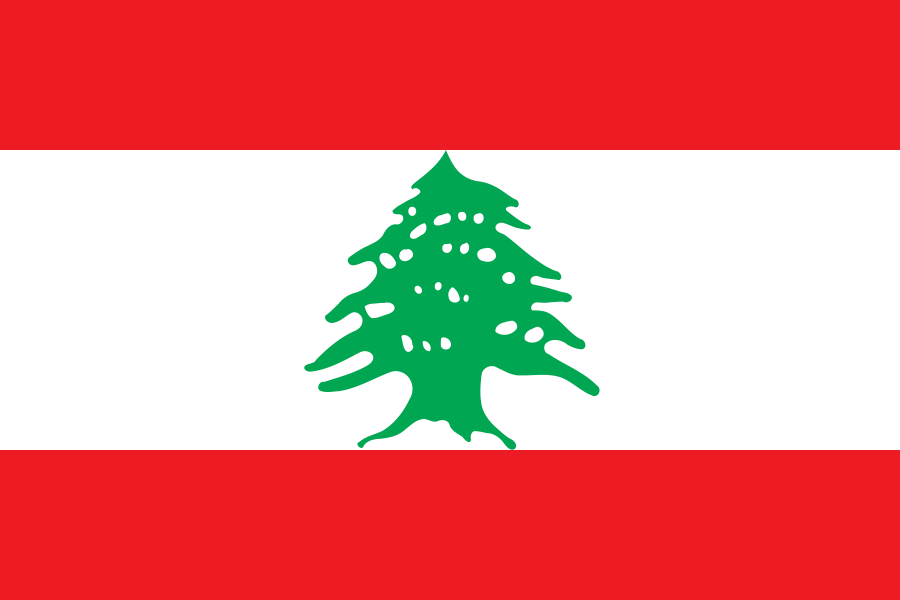
Flag of Lebanon
Welcome to Lebanon

Mediterranean Crossroads of Culture

Welcome to Lebanon, a small Mediterranean country where ancient Phoenician ruins meet vibrant modern culture and renowned cuisine. Beirut, the capital, blends French colonial charm with a resilient, lively energy reflected in its nightlife and dining scene. The Roman ruins of Baalbek, among the best preserved in the world, showcase colossal temple columns rising dramatically from the Bekaa Valley. Lebanon's mountains offer skiing in winter and hiking through cedar forests in summer, a striking contrast to its Mediterranean coast. The ancient cedar trees of Lebanon, a national symbol, have been treasured since biblical times. Byblos, one of the oldest continuously inhabited cities on Earth, reveals layers of Phoenician, Roman, and Crusader history. Lebanese cuisine, rich in mezze and fresh ingredients, reflects a proud culinary tradition celebrated throughout the region. Lebanon invites travelers to discover a small country of extraordinary history, flavor, and resilience.


Popular City

Beirut

Beirut mixes Mediterranean beach culture with a resilient, layered history, its downtown Martyrs’ Square surrounded by rebuilt Ottoman and French colonial architecture. The Beirut National Museum houses an outstanding collection of Phoenician and Roman artifacts recovered from across the country. The Corniche, a long seafront promenade, is where locals walk, cycle, and gather at cafes overlooking the Mediterranean and the rock formations of Pigeon Rocks. Gemmayze and Mar Mikhael offer some of the city’s best nightlife, with bars and restaurants filling restored heritage buildings. The reconstructed Al-Omari Mosque and Maronite cathedral standing side by side downtown reflect Beirut’s religious diversity. Beirut’s endurance through decades of upheaval has only deepened its reputation as one of the Middle East’s most vibrant cities.

Travel News

No API URL found for post ID 140525.

Popular City

Byblos

Byblos, one of the oldest continuously inhabited cities in the world, layers Phoenician, Roman, and Crusader history within a compact archaeological site overlooking the harbor. Its ancient port still shelters small fishing boats beneath a medieval sea castle. The old souks, rebuilt in traditional style, sell crafts and jewelry along narrow lanes leading down to the waterfront. Byblos’s small fishing harbor restaurants are known for fresh seafood served with a view of the Crusader castle. The Byblos Fossil Museum displays remarkably preserved fish and marine fossils found in the surrounding limestone. Byblos offers an easy, atmospheric day trip from Beirut that spans thousands of years of Mediterranean history.

Travel Tips

Helpful information to consider before and during your visit.

Before You Go

  • Confirm passport validity and entry requirements.
  • Check whether a tourist visa is required.
  • Keep digital copies of important documents.
  • Consider purchasing travel insurance.

Money & Payments

  • Review the local currency and exchange rate.
  • Carry some cash for small businesses and markets.
  • Check for international bank transaction fees.
  • Learn the country's customary tipping practices.

Stay Connected

  • Review your mobile carrier's international plan.
  • Consider purchasing a local SIM or eSIM.
  • Download maps for offline use before traveling.
  • Avoid sensitive transactions on unsecured Wi-Fi.

Transportation

  • Research public transportation before arrival.
  • Use licensed taxis or reputable rideshare services.
  • Check which side of the road vehicles use.
  • Confirm whether an international permit is needed.

Electricity

  • Check the country's voltage and outlet type.
  • Bring the correct plug adapter for your devices.
  • Use a voltage converter when required.
  • Pack a portable charger for longer excursions.

Weather & Clothing

  • Review the seasonal weather before packing.
  • Bring layers for changing temperatures.
  • Pack rain protection when appropriate.
  • Use sunscreen even on cool or cloudy days.

Food & Water

  • Research whether tap water is safe to drink.
  • Communicate food allergies clearly.
  • Try traditional dishes from reputable vendors.
  • Observe local dining customs and meal times.

Safety

  • Secure valuables in crowded tourist areas.
  • Avoid displaying large amounts of cash.
  • Share your itinerary with someone you trust.
  • Review current government travel advisories.

Language & Etiquette

  • Learn a few polite words in the local language.
  • Respect dress requirements at religious sites.
  • Ask permission before photographing people.
  • Follow local traditions, laws and social customs.

Emergency Planning

  • Save the country's emergency telephone number.
  • Locate your nearest embassy or consulate.
  • Keep medication in its original packaging.
  • Store emergency contacts offline and on paper.

Smart Packing

  • Pack comfortable shoes for walking and tours.
  • Keep essential medication in your carry-on.
  • Bring a reusable bottle where appropriate.
  • Leave room for locally purchased items.

Local Research

  • Check attraction hours and reservation policies.
  • Review national holidays and local closures.
  • Download important addresses before departure.
  • Leave flexibility for unexpected discoveries.
Important: Entry requirements, transportation rules, weather conditions and safety guidance can change. Verify important information with official sources before traveling.

Popular City

Baalbek

Baalbek is home to some of the best-preserved and most monumental Roman ruins anywhere in the world, including the Temple of Jupiter, whose six standing columns are among the tallest Roman columns ever built. The adjacent Temple of Bacchus rivals the Parthenon in scale and preservation. The site’s massive stone foundation blocks, some of the largest ever quarried in antiquity, still puzzle engineers about how they were moved and placed. The Baalbek International Festival, held among the ruins in warmer months, brings performances to this extraordinary ancient backdrop. The surrounding Bekaa Valley is known for its vineyards, offering wine tastings that pair naturally with a visit to the ruins. Baalbek’s scale and preservation make it one of the most significant Roman sites in the eastern Mediterranean.

Local Food to Try

Discover some of Lebanon's most popular flavors, traditional dishes and memorable local treats during your visit.

Kibbeh

Kibbeh is a signature Lebanon specialty known for its distinctive local ingredients, seasoning and traditional preparation.

Tabbouleh

This popular Lebanon dish brings together familiar regional flavors and is commonly enjoyed in homes, markets or local restaurants.

Fattoush

A well-loved part of Lebanon cuisine, Fattoush reflects the country's culinary traditions and locally available ingredients.

Manakish

Manakish is a comforting regional favorite, prepared in styles that may vary between families, cities and different parts of Lebanon.

Shawarma

Visitors often seek out Shawarma for an authentic taste of Lebanon's everyday cooking and food culture.

Mujadara

This traditional favorite highlights the bold, savory or gently spiced flavors associated with cooking in Lebanon.

Warak Enab

Warak Enab is widely recognized in Lebanon and is often served at casual meals, celebrations or community gatherings.

Knafeh

A memorable choice for travelers, Knafeh offers a flavorful introduction to the ingredients and techniques used across Lebanon.

Maamoul

This classic food is an important part of Lebanon's culinary identity and is best sampled freshly prepared.

Dining tip: Regional specialties and preparation styles vary throughout Lebanon. Explore local markets, independent cafés and family-owned restaurants for an authentic taste of the destination.

Little-Known Facts

Lebanon

Lebanon is a country where ancient history, Mediterranean beauty, and towering mountains come together in an area smaller than many U.S. states. Nestled along the eastern Mediterranean coast, Lebanon has served as a crossroads of civilizations for thousands of years, with influences from the Phoenicians, Romans, Ottomans, and many others still visible today. Despite its compact size, the country offers remarkable geographic diversity, from sandy beaches and fertile valleys to cedar-covered mountains that receive enough winter snowfall to support ski resorts.

One of Lebanon's most treasured natural symbols is the Cedars of God, a UNESCO World Heritage Site preserving some of the last remaining groves of the legendary cedar trees that were prized by ancient civilizations for shipbuilding and monumental construction. The ancient city of Byblos, considered one of the world's oldest continuously inhabited cities, has welcomed people for more than 7,000 years. Visitors can also explore the magnificent Roman temples of Baalbek, among the largest and best-preserved Roman ruins anywhere in the world, featuring towering columns that continue to impress archaeologists and travelers alike.

Lebanon is renowned for its rich culinary traditions, including hummus, tabbouleh, kibbeh, and freshly baked flatbreads that have become favorites around the world. Its vibrant culture blends Middle Eastern hospitality with Mediterranean charm, reflected in lively festivals, music, art, and café culture. From ancient archaeological treasures and picturesque mountain villages to bustling coastal cities, Lebanon offers an extraordinary combination of history, natural beauty, and cultural richness that has captivated visitors for generations.
Another little-known fact is that Albanians have a unique cultural tradition called "Besa," meaning "to keep one's promise." This centuries-old code of honor became internationally recognized during World War II when Albania was one of the few European countries where the Jewish population actually increased because local families risked their lives to shelter refugees. Albania also boasts the stunning Blue Eye (Syri i Kaltër), a natural spring with crystal-clear turquoise water whose exact depth remains unknown despite multiple explorations.

Finally, Albania enjoys more than 300 sunny days each year, rivaling many Mediterranean destinations. The country is also famous for its "sworn virgins"—a centuries-old tradition in remote mountain villages where women could legally assume male social roles by taking a lifelong vow of celibacy, preserving family inheritance and leadership in the absence of male heirs.