Blahface.com Uniting People Online

Home Advertise Contact Terms

Capital

Nouakchott

Currency

Mauritanian Ouguiya (MRU)

Language

Arabic

Best Time

Novโ€“Mar

Time Zone

GMT (UTC+0)

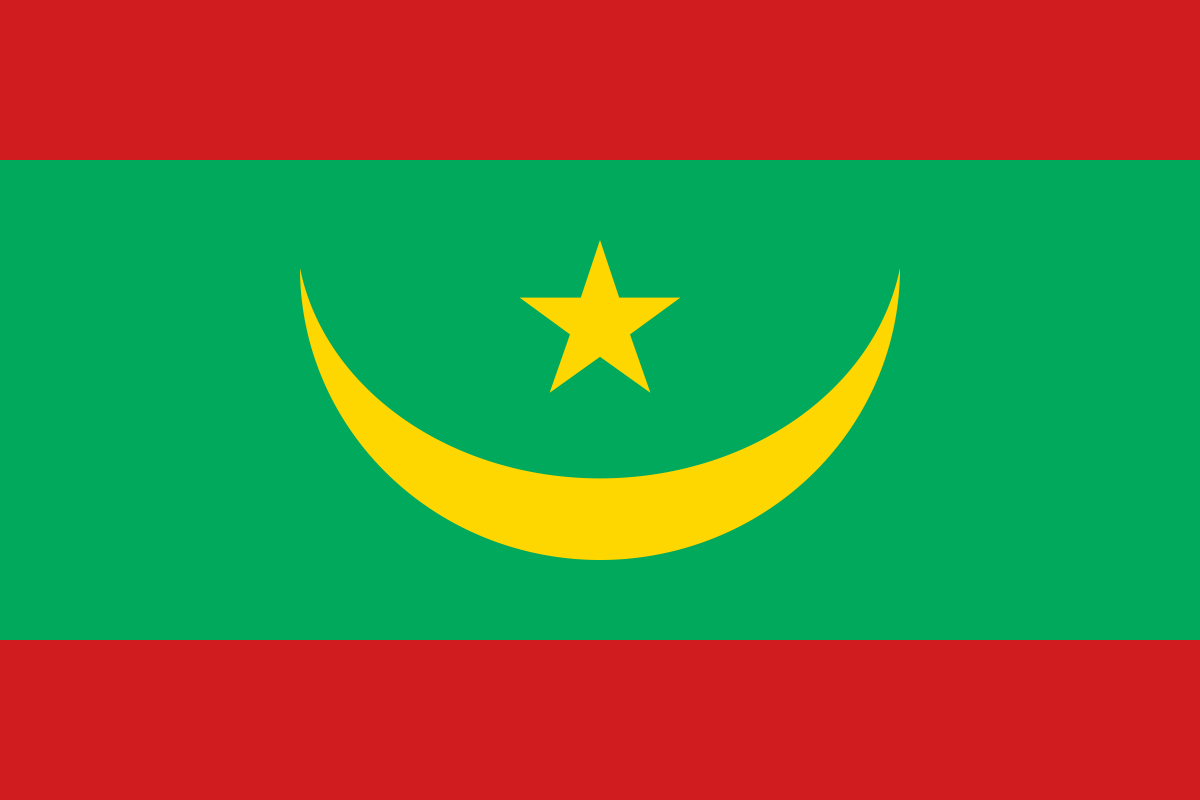
Flag of Mauritania
Welcome to Mauritania

Sahara Meets the Atlantic

Welcome to Mauritania, a vast West African nation where the Sahara Desert stretches dramatically to meet the Atlantic Ocean. The ancient caravan city of Chinguetti, a UNESCO World Heritage Site, holds centuries-old manuscripts and mosques amid golden desert dunes. Nouakchott, the capital, offers a gateway to the desert alongside a bustling fishing port along the coast. The Banc d'Arguin National Park protects one of the richest bird habitats in the world, where migratory species gather by the millions. Mauritania's desert landscapes reveal dramatic dunes, rocky plateaus, and remote oasis towns steeped in Saharan trading history. Traditional nomadic Moorish culture remains deeply rooted throughout the country's vast desert interior. The country's remoteness has preserved an authentic, largely undiscovered desert experience for adventurous travelers. Mauritania invites explorers to discover a dramatic meeting point of desert and sea.
Popular City

Nouakchott

Nouakchott, Mauritania’s capital, sits at the edge of the Sahara, its fish market at the Port de Peche offering one of the most vivid scenes in the city, with hundreds of wooden pirogues landing the day’s catch each afternoon. The Grand Mosque, a gift from Saudi Arabia, anchors the city’s skyline. The National Museum traces Mauritania’s Berber, Arab, and West African heritage through artifacts spanning the Sahara’s long trading history. Camel markets on the city’s outskirts offer a striking glimpse of a trade still central to Mauritanian desert life. Nouakchott’s wide, sandy streets and proximity to the desert give it a frontier character distinct from other West African capitals. It serves as the practical starting point for journeys deeper into the Sahara.

Travel News

No API URL found for post ID 140539.

Popular City

Chinguetti

Chinguetti, a UNESCO World Heritage site and one of Islam’s holiest cities, was once a major stop for pilgrims traveling to Mecca and a center of Islamic scholarship in the Sahara. Its old libraries still hold centuries-old manuscripts on astronomy, law, and mathematics. The town’s mudbrick architecture and the Friday Mosque, one of the oldest in West Africa, sit at the edge of encroaching sand dunes that have slowly swallowed parts of the old quarter. Camel treks into the surrounding dunes are among the most popular ways to experience the Sahara here. Chinguetti’s remoteness and manuscript libraries make it a significant destination for those interested in Saharan Islamic history. Few places convey the scale and silence of the desert as vividly as this ancient caravan town.

Travel Tips

Helpful information to consider before and during your visit.

Before You Go

  • Confirm passport validity and entry requirements.
  • Check whether a tourist visa is required.
  • Keep digital copies of important documents.
  • Consider purchasing travel insurance.

Money & Payments

  • Review the local currency and exchange rate.
  • Carry some cash for small businesses and markets.
  • Check for international bank transaction fees.
  • Learn the country's customary tipping practices.

Stay Connected

  • Review your mobile carrier's international plan.
  • Consider purchasing a local SIM or eSIM.
  • Download maps for offline use before traveling.
  • Avoid sensitive transactions on unsecured Wi-Fi.

Transportation

  • Research public transportation before arrival.
  • Use licensed taxis or reputable rideshare services.
  • Check which side of the road vehicles use.
  • Confirm whether an international permit is needed.

Electricity

  • Check the country's voltage and outlet type.
  • Bring the correct plug adapter for your devices.
  • Use a voltage converter when required.
  • Pack a portable charger for longer excursions.

Weather & Clothing

  • Review the seasonal weather before packing.
  • Bring layers for changing temperatures.
  • Pack rain protection when appropriate.
  • Use sunscreen even on cool or cloudy days.

Food & Water

  • Research whether tap water is safe to drink.
  • Communicate food allergies clearly.
  • Try traditional dishes from reputable vendors.
  • Observe local dining customs and meal times.

Safety

  • Secure valuables in crowded tourist areas.
  • Avoid displaying large amounts of cash.
  • Share your itinerary with someone you trust.
  • Review current government travel advisories.

Language & Etiquette

  • Learn a few polite words in the local language.
  • Respect dress requirements at religious sites.
  • Ask permission before photographing people.
  • Follow local traditions, laws and social customs.

Emergency Planning

  • Save the country's emergency telephone number.
  • Locate your nearest embassy or consulate.
  • Keep medication in its original packaging.
  • Store emergency contacts offline and on paper.

Smart Packing

  • Pack comfortable shoes for walking and tours.
  • Keep essential medication in your carry-on.
  • Bring a reusable bottle where appropriate.
  • Leave room for locally purchased items.

Local Research

  • Check attraction hours and reservation policies.
  • Review national holidays and local closures.
  • Download important addresses before departure.
  • Leave flexibility for unexpected discoveries.
Important: Entry requirements, transportation rules, weather conditions and safety guidance can change. Verify important information with official sources before traveling.

Popular City

Nouadhibou

Nouadhibou, Mauritania’s main economic port, sits on a peninsula shared with Western Sahara and is known for the nearby ship graveyard, one of the largest collections of abandoned vessels in the world rusting in the shallow bay. Fishing remains central to the local economy. The nearby Banc d’Arguin National Park, a UNESCO World Heritage site, protects one of the most important bird migration stopovers on earth, with vast flocks of pelicans and flamingos visible from traditional Imraguen fishing boats. Local Imraguen fishermen still use a unique technique working with wild dolphins to herd fish. Nouadhibou’s stark desert-meets-ocean setting gives it a raw, unpolished character. It offers access to some of West Africa’s most significant wildlife and one of its strangest maritime sights.

Local Food to Try

Discover some of Mauritania's most popular flavors, traditional dishes and memorable local treats during your visit.

Thieboudienne

Thieboudienne is a signature Mauritania specialty known for its distinctive local ingredients, seasoning and traditional preparation.

Mechoui

This popular Mauritania dish brings together familiar regional flavors and is commonly enjoyed in homes, markets or local restaurants.

Maru We-llham

A well-loved part of Mauritania cuisine, Maru We-llham reflects the country's culinary traditions and locally available ingredients.

Couscous

Couscous is a comforting regional favorite, prepared in styles that may vary between families, cities and different parts of Mauritania.

Bonava

Visitors often seek out Bonava for an authentic taste of Mauritania's everyday cooking and food culture.

Grilled Camel

This traditional favorite highlights the bold, savory or gently spiced flavors associated with cooking in Mauritania.

Fish with Rice

Fish with Rice is widely recognized in Mauritania and is often served at casual meals, celebrations or community gatherings.

Lakh

A memorable choice for travelers, Lakh offers a flavorful introduction to the ingredients and techniques used across Mauritania.

Dates with Milk

This classic food is an important part of Mauritania's culinary identity and is best sampled freshly prepared.

Dining tip: Regional specialties and preparation styles vary throughout Mauritania. Explore local markets, independent cafรฉs and family-owned restaurants for an authentic taste of the destination.

Little-Known Facts

Mauritania

Mauritania is home to one of the longest and heaviest freight trains in the world, which regularly stretches over a mile and a half in length as it hauls iron ore from inland mines to the coastal port city of Nouadhibou, and some travelers ride it, sitting atop open ore cars, as a rugged and unofficial form of public transportation across the desert.

The country also holds a sobering historical distinction: it was the last country in the world to formally abolish slavery, doing so in 1981, and it did not criminalize the practice with actual legal penalties until 2007, a fact that stands in stark contrast to its otherwise striking Saharan landscapes and ancient trading cities like Chinguetti, once a major stop for pilgrims traveling to Mecca.

Roughly 90% of Mauritania's land is desert, and the country is bisected by the Sahara's shifting dunes, some of which have gradually swallowed parts of historic towns, forcing residents to periodically dig their homes back out from beneath the sand.
Another little-known fact is that Albanians have a unique cultural tradition called "Besa," meaning "to keep one's promise." This centuries-old code of honor became internationally recognized during World War II when Albania was one of the few European countries where the Jewish population actually increased because local families risked their lives to shelter refugees. Albania also boasts the stunning Blue Eye (Syri i Kaltรซr), a natural spring with crystal-clear turquoise water whose exact depth remains unknown despite multiple explorations.

Finally, Albania enjoys more than 300 sunny days each year, rivaling many Mediterranean destinations. The country is also famous for its "sworn virgins"โ€”a centuries-old tradition in remote mountain villages where women could legally assume male social roles by taking a lifelong vow of celibacy, preserving family inheritance and leadership in the absence of male heirs.