
Before You Go
- Confirm passport validity and entry requirements.
- Check whether a tourist visa is required.
- Keep digital copies of important documents.
- Consider purchasing travel insurance.
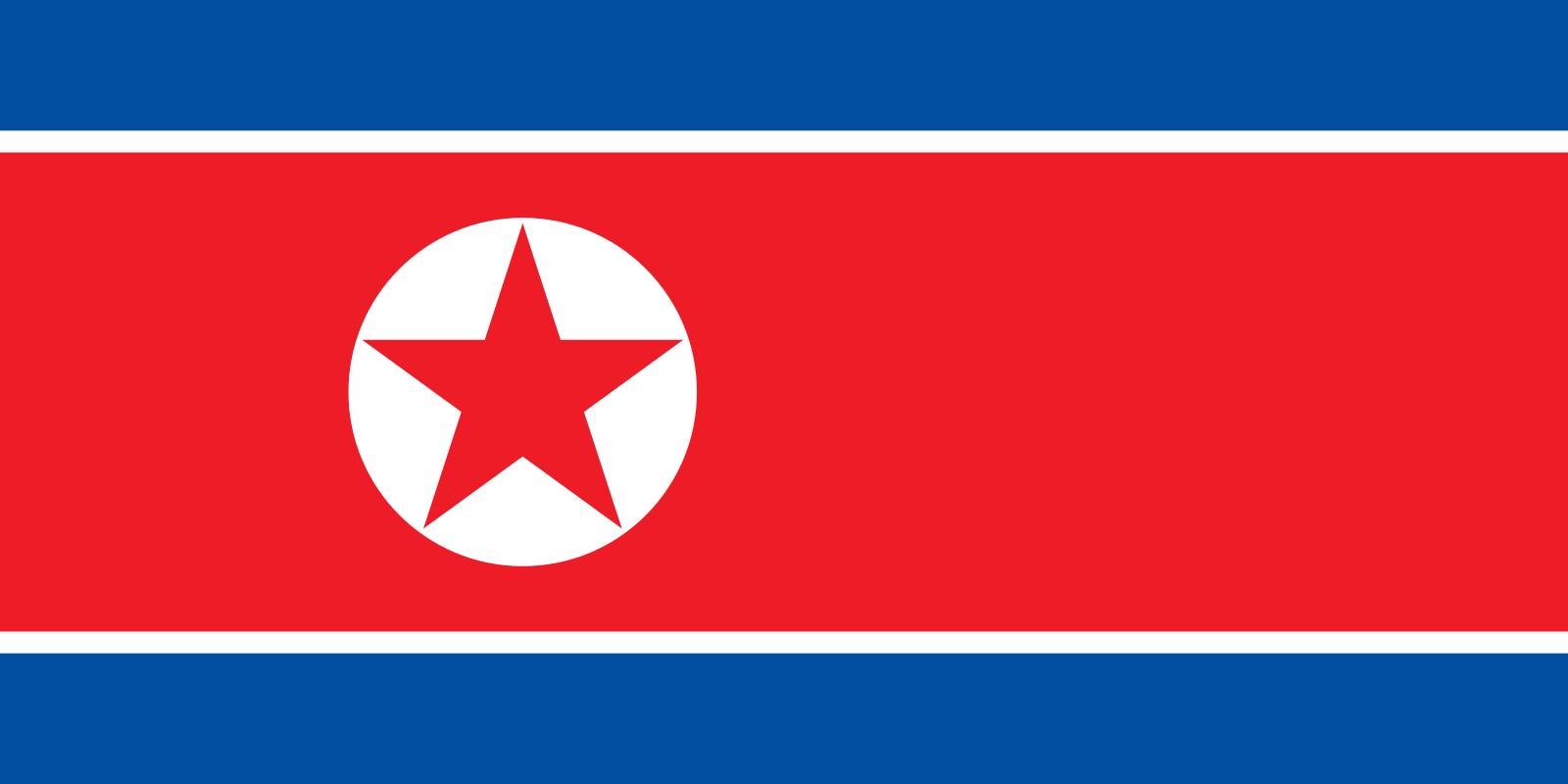
Pyongyang
North Korean Won (KPW)
Korean
Apr–Jun and Sep–Oct
KST (UTC+9)
Welcome to North Korea, one of the most isolated and rarely visited countries in the world, offering a strictly guided glimpse into a unique political and cultural landscape. Pyongyang, the capital, showcases grand monuments, wide boulevards, and dramatic architecture reflecting the country's distinct ideology. The Demilitarized Zone offers a tense but fascinating look at one of the world's most heavily fortified borders. Mount Paektu, considered sacred in Korean folklore, rises dramatically along the border with China, its crater lake shimmering deep blue. Traditional mass games and performances showcase remarkable precision and choreography on a massive scale. Visits to North Korea are tightly controlled, with all travel arranged through official guided tours. The country's isolation has created an experience unlike any other destination on Earth. North Korea invites the most curious travelers to witness a rarely seen chapter of the modern world.

No API URL found for post ID 140519.
Helpful information to consider before and during your visit.
Discover some of North Korea's most popular flavors, traditional dishes and memorable local treats during your visit.
Naengmyeon is a signature North Korea specialty known for its distinctive local ingredients, seasoning and traditional preparation.
This popular North Korea dish brings together familiar regional flavors and is commonly enjoyed in homes, markets or local restaurants.
A well-loved part of North Korea cuisine, Pyongyang Onban reflects the country's culinary traditions and locally available ingredients.
Dububap is a comforting regional favorite, prepared in styles that may vary between families, cities and different parts of North Korea.
Visitors often seek out Sinseollo for an authentic taste of North Korea's everyday cooking and food culture.
This traditional favorite highlights the bold, savory or gently spiced flavors associated with cooking in North Korea.
Japchae is widely recognized in North Korea and is often served at casual meals, celebrations or community gatherings.
A memorable choice for travelers, Injo Gogi Bap offers a flavorful introduction to the ingredients and techniques used across North Korea.
This classic food is an important part of North Korea's culinary identity and is best sampled freshly prepared.
North Korea occupies the northern half of the Korean Peninsula and is a country of dramatic mountain landscapes, dense forests, and rugged coastlines bordering both the Yellow Sea and the Sea of Japan (East Sea). Nearly 80 percent of the country is mountainous, with scenic ranges that have inspired Korean art and folklore for centuries. Although international tourism is highly restricted, North Korea possesses numerous natural attractions, including crater lakes, waterfalls, hot springs, and national parks that remain largely untouched.
The country's most iconic natural landmark is Mount Paektu, an active volcano rising more than 9,000 feet (2,744 meters) along the border with China. Revered as the highest peak on the Korean Peninsula, the mountain is crowned by the breathtaking Heaven Lake, a volcanic crater lake surrounded by steep cliffs and often shrouded in mist. North Korea is also home to the scenic Kumgang Mountains, known for their granite peaks, waterfalls, and forests, as well as extensive cave systems and wetlands that provide habitat for rare cranes, deer, black bears, and other wildlife.
North Korea shares a rich cultural heritage with the rest of the Korean Peninsula that dates back thousands of years. Ancient fortresses, Buddhist temples, royal tombs, and archaeological sites reflect the legacy of historic Korean kingdoms that flourished long before the peninsula was divided. Traditional Korean music, cuisine, craftsmanship, and seasonal festivals continue to preserve customs that have been passed down through generations, offering a glimpse into one of East Asia's oldest cultural traditions.
Another little-known fact is that Albanians have a unique cultural tradition called "Besa," meaning "to keep one's promise." This centuries-old code of honor became internationally recognized during World War II when Albania was one of the few European countries where the Jewish population actually increased because local families risked their lives to shelter refugees. Albania also boasts the stunning Blue Eye (Syri i Kaltër), a natural spring with crystal-clear turquoise water whose exact depth remains unknown despite multiple explorations.
Finally, Albania enjoys more than 300 sunny days each year, rivaling many Mediterranean destinations. The country is also famous for its "sworn virgins"—a centuries-old tradition in remote mountain villages where women could legally assume male social roles by taking a lifelong vow of celibacy, preserving family inheritance and leadership in the absence of male heirs.