Blahface.com Uniting People Online

Capital

East Jerusalem*

Currency

Israeli New Shekel (ILS)

Language

Arabic

Best Time

Mar–May and Sep–Nov

Time Zone

EET (UTC+2) / EEST (UTC+3)

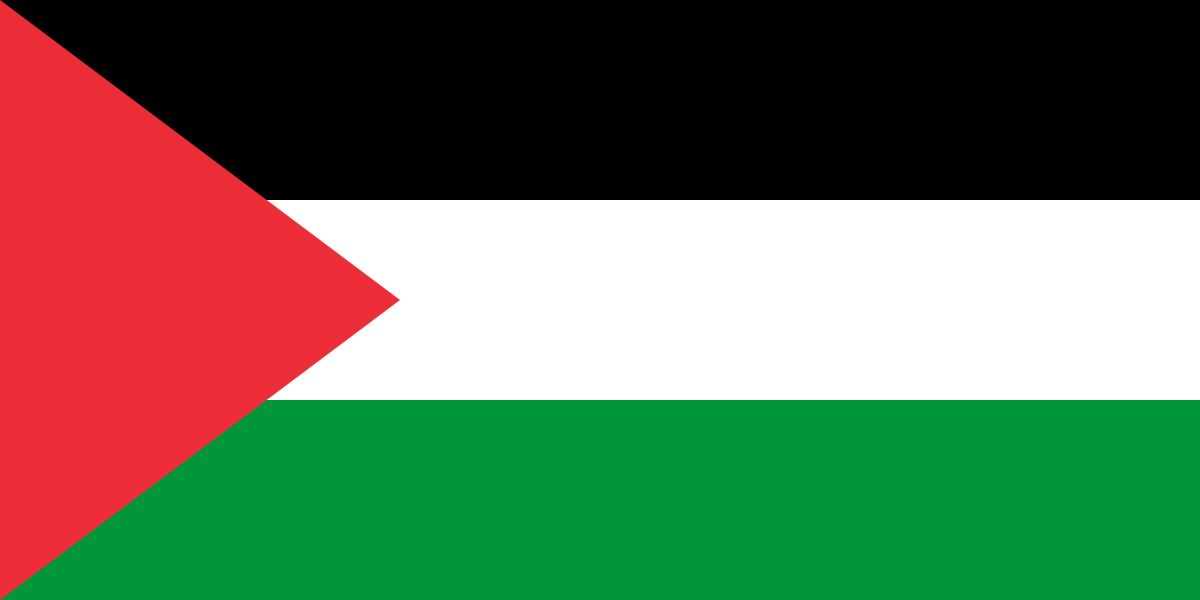
Flag of Palestine
Welcome to Palestine

Palestine's Ancient Holy Land

Welcome to Palestine, a land steeped in profound religious and historical significance across its ancient cities and rolling hills. Bethlehem's Church of the Nativity draws pilgrims from around the world to the traditional birthplace of Jesus. Old City Jerusalem shares deep spiritual meaning here, with sites sacred to millions across multiple faiths. Ramallah offers a glimpse into vibrant modern Palestinian life, culture, and cuisine. The West Bank's rolling hills and ancient olive groves reflect a landscape farmed for thousands of years. Traditional Palestinian embroidery and cuisine reflect a rich, resilient cultural heritage passed down through generations. Historic sites throughout the region reveal layers of Canaanite, Roman, and Islamic history. Palestine invites travelers to experience a land of profound spiritual and cultural depth.

Popular City

Ramallah

Ramallah serves as the de facto administrative center of the Palestinian Authority, its Al-Manara Square anchoring a city known for a lively, youthful cafe culture. The Yasser Arafat Museum traces the life of the Palestinian leader alongside the broader history of the Palestinian national movement. The city’s art galleries and cultural centers, including the Ramallah Cultural Palace, host performances and exhibitions reflecting a thriving local creative scene. Nearby Al-Bireh’s markets offer a more traditional counterpoint to Ramallah’s cafes and boutiques. Ramallah’s relatively cosmopolitan atmosphere has made it a center of Palestinian civil society and culture. It serves as a practical base for visitors exploring the West Bank’s historic and religious sites.

Travel News

No API URL found for post ID 140563.

Popular City

Bethlehem

Bethlehem, revered as the birthplace of Jesus, centers on the Church of the Nativity, a UNESCO World Heritage site where a silver star marks the traditional site of the birth beneath the altar. Manger Square outside fills with pilgrims, especially around Christmas, when the city holds its most significant celebrations. The Milk Grotto and the Shepherds’ Fields nearby add further layers of biblical history to a visit. Bethlehem’s markets sell olive wood carvings and mother-of-pearl religious items crafted by artisans whose families have worked the trade for generations. The separation wall running through parts of the city has itself become a canvas for street art, including works attributed to Banksy, drawing visitors interested in its political as well as religious significance. Bethlehem remains one of the most significant pilgrimage destinations in Christianity.

Travel Tips

Helpful information to consider before and during your visit.

Before You Go

  • Confirm passport validity and entry requirements.
  • Check whether a tourist visa is required.
  • Keep digital copies of important documents.
  • Consider purchasing travel insurance.

Money & Payments

  • Review the local currency and exchange rate.
  • Carry some cash for small businesses and markets.
  • Check for international bank transaction fees.
  • Learn the country's customary tipping practices.

Stay Connected

  • Review your mobile carrier's international plan.
  • Consider purchasing a local SIM or eSIM.
  • Download maps for offline use before traveling.
  • Avoid sensitive transactions on unsecured Wi-Fi.

Transportation

  • Research public transportation before arrival.
  • Use licensed taxis or reputable rideshare services.
  • Check which side of the road vehicles use.
  • Confirm whether an international permit is needed.

Electricity

  • Check the country's voltage and outlet type.
  • Bring the correct plug adapter for your devices.
  • Use a voltage converter when required.
  • Pack a portable charger for longer excursions.

Weather & Clothing

  • Review the seasonal weather before packing.
  • Bring layers for changing temperatures.
  • Pack rain protection when appropriate.
  • Use sunscreen even on cool or cloudy days.

Food & Water

  • Research whether tap water is safe to drink.
  • Communicate food allergies clearly.
  • Try traditional dishes from reputable vendors.
  • Observe local dining customs and meal times.

Safety

  • Secure valuables in crowded tourist areas.
  • Avoid displaying large amounts of cash.
  • Share your itinerary with someone you trust.
  • Review current government travel advisories.

Language & Etiquette

  • Learn a few polite words in the local language.
  • Respect dress requirements at religious sites.
  • Ask permission before photographing people.
  • Follow local traditions, laws and social customs.

Emergency Planning

  • Save the country's emergency telephone number.
  • Locate your nearest embassy or consulate.
  • Keep medication in its original packaging.
  • Store emergency contacts offline and on paper.

Smart Packing

  • Pack comfortable shoes for walking and tours.
  • Keep essential medication in your carry-on.
  • Bring a reusable bottle where appropriate.
  • Leave room for locally purchased items.

Local Research

  • Check attraction hours and reservation policies.
  • Review national holidays and local closures.
  • Download important addresses before departure.
  • Leave flexibility for unexpected discoveries.
Important: Entry requirements, transportation rules, weather conditions and safety guidance can change. Verify important information with official sources before traveling.

Popular City

Hebron

Hebron, one of the oldest continuously inhabited cities in the world, is centered on the Cave of the Patriarchs, revered by both Jews and Muslims as the burial site of Abraham and his family. The Old City’s covered markets, though affected by the area’s complex political situation, retain centuries of Mamluk-era architecture. Traditional Hebron glassblowing and ceramics workshops continue crafts practiced in the city for generations, with several open for visitors to observe artisans at work. The city’s layered religious and political history makes it one of the most complex places to visit in the West Bank. Guided tours, often led by local organizations, help visitors understand the city’s contested landscape and its significance to multiple faiths. Hebron offers a challenging but historically profound stop for those seeking deeper understanding of the region.

Local Food to Try

Discover some of Palestine's most popular flavors, traditional dishes and memorable local treats during your visit.

Musakhan

Musakhan is a signature Palestine specialty known for its distinctive local ingredients, seasoning and traditional preparation.

Maqluba

This popular Palestine dish brings together familiar regional flavors and is commonly enjoyed in homes, markets or local restaurants.

Knafeh

A well-loved part of Palestine cuisine, Knafeh reflects the country's culinary traditions and locally available ingredients.

Maftoul

Maftoul is a comforting regional favorite, prepared in styles that may vary between families, cities and different parts of Palestine.

Qidreh

Visitors often seek out Qidreh for an authentic taste of Palestine's everyday cooking and food culture.

Falafel

This traditional favorite highlights the bold, savory or gently spiced flavors associated with cooking in Palestine.

Hummus

Hummus is widely recognized in Palestine and is often served at casual meals, celebrations or community gatherings.

Warak Dawali

A memorable choice for travelers, Warak Dawali offers a flavorful introduction to the ingredients and techniques used across Palestine.

Qatayef

This classic food is an important part of Palestine's culinary identity and is best sampled freshly prepared.

Dining tip: Regional specialties and preparation styles vary throughout Palestine. Explore local markets, independent cafés and family-owned restaurants for an authentic taste of the destination.

Little-Known Facts

Palestine

The Panama Canal, completed in 1914, remains one of the most significant engineering achievements in modern history, cutting the sea voyage between the Atlantic and Pacific by thousands of miles and saving ships from having to sail around the southern tip of South America. Panama is also one of the very few places on Earth where you can watch the sun rise over the Pacific Ocean and set over the Atlantic, due to the unusual east-west orientation of the isthmus at that point.

The country is home to the Darién Gap, a dense, roadless stretch of rainforest and swamp separating Panama from Colombia that remains one of the only breaks in the Pan-American Highway, a nearly 19,000-mile road network that otherwise connects almost the entire Western Hemisphere. Panama also uses the U.S. dollar alongside its own currency, the balboa, and the two are used interchangeably in daily transactions.

Panama City is the only capital city in the world with a tropical rainforest located within its official city limits, and the country as a whole is considered one of the most biodiverse nations relative to its size, serving as a land bridge that allowed species from North and South America to intermingle millions of years ago.
Another little-known fact is that Albanians have a unique cultural tradition called "Besa," meaning "to keep one's promise." This centuries-old code of honor became internationally recognized during World War II when Albania was one of the few European countries where the Jewish population actually increased because local families risked their lives to shelter refugees. Albania also boasts the stunning Blue Eye (Syri i Kaltër), a natural spring with crystal-clear turquoise water whose exact depth remains unknown despite multiple explorations.

Finally, Albania enjoys more than 300 sunny days each year, rivaling many Mediterranean destinations. The country is also famous for its "sworn virgins"—a centuries-old tradition in remote mountain villages where women could legally assume male social roles by taking a lifelong vow of celibacy, preserving family inheritance and leadership in the absence of male heirs.