Blahface.com Uniting People Online

Capital

Dakar

Currency

West African CFA Franc (XOF)

Language

French

Best Time

Nov–May

Time Zone

GMT (UTC+0)

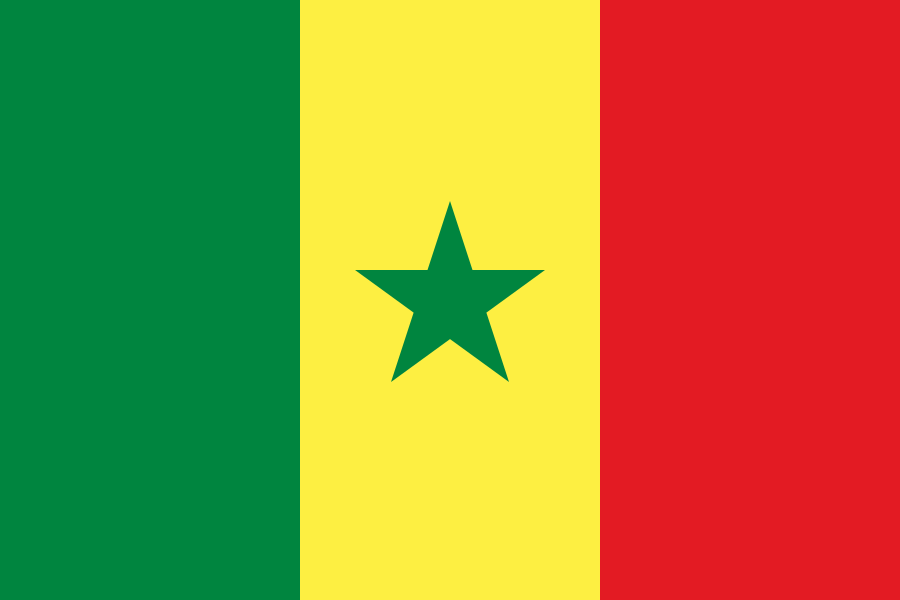
Flag of Senegal
Welcome to Senegal

Senegal's Vibrant Coastal Rhythm

Welcome to Senegal, a West African country where vibrant music, colorful markets, and Atlantic beaches create an unforgettable rhythm. Dakar, the capital, pulses with energy, from bustling markets to a thriving contemporary art and music scene. Gorée Island, a UNESCO World Heritage Site, offers a moving and important reflection on the history of the transatlantic slave trade. Lake Retba, or the Pink Lake, dazzles with its striking rose-colored waters caused by unique algae. Senegal's Sine-Saloum Delta reveals mangrove channels teeming with birdlife and traditional fishing villages. The country's beaches offer excellent surfing and relaxed coastal towns along the Atlantic coast. Traditional wrestling matches, a beloved national sport, draw passionate crowds throughout the country. Senegal invites travelers to experience vibrant culture and rhythm along West Africa's colorful coast.


Popular City

Dakar

Dakar’s African Renaissance Monument, one of the tallest statues in Africa, offers panoramic views over the capital from its viewing platform inside the figure’s head. The Soumbedioune fish market and craft village give a vivid look at local commerce, from freshly landed catch to wood carvings and leather goods. The IFAN Museum of African Arts showcases traditional masks and artifacts from across West Africa. Dakar’s Sandaga Market bustles with fabric vendors selling vibrant wax prints used throughout Senegalese fashion. The city’s live music scene, rooted in mbalax rhythms popularized by Youssou N’Dour, keeps Dakar’s nightlife lively well into the early hours. Dakar’s energy and creativity make it one of West Africa’s most compelling cultural capitals.

Travel News

No API URL found for post ID 140582.

Popular City

Saint-Louis

Saint-Louis, a UNESCO World Heritage former colonial capital, sits on an island in the Senegal River connected to the mainland by the elegant Faidherbe Bridge, built in the same Eiffel workshop era as Paris landmarks. The city’s colonial-era buildings, painted in faded pastel colors, line streets largely unchanged since the nineteenth century. The nearby Langue de Barbarie National Park protects a narrow sandy peninsula rich in birdlife, including pelicans and flamingos, reachable by pirogue from the city. Saint-Louis’s annual jazz festival draws musicians from across the world to the historic riverside setting. Fishing pirogues line the Guet Ndar neighborhood’s beach, launching each morning in one of the most vivid scenes in the city. Saint-Louis’s colonial architecture and river setting make it one of Senegal’s most atmospheric towns.

Travel Tips

Helpful information to consider before and during your visit.

Before You Go

  • Confirm passport validity and entry requirements.
  • Check whether a tourist visa is required.
  • Keep digital copies of important documents.
  • Consider purchasing travel insurance.

Money & Payments

  • Review the local currency and exchange rate.
  • Carry some cash for small businesses and markets.
  • Check for international bank transaction fees.
  • Learn the country's customary tipping practices.

Stay Connected

  • Review your mobile carrier's international plan.
  • Consider purchasing a local SIM or eSIM.
  • Download maps for offline use before traveling.
  • Avoid sensitive transactions on unsecured Wi-Fi.

Transportation

  • Research public transportation before arrival.
  • Use licensed taxis or reputable rideshare services.
  • Check which side of the road vehicles use.
  • Confirm whether an international permit is needed.

Electricity

  • Check the country's voltage and outlet type.
  • Bring the correct plug adapter for your devices.
  • Use a voltage converter when required.
  • Pack a portable charger for longer excursions.

Weather & Clothing

  • Review the seasonal weather before packing.
  • Bring layers for changing temperatures.
  • Pack rain protection when appropriate.
  • Use sunscreen even on cool or cloudy days.

Food & Water

  • Research whether tap water is safe to drink.
  • Communicate food allergies clearly.
  • Try traditional dishes from reputable vendors.
  • Observe local dining customs and meal times.

Safety

  • Secure valuables in crowded tourist areas.
  • Avoid displaying large amounts of cash.
  • Share your itinerary with someone you trust.
  • Review current government travel advisories.

Language & Etiquette

  • Learn a few polite words in the local language.
  • Respect dress requirements at religious sites.
  • Ask permission before photographing people.
  • Follow local traditions, laws and social customs.

Emergency Planning

  • Save the country's emergency telephone number.
  • Locate your nearest embassy or consulate.
  • Keep medication in its original packaging.
  • Store emergency contacts offline and on paper.

Smart Packing

  • Pack comfortable shoes for walking and tours.
  • Keep essential medication in your carry-on.
  • Bring a reusable bottle where appropriate.
  • Leave room for locally purchased items.

Local Research

  • Check attraction hours and reservation policies.
  • Review national holidays and local closures.
  • Download important addresses before departure.
  • Leave flexibility for unexpected discoveries.
Important: Entry requirements, transportation rules, weather conditions and safety guidance can change. Verify important information with official sources before traveling.

Popular City

Goree Island

Goree Island, a short ferry ride from Dakar, is a UNESCO World Heritage site and one of the most significant memorial sites connected to the Atlantic slave trade. The House of Slaves and its Door of No Return stand as a somber, essential stop for understanding this chapter of history. The island’s car-free streets, lined with colorful colonial buildings now housing small galleries and craft shops, give it a quiet, contemplative atmosphere distinct from bustling Dakar. Goree’s fort and museum offer further historical context on the island’s role in centuries of transatlantic trade. The island’s beaches offer a peaceful place to reflect after visiting its historic sites. Goree Island remains one of the most important places in West Africa for confronting the history of slavery.

Local Food to Try

Discover some of Senegal's most popular flavors, traditional dishes and memorable local treats during your visit.

Thieboudienne

Thieboudienne is a signature Senegal specialty known for its distinctive local ingredients, seasoning and traditional preparation.

Yassa Poulet

This popular Senegal dish brings together familiar regional flavors and is commonly enjoyed in homes, markets or local restaurants.

Mafé

A well-loved part of Senegal cuisine, Mafé reflects the country's culinary traditions and locally available ingredients.

Thiou

Thiou is a comforting regional favorite, prepared in styles that may vary between families, cities and different parts of Senegal.

Domoda

Visitors often seek out Domoda for an authentic taste of Senegal's everyday cooking and food culture.

Pastels

This traditional favorite highlights the bold, savory or gently spiced flavors associated with cooking in Senegal.

Fataya

Fataya is widely recognized in Senegal and is often served at casual meals, celebrations or community gatherings.

Ngalakh

A memorable choice for travelers, Ngalakh offers a flavorful introduction to the ingredients and techniques used across Senegal.

Thiéré

This classic food is an important part of Senegal's culinary identity and is best sampled freshly prepared.

Dining tip: Regional specialties and preparation styles vary throughout Senegal. Explore local markets, independent cafés and family-owned restaurants for an authentic taste of the destination.

Little-Known Facts

Senegal

Serbia is home to Belgrade, one of the oldest continuously inhabited cities in Europe, having been conquered and rebuilt dozens of times throughout history due to its strategic position at the confluence of the Danube and Sava Rivers. The country is also considered the birthplace of Nikola Tesla, the influential inventor and engineer whose pioneering work on alternating current systems helped shape modern electrical infrastructure, and Belgrade's main airport is named in his honor.

Serbia is home to Devil's Town, a bizarre rock formation of nearly 200 tall earthen pillars capped with stone, created by unusual erosion patterns over thousands of years, and local legend attributes their strange, almost humanoid shapes to a village turned to stone as divine punishment. Serbia was also the site where the assassination of Archduke Franz Ferdinand in nearby Sarajevo, involving a Serbian nationalist, helped trigger the outbreak of World War I in 1914, an event with outsized consequences given the region's relatively small size.

Serbia's Exit Festival, held annually in the historic Petrovaradin Fortress, has grown into one of the largest music festivals in Europe, drawing hundreds of thousands of visitors to a site originally built as an 18th-century military stronghold.
Another little-known fact is that Albanians have a unique cultural tradition called "Besa," meaning "to keep one's promise." This centuries-old code of honor became internationally recognized during World War II when Albania was one of the few European countries where the Jewish population actually increased because local families risked their lives to shelter refugees. Albania also boasts the stunning Blue Eye (Syri i Kaltër), a natural spring with crystal-clear turquoise water whose exact depth remains unknown despite multiple explorations.

Finally, Albania enjoys more than 300 sunny days each year, rivaling many Mediterranean destinations. The country is also famous for its "sworn virgins"—a centuries-old tradition in remote mountain villages where women could legally assume male social roles by taking a lifelong vow of celibacy, preserving family inheritance and leadership in the absence of male heirs.