Blahface.com Uniting People Online

Home Advertise Contact Terms

Capital

Pretoria

Currency

Rand (ZAR)

Language

11 Official Languages

Best Time

Mayโ€“Sep

Time Zone

SAST (UTC+2)

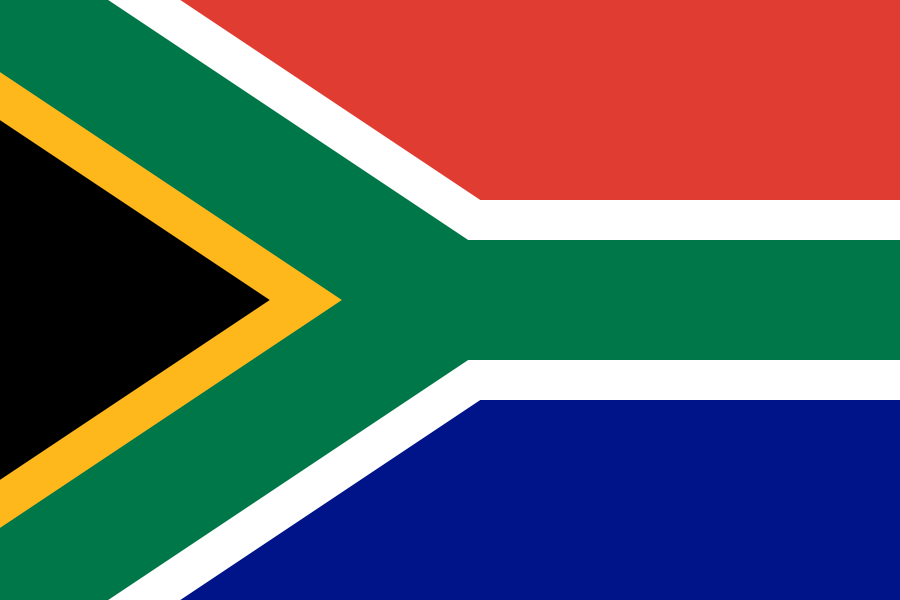
Flag of South Africa
Welcome to South Africa

South Africa's Peaks, Wine, and Wildlife

Welcome to South Africa, a country where dramatic mountains, world-class wine regions, and abundant wildlife create extraordinary diversity. Cape Town's Table Mountain rises dramatically above the city, offering sweeping views over ocean and vineyard alike. Kruger National Park ranks among Africa's premier safari destinations, home to lions, elephants, and the full Big Five. The Cape Winelands offer stunning valley scenery alongside some of the finest wine produced outside Europe. South Africa's Garden Route winds along a dramatic coastline of forests, lagoons, and charming towns. The Drakensberg Mountains offer dramatic peaks and ancient San rock art amid excellent hiking. Vibrant townships and cultural sites throughout the country reflect a powerful, ongoing story of transformation. South Africa invites travelers to experience an extraordinary blend of nature, wildlife, and history.

Popular City

Cape Town

Cape Town sits beneath the flat-topped Table Mountain, reachable by a rotating cable car that offers panoramic views over the city, the Atlantic, and the Cape Peninsula. Robben Island, a UNESCO World Heritage site where Nelson Mandela spent eighteen years imprisoned, offers ferry tours led by former political prisoners. The V&A Waterfront combines shopping and dining with harbor views and easy access to boat trips and the Two Oceans Aquarium. Nearby, Boulders Beach lets visitors walk among a colony of African penguins nesting directly on the sand. The Cape Winelands, just outside the city in Stellenbosch and Franschhoek, offer some of the finest wine tasting in the Southern Hemisphere amid dramatic mountain scenery. Cape Town’s combination of natural beauty, history, and food makes it one of the most compelling cities in Africa.

Travel News

No API URL found for post ID 140591.

Popular City

Johannesburg

Johannesburg’s Apartheid Museum offers one of the most comprehensive and moving accounts of South Africa’s racial history, tracing the system’s rise and fall through immersive exhibits. Soweto, the historic township at the heart of the anti-apartheid struggle, can be toured to see Nelson Mandela’s former home and the Hector Pieterson Memorial. Maboneng and Braamfontein have emerged as creative districts filled with street art, markets, and galleries reflecting the city’s ongoing urban renewal. Constitution Hill, a former prison that once held both Mandela and Gandhi, now houses South Africa’s Constitutional Court on the same grounds. The Cradle of Humankind, a UNESCO World Heritage site nearby, has yielded some of the most significant hominid fossils ever discovered. Johannesburg’s raw energy and deep historical significance make it essential for understanding modern South Africa.

Travel Tips

Helpful information to consider before and during your visit.

Before You Go

  • Confirm passport validity and entry requirements.
  • Check whether a tourist visa is required.
  • Keep digital copies of important documents.
  • Consider purchasing travel insurance.

Money & Payments

  • Review the local currency and exchange rate.
  • Carry some cash for small businesses and markets.
  • Check for international bank transaction fees.
  • Learn the country's customary tipping practices.

Stay Connected

  • Review your mobile carrier's international plan.
  • Consider purchasing a local SIM or eSIM.
  • Download maps for offline use before traveling.
  • Avoid sensitive transactions on unsecured Wi-Fi.

Transportation

  • Research public transportation before arrival.
  • Use licensed taxis or reputable rideshare services.
  • Check which side of the road vehicles use.
  • Confirm whether an international permit is needed.

Electricity

  • Check the country's voltage and outlet type.
  • Bring the correct plug adapter for your devices.
  • Use a voltage converter when required.
  • Pack a portable charger for longer excursions.

Weather & Clothing

  • Review the seasonal weather before packing.
  • Bring layers for changing temperatures.
  • Pack rain protection when appropriate.
  • Use sunscreen even on cool or cloudy days.

Food & Water

  • Research whether tap water is safe to drink.
  • Communicate food allergies clearly.
  • Try traditional dishes from reputable vendors.
  • Observe local dining customs and meal times.

Safety

  • Secure valuables in crowded tourist areas.
  • Avoid displaying large amounts of cash.
  • Share your itinerary with someone you trust.
  • Review current government travel advisories.

Language & Etiquette

  • Learn a few polite words in the local language.
  • Respect dress requirements at religious sites.
  • Ask permission before photographing people.
  • Follow local traditions, laws and social customs.

Emergency Planning

  • Save the country's emergency telephone number.
  • Locate your nearest embassy or consulate.
  • Keep medication in its original packaging.
  • Store emergency contacts offline and on paper.

Smart Packing

  • Pack comfortable shoes for walking and tours.
  • Keep essential medication in your carry-on.
  • Bring a reusable bottle where appropriate.
  • Leave room for locally purchased items.

Local Research

  • Check attraction hours and reservation policies.
  • Review national holidays and local closures.
  • Download important addresses before departure.
  • Leave flexibility for unexpected discoveries.
Important: Entry requirements, transportation rules, weather conditions and safety guidance can change. Verify important information with official sources before traveling.

Popular City

Durban

Durban’s Golden Mile stretches along the Indian Ocean with a wide promenade popular for surfing, swimming, and beachfront markets. The city’s large Indian population, the largest outside India itself, has shaped a distinct culinary and cultural identity, especially around the historic Victoria Street Market. uShaka Marine World combines an aquarium with water park attractions along the beachfront, a popular family stop. The Moses Mabhida Stadium, built for the 2010 World Cup, offers a Skycar ride to an arch viewpoint over the city and coastline. Durban’s warm subtropical climate and easy beach access make it South Africa’s most popular coastal holiday city. Its blend of surf culture and Indian Ocean cuisine gives it a character distinct from Cape Town or Johannesburg.

Local Food to Try

Discover some of South Africa's most popular flavors, traditional dishes and memorable local treats during your visit.

Bobotie

Bobotie is a signature South Africa specialty known for its distinctive local ingredients, seasoning and traditional preparation.

Bunny Chow

This popular South Africa dish brings together familiar regional flavors and is commonly enjoyed in homes, markets or local restaurants.

Boerewors

A well-loved part of South Africa cuisine, Boerewors reflects the country's culinary traditions and locally available ingredients.

Biltong

Biltong is a comforting regional favorite, prepared in styles that may vary between families, cities and different parts of South Africa.

Potjiekos

Visitors often seek out Potjiekos for an authentic taste of South Africa's everyday cooking and food culture.

Pap and Chakalaka

This traditional favorite highlights the bold, savory or gently spiced flavors associated with cooking in South Africa.

Sosaties

Sosaties is widely recognized in South Africa and is often served at casual meals, celebrations or community gatherings.

Malva Pudding

A memorable choice for travelers, Malva Pudding offers a flavorful introduction to the ingredients and techniques used across South Africa.

Koeksisters

This classic food is an important part of South Africa's culinary identity and is best sampled freshly prepared.

Dining tip: Regional specialties and preparation styles vary throughout South Africa. Explore local markets, independent cafรฉs and family-owned restaurants for an authentic taste of the destination.

Little-Known Facts

South Africa

South Sudan is the world's newest country, having gained independence from Sudan in 2011 following a long and devastating civil war, making it younger than many people currently living within its own borders. The country contains the Sudd, one of the largest freshwater wetlands in the world, formed by the White Nile as it spreads out across a vast, flat floodplain, an ecosystem so significant it plays a major role in regulating downstream Nile water flow for Egypt and Sudan.

South Sudan is home to one of the largest wildlife migrations on Earth, involving over a million antelope species such as white-eared kob moving across the Boma-Jonglei landscape, a migration comparable in scale to East Africa's more famous wildebeest migrations but far less studied and documented due to the region's remoteness and instability. Despite gaining independence with substantial oil reserves, South Sudan has struggled with recurring internal conflict since its founding, complicating efforts to develop the infrastructure needed to fully capitalize on its natural resources.

The country is home to more than 60 distinct ethnic groups, and cattle herding remains deeply embedded in cultural identity and wealth measurement for many communities within its borders.
Another little-known fact is that Albanians have a unique cultural tradition called "Besa," meaning "to keep one's promise." This centuries-old code of honor became internationally recognized during World War II when Albania was one of the few European countries where the Jewish population actually increased because local families risked their lives to shelter refugees. Albania also boasts the stunning Blue Eye (Syri i Kaltรซr), a natural spring with crystal-clear turquoise water whose exact depth remains unknown despite multiple explorations.

Finally, Albania enjoys more than 300 sunny days each year, rivaling many Mediterranean destinations. The country is also famous for its "sworn virgins"โ€”a centuries-old tradition in remote mountain villages where women could legally assume male social roles by taking a lifelong vow of celibacy, preserving family inheritance and leadership in the absence of male heirs.