

Blahface.com Uniting People Online

Vietnam
✈️ Travel Guide

Vietnam

Vietnam's Emerald Bays and Ancient Towns

Capital
Hanoi
Currency
Vietnamese Đồng (VND)
Language
Vietnamese
Best Time
Nov–Apr
Time Zone
ICT (UTC+7)
Flag of Vietnam
👋 Overview

Welcome to Vietnam

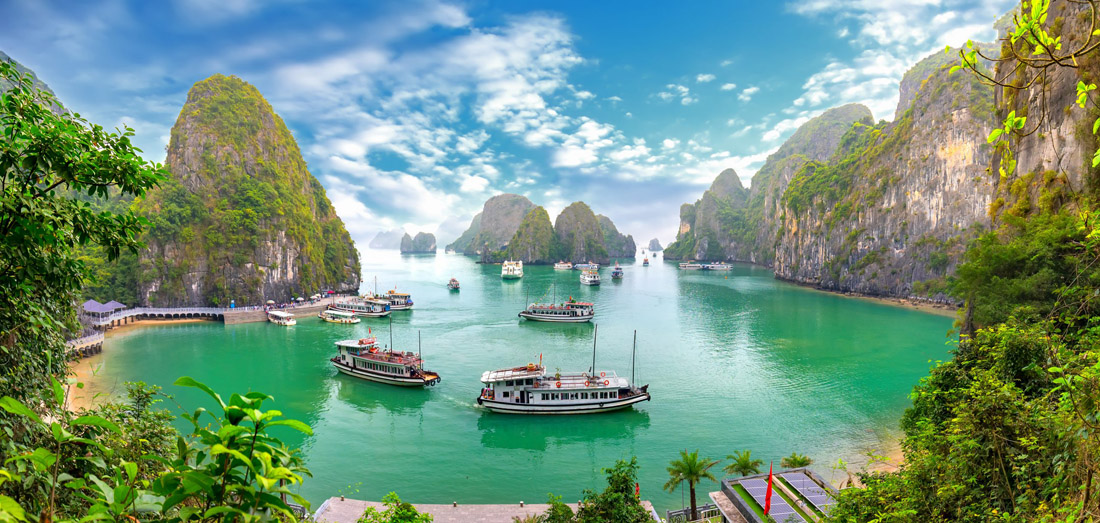
Welcome to Vietnam, a Southeast Asian country where dramatic limestone bays, ancient towns, and vibrant street life create unforgettable diversity. Halong Bay's thousands of limestone islands rising from emerald waters rank among the most spectacular natural sights in Asia. Hoi An's lantern-lit ancient town, a UNESCO World Heritage Site, offers beautifully preserved architecture and renowned tailoring. Hanoi's Old Quarter buzzes with scooters, street food, and centuries of history around a scenic lake.

Vietnam's terraced rice fields in Sapa reveal dramatic mountain scenery and vibrant hill tribe culture. The Mekong Delta offers a fascinating glimpse into floating markets and traditional river life. Vietnamese cuisine, from pho to banh mi, reflects fresh ingredients and centuries of culinary refinement. Vietnam invites travelers to experience a country of extraordinary natural beauty and rich cultural depth.

AdvertisementAdvertise with Blahface
📍 Where to go

Popular Cities

01

Hanoi

Hanoi’s Old Quarter packs thirty-six ancient trading streets, each historically named for the goods once sold there, into a dense maze best explored on foot or by cyclo. Hoan Kiem Lake, with its small red bridge leading to Ngoc Son Temple, anchors the city center and remains central to local legend and daily life.

Read more ↓Show less ↑

The Temple of Literature, Vietnam’s first national university, honors Confucius and centuries of scholarly tradition within tranquil, tree-shaded courtyards. Egg coffee, a Hanoi specialty combining whipped egg yolk with strong Vietnamese coffee, is best sampled at cafes tucked into the Old Quarter’s narrow alleys. The Ho Chi Minh Mausoleum and nearby stilt house offer insight into the life of Vietnam’s revolutionary leader. Hanoi’s blend of French colonial architecture and centuries-old trading streets make it one of Southeast Asia’s most atmospheric capitals.

02

Ho Chi Minh City

Ho Chi Minh City, still widely known by its former name Saigon, offers the War Remnants Museum, a sobering and essential stop for understanding the Vietnam War from the Vietnamese perspective. The Cu Chi Tunnels, an extensive underground network used by Viet Cong fighters, can be explored just outside the city.

Read more ↓Show less ↑

The Notre-Dame Cathedral and Central Post Office, both French colonial landmarks, reflect the city’s history under French rule. Ben Thanh Market offers a dense concentration of street food, textiles, and souvenirs at the heart of downtown. Rooftop bars overlooking the chaotic scooter traffic below offer one of the best ways to appreciate the city’s relentless energy after dark. Ho Chi Minh City’s mix of wartime history and modern hustle make it Vietnam’s most dynamic city.

03

Ha Long Bay

Ha Long Bay, a UNESCO World Heritage site, scatters thousands of limestone karsts and islets across emerald waters, best experienced on an overnight cruise that includes kayaking through hidden lagoons and exploring caves like Sung Sot. Cat Ba Island, the largest in the bay, offers hiking trails and a national park for those wanting time on land.

Read more ↓Show less ↑

Traditional junk boats, many restored in a style recalling the region’s fishing heritage, remain the classic way to explore the bay’s dramatic scenery overnight. Floating fishing villages within the bay offer a glimpse of communities that have lived on these waters for generations. Sunrise and sunset over the karst-studded bay rank among the most photographed scenes in all of Vietnam. Ha Long Bay’s otherworldly limestone landscape makes it one of the most essential natural attractions in Southeast Asia.

🍴 On the menu

Local Food to Try

Discover some of Vietnam's most popular flavors, traditional dishes and memorable local treats during your visit.

Phở

Phở is a well-known part of Vietnam's cuisine and offers visitors a flavorful introduction to the country's food traditions.

Bánh Mì

Bánh Mì is a well-known part of Vietnam's cuisine and offers visitors a flavorful introduction to the country's food traditions.

Bún Chả

Bún Chả is a well-known part of Vietnam's cuisine and offers visitors a flavorful introduction to the country's food traditions.

Gỏi Cuốn

Gỏi Cuốn is a well-known part of Vietnam's cuisine and offers visitors a flavorful introduction to the country's food traditions.

Cao Lầu

Cao Lầu is a well-known part of Vietnam's cuisine and offers visitors a flavorful introduction to the country's food traditions.

Bánh Xèo

Bánh Xèo is a well-known part of Vietnam's cuisine and offers visitors a flavorful introduction to the country's food traditions.

Cơm Tấm

Cơm Tấm is a well-known part of Vietnam's cuisine and offers visitors a flavorful introduction to the country's food traditions.

Bún Bò Huế

Bún Bò Huế is a well-known part of Vietnam's cuisine and offers visitors a flavorful introduction to the country's food traditions.

Chè

Chè is a well-known part of Vietnam's cuisine and offers visitors a flavorful introduction to the country's food traditions.

AdvertisementAdvertise with Blahface
💡 Did you know?

Little-Known Facts

1

Vietnam is home to Sơn Đoòng, the largest known cave passage in the world by volume, discovered relatively recently and found to be so massive that it contains its own localized weather system, complete with clouds forming inside the cave and a dense jungle growing on its floor where sunlight breaks through collapsed sections of the ceiling. The country's Hạ Long Bay features thousands of limestone karst islands and islets rising dramatically out of emerald waters, a landscape shaped over millions of years and recognized as a UNESCO World Heritage Site.

2

Vietnam endured a prolonged and devastating war in the mid-20th century, and the extensive Củ Chi tunnel network near Ho Chi Minh City, stretching over a hundred miles, allowed Viet Cong fighters to move troops, supplies, and even entire field hospitals underground largely undetected. The country has since transformed into one of the fastest-growing economies in Southeast Asia, and it's now one of the largest exporters of coffee in the world, a legacy tied back to French colonial-era plantation agriculture.

3

Vietnam's cuisine, particularly dishes like phở and bánh mì, reflects a distinctive blend of indigenous Vietnamese ingredients with French colonial culinary influence, creating a food culture widely celebrated around the world today.

🧳 Before & during your trip

Travel Tips

Tap a topic to open it.

Before You Go
  • Confirm passport validity and entry requirements.
  • Check whether a tourist visa is required.
  • Keep digital copies of important documents.
  • Consider purchasing travel insurance.
Money & Payments
  • Review the local currency and exchange rate.
  • Carry some cash for small businesses and markets.
  • Check for international bank transaction fees.
  • Learn the country's customary tipping practices.
Stay Connected
  • Review your mobile carrier's international plan.
  • Consider purchasing a local SIM or eSIM.
  • Download maps for offline use before traveling.
  • Avoid sensitive transactions on unsecured Wi-Fi.
Transportation
  • Research public transportation before arrival.
  • Use licensed taxis or reputable rideshare services.
  • Check which side of the road vehicles use.
  • Confirm whether an international permit is needed.
Electricity
  • Check the country's voltage and outlet type.
  • Bring the correct plug adapter for your devices.
  • Use a voltage converter when required.
  • Pack a portable charger for longer excursions.
Weather & Clothing
  • Review the seasonal weather before packing.
  • Bring layers for changing temperatures.
  • Pack rain protection when appropriate.
  • Use sunscreen even on cool or cloudy days.
Food & Water
  • Research whether tap water is safe to drink.
  • Communicate food allergies clearly.
  • Try traditional dishes from reputable vendors.
  • Observe local dining customs and meal times.
Safety
  • Secure valuables in crowded tourist areas.
  • Avoid displaying large amounts of cash.
  • Share your itinerary with someone you trust.
  • Review current government travel advisories.
Language & Etiquette
  • Learn a few polite words in the local language.
  • Respect dress requirements at religious sites.
  • Ask permission before photographing people.
  • Follow local traditions, laws and social customs.
Emergency Planning
  • Save the country's emergency telephone number.
  • Locate your nearest embassy or consulate.
  • Keep medication in its original packaging.
  • Store emergency contacts offline and on paper.
Smart Packing
  • Pack comfortable shoes for walking and tours.
  • Keep essential medication in your carry-on.
  • Bring a reusable bottle where appropriate.
  • Leave room for locally purchased items.
Local Research
  • Check attraction hours and reservation policies.
  • Review national holidays and local closures.
  • Download important addresses before departure.
  • Leave flexibility for unexpected discoveries.

Important: Entry requirements, transportation rules, weather conditions and safety guidance can change. Verify important information with official sources before traveling.

📰 Travel News

Live feed